Search

The Revenant Review

Horror Film History, Analysis, and Reviews

Month

August 2016

Movie Review – Pernicious (2015)

Movie Review – Pernicious (2015)

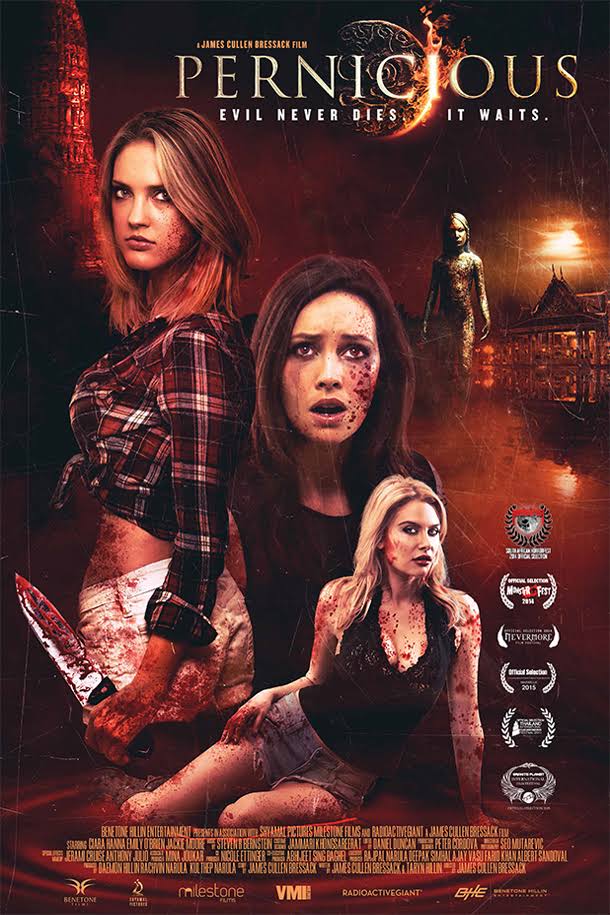
Pernicious (2015) is a Thai-American production directed by James Cullen Bressack, who wrote the story with Taryn Hillin. Shot completely in Thailand, the story follows three attractive American women who arrive in the country to do volunteer work and who find a mysterious gold statue of a little girl in their rented house (a pretty nice property for volunteers, I might add). Soon the statue disappears and the girls experience violent dreams and come to be haunted by the statue.

Pernicious was a frustrating experience. It combines J-horror supernatural aesthetics with graphic gore, to mixed success. There were elements that I felt were done very well, such as the unexpected torture scenes. It’s very rare that an effect will have me cringing, but there’s one involving teeth that had my gaze turning ever-so-slightly away from the screen. While there were many predictable jump scares, they were executed well. Also, the idea of the gold statue coming to life was novel.

However, there were many other areas where the film falters. The lead actresses play well off each other, even if they’re prone to overacting, but their dialogue is often childish. The story itself is decent, but it’s execution awkward, with odd choices being made such as a character deciding to run full speed after a random little girl they’ve just met on the street who asks them to follow her. (Here’s a travel tip: if you’re in a foreign country where you’re obviously not a local and some stranger tells you to follow them to a remote location without witnesses, even if it’s a kid, do not do it.) I was never convinced that these girls were traveling, and the location shooting was underutilized – we never get a feel for Thailand, which is unfortunate. When the origin of the ghost is revealed, it is done so in an overly long, convoluted flashback. Also, the ghost aspects are simply rehashes of what we’ve seen before – one scene involving a ghost beneath the covers is a direct copy of Ju-on: The Grudge (2002). And Bressack even gives us another bathroom medicine cabinet jump scare. The errors in spelling and punctuation in the subtitles didn’t help either, particularly when they decide to disappear altogether before dialogue can be completed. In the end, the shortcomings and retreads can’t overcome the few unique aspects to be found in Pernicious.

Grade: D+

Horror’s “Worst” Films – The Beast of Yucca Flats (1961)

This review is part of the Horror’s “Worst” Films: Tasteless Entertainment or Endurance Test? series.

Horror’s “Worst” Films – The Beast of Yucca Flats (1961)

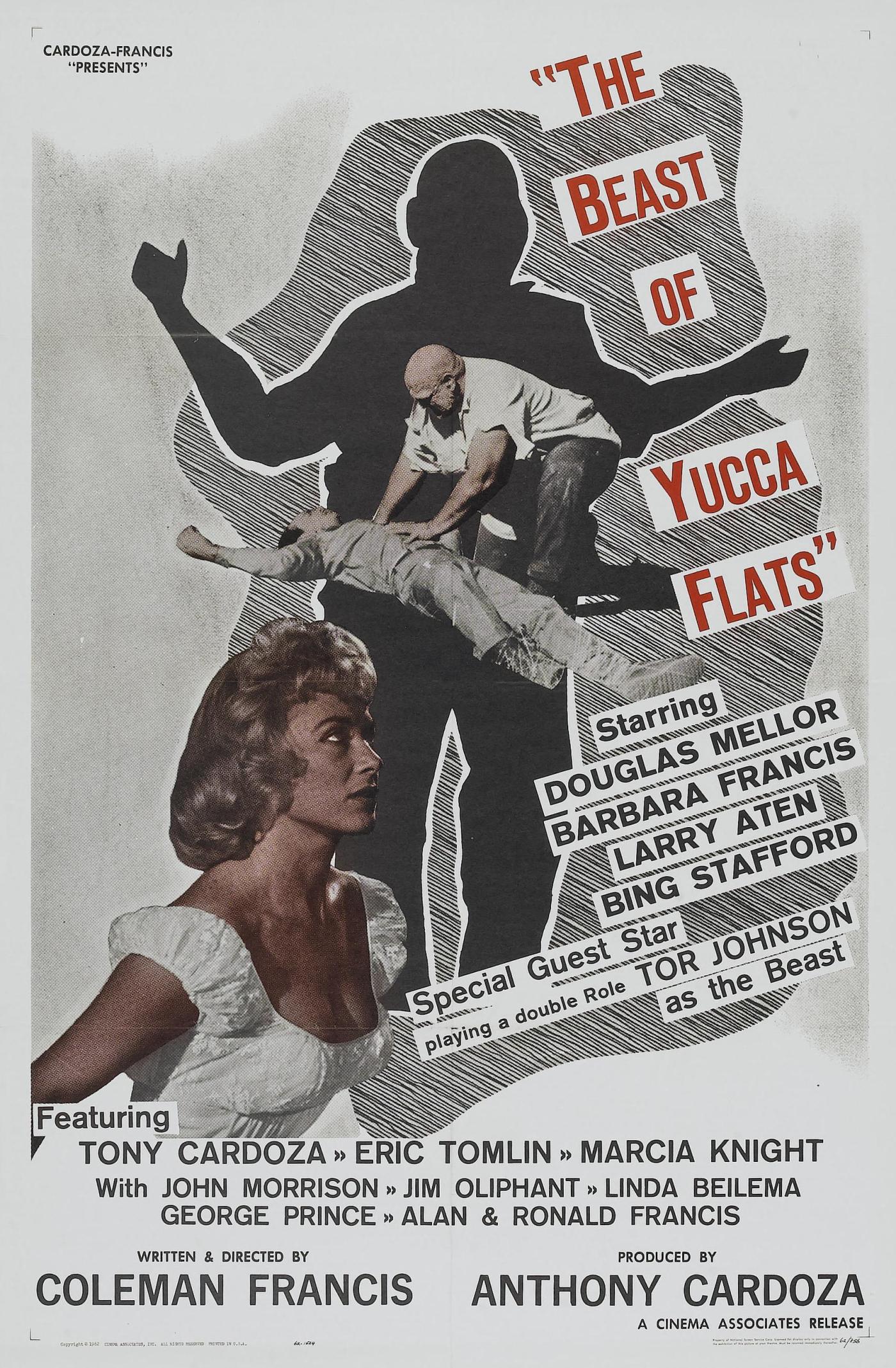
The film, written and directed by Coleman Francis, opens with a woman getting out of a shower and toweling off. She then sits down on her bed and looks up rather indifferently as a man’s hands slowly reach out and strangle her. The man then places her fully on the bed and the audience is given a dose of implied necrophilia. This would be disturbing if it at all fit or had any bearing upon the rest of the movie, which it does not. In fact, when asked about the scene’s existence by film historian Tom Weaver, producer Anthony Cardoza explained: “Uh … Coley liked nudity. That’s it! [Laughs] Her name escapes me; she was an Italian girl from New York. I saw her that one time there, and that was it. She was choked by a guy who doubled for Tor Johnson. (That was obvious, right?)” Therefore, it’s best to forget about it as quickly as possible and attempt to refocus on the rest of the mind-numbingly boring The Beast of Yucca Flats (1961).

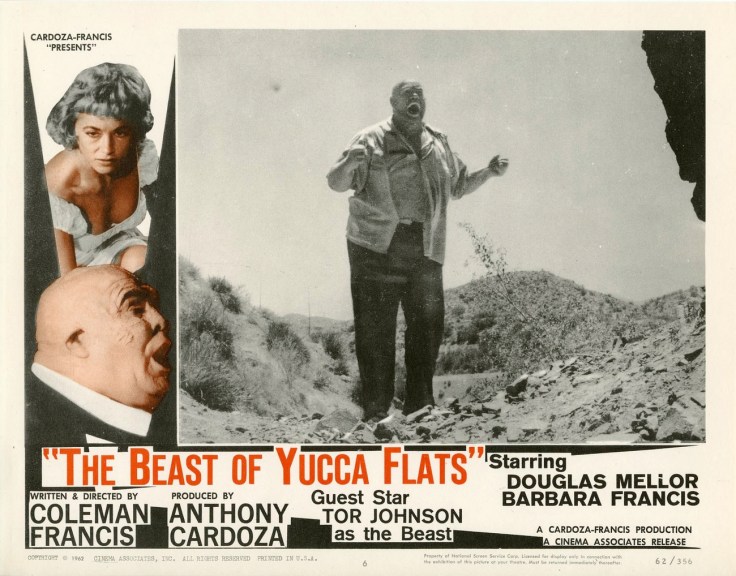
Just as I had promised in my review of Plan 9, Tor Johnson returns to the list as a Soviet scientist-turned-monster after being exposed to nuclear radiation, condemned to wander Yucca Flats and slowly strangle people. The movie was filmed without a soundtrack, so we get added special effects, voices that are heard only when mouths can’t be seen so that the audio would not have to be synchronized, and the rambling and repetitive narration by Francis where he says the word “progress” more times, and more nonsensically, than any word should be used: “Boys from the city. Not yet caught by the whirlwind of Progress. Feed soda pop to the thirsty pigs.” It’s the kind of smug dialogue that only Rod Serling could pull off in small doses in The Twilight Zone, but throughout an entire film it becomes nearly unbearable.

The Beast of Yucca Flats 1961

The film is largely a test of endurance, though those who make it to the final moments do get a treat when a rabbit unexpectedly enters the monster’s death scene. As Anthony Cardoza said of it in that same interview with Weaver: “The rabbit comes up to Tor Johnson during his death scene. And do you know that that was a wild rabbit that came up to Tor? That wasn’t a trained rabbit, it was a baby jack rabbit that came out of nowhere, a bunny. It was like a miracle – he came over to Tor while we were shooting, and he was lying on the ground dying. Tor opened his eyes and saw it and kissed it. Can you imagine that? Isn’t that an amazing scene?” Admittedly, it kind of is, but it’s not enough to make up for the confusing, boring slog of the movie that precedes it.

A Shout-Out from The Girls in the Back Row!

The lovely ladies at The Girls in the Back Row podcast gave both The Revenant Review and The HorrorCast podcast a generous shout-out on their latest episode, where they discuss one of my favorite films, 1920’s The Cabinet of Dr. Caligari.

Kate and Tab’s show, part of the Fangoria Podcast Network, always showcases well-researched, thoughtful discussions. They appreciate horror as much as they do cinematic artistry and their film selections reflect a knowledge of and respect for the genre. Additionally, Tab has begun an interesting and inventive blog wherein she watches the films discussed in Kier-La Janisse’s House of Psychotic Women: An Autobiographical Topography of Female Neurosis in Horror and Exploitation Films and gives her impressions on them. Highly recommended!

Thanks again, Kate and Tab!

Movie Review – Nightbreed: The Director’s Cut (1990)

Movie Review – Nightbreed: The Director’s Cut (1990)

The troubled story of Clive Barker’s Nightbreed (1990), his second feature-length film after 1987’s Hellraiser, is as labyrinthine as it is long. Based on his novella, Cabal, Barker set out to create an adult fairy tale where the monsters are the sympathetic heroes and the humans are the violent aggressors, the latter fueled by their intolerance and insufferable envy. Originally conceived as a trilogy, Nightbreed was to be the first in an epic in the vein of Star Wars.

And then everything that could go wrong apparently did. With the genre being the perpetual whipping boy of Hollywood, the studio did not understand Barker’s mixture of fantasy and horror and cut much of the film at the last minute. It then mis-marketed the film as a slasher. Ultimately, Barker was immensely dissatisfied with the resulting product and Nightbreed went on to receive mostly negative reviews.

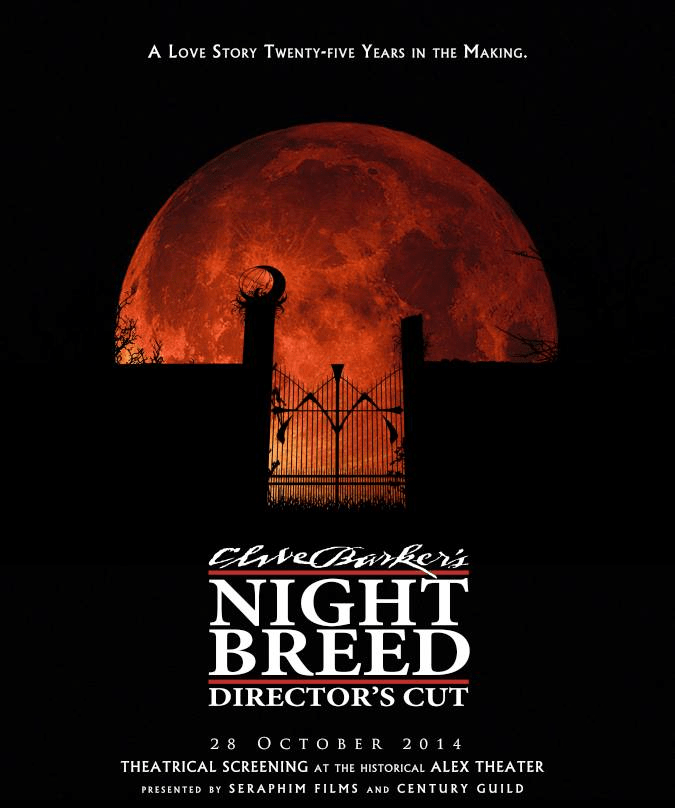
In 2009 missing footage was recovered and put back into the film, creating what was called The Cabal Cut and clocking in at over 150 minutes, and was played at various film festivals and reactions were generally favorable. In 2014 yet another version was released through Shout! Factory using recently recovered original film elements. Overseen by Barker, this version would be The Director’s Cut, and can safely be considered the final, definitive version of Barker’s original vision for Nightbreed. As Barker said in an official statement:

“This is film history and beyond my wildest dreams of realization. When Scream Factory told me that they found the NIGHTBREED film footage, I was gob-smacked… There’s never been a reconstruction that’s had as little chance of succeeding and yet has succeeded on as many fronts as this film has. It’s unprecedented. To now have a movie that we can put together in the way that I fully intended it to be seen when I first set out to make this film in 1989 is extraordinary. The project has moved inexorably to this conclusion.”

If one thinks about it, horror has its roots deeply embedded in the fantasy genre, in the ancient myths of monsters and particularly in the fairy tales of witches and naughty children getting their due. Horror fiction is really, and most plainly when it deals with the supernatural, dark fairy tales for adults. When macabre story elements become more visceral they cross the line from innocent childhood anxieties to the fears of a mature mind fully aware of its frail mortality. It then becomes what we would consider true horror, and this acknowledgment of horror’s mature status explains why it is the only genre outside of porn to be considered of an adult realm, at least when taken seriously. Show a child fantasy and sci-fi and people don’t bat an eye, but show them horror and they will seriously call into question your mental and ethical fitness. Ultimately, however, the difference between kids’ fairy tales and adult horror becomes a matter of degrees, and I would be remiss to discount the many examples of films which fall in the middle.

An adult horror fairy tale, therefore, is an idea which should come more naturally to horror filmmakers, or at least embraced more explicitly as Barker does here. Like in Hellraiser, we see themes of unfulfilled desires in the envy of the humans for the monsters’ powers and in the monsters for their wish to walk freely without fear of violent reprisal. Barker sets in motion many elements which immediately put Nightbreed on a solid footing, including music by Danny Elfman and casting the body horror maestro David Cronenberg in the role of Dr. Philip K. Decker, a serial killer who wears a creepy mask and who frames the film’s protagonist, Aaron Boone (Craig Sheffer). The film also boasts some imaginative creature designs, some of which admittedly look better than others.
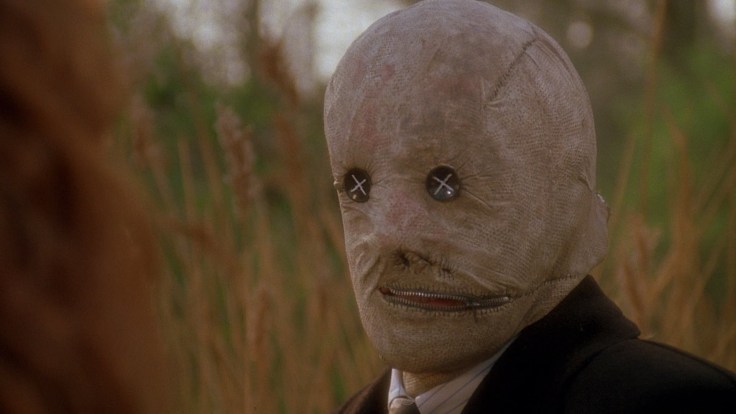
Nightbreed 1990 still

While there are moments of genuine fun and excitement in Nightbreed, it still in many ways feels like an uneven, even rushed film. Decker is menacing, but as the film proceeds it becomes more difficult to discern his motives. He goes from being a crafty, manipulative nemesis to a sloppy, careless slasher in fairly quick time. Decker’s character isn’t the only one who feels underdeveloped. The monsters are underused and there’s little to no character development among them, and this becomes an issue when we’re asked as an audience to sympathize with them. The cops, too, are thinly drawn in a most cartoonish manner. Their commitment to excessive violence and disregard for due process may fit with the simplistic fairy tale theme, but it also makes it difficult to buy into the story. The main problem, however, lies with the character of Boone, our hero. In the end, he’s fairly boring, and unfortunately Sheffer is unable to bring much charisma to the screen.

I feel that if I had seen this movie as an adolescent, it may have really resonated with me. Kids connect with monsters because they recognize their disenfranchisement and they sympathize with how they’re misunderstood and/or underestimated by the adult population. I still connect with them for those same reasons, but I require more story to get me there. When I was eight I saw 1989’s Little Monsters, a movie I really loved at that age (though I suspect it wouldn’t hold up to an adult viewing), and I couldn’t help but think of that film as I watched Nightbreed (which was released a year later, curiously enough, and makes one wonder if Barker was inspired by it). Both films confirm our suspicions that monsters exist below the surface and exploit our desires to live and be among them – to become them, even. Even the creature designs and the underworld in which they inhabit bear striking similarities, though these may be more superficial than my foggy recollection is suggesting. Nevertheless, viewing Nightbreed for the first time now, as a thirty-something, I have difficulty connecting to the characters and feel that the film never comes together or progresses in a convincing manner.

Grade: C+
Movie Review – Wolfblood: A Tale of the Forest (1925)

This review is part of the A Play of Light and Shadow: Horror in Silent Cinema Series

Movie Review – Wolfblood: A Tale of the Forest (1925)

Wolfblood: A Tale of the Forest (1925), also known simply as Wolf Blood, is saddled with some modern misconceptions. Firstly, it is often erroneously described as the first werewolf film, but that honor belongs to the now lost The Werewolf from 1913, considered by some to also be the first true Universal monster, though the much later The Hunchback of Notre Dame (1923) would have far greater impact in establishing that studio’s series. The Werewolf involved a Navajo witch who transformed into a wolf to kill white settlers, and then returned a century later to kill again. (Some are even more in error in calling 1935’s Werewolf of London the first werewolf film, but it was merely the first mainstream Hollywood one.) Nevertheless, Wolf Blood can properly be considered the earliest surviving werewolf movie.

Secondly, Wolf Blood is today advertised as a horror film, but really it’s a drama-romance with some werewolf elements coming into play in the second half. It tells of the manager of a logging camp named Dick Bannister who falls in love with his pretty young boss. After a fight with a business rival he requires a blood transfusion, and the only blood available is that of a she-wolf. Worries about the effects soon spring forth and he fears that the blood is changing his brain, edging him ever further toward homicide and madness.

Lycanthropy comes fairly late in the film, more than half-way through. There is no transformation scene. Instead, we see Bannister running through the forest in a fit of madness alongside ghostly wolves. Before the release of Dracula and Frankenstein in 1931, American films generally shied away from inserting the sincerely supernatural into their narratives, unlike their German and Scandinavian counterparts. American plots had a tendency to explain away the seemingly supernatural with human agency, misunderstanding, or mental breakdown, and the trend is no different here.

The director and star, George Chesebro, was a regular fixture in B-movie Westerns, often playing a villain. Likewise, his co-stars were also well-known to contemporary Western fans, and the influence of that genre can be felt throughout. Also present are numerous jokes about Prohibition and jazz, as well as a pinch of racism, placing this film firmly within the time in which it was created.

The forest vistas, with the stately pine trees, are beautiful to behold, but the rest of the movie is very dimly lit and at times difficult to discern. The story is simple and the curious ideas about blood transfusion innocently quaint, but there isn’t much to invest the viewer’s attention. I couldn’t find contemporary reviews, but I imagine this was seen as pretty middling-fare even in the 1920s.

Wolf Blood, while not being a bad film, does not have a great deal to offer the modern audience except for its novelty as the longest surviving runt in a very particular pack.

Grade: D

Movie Review – Tusk (2014)

Movie Review – Tusk (2014)

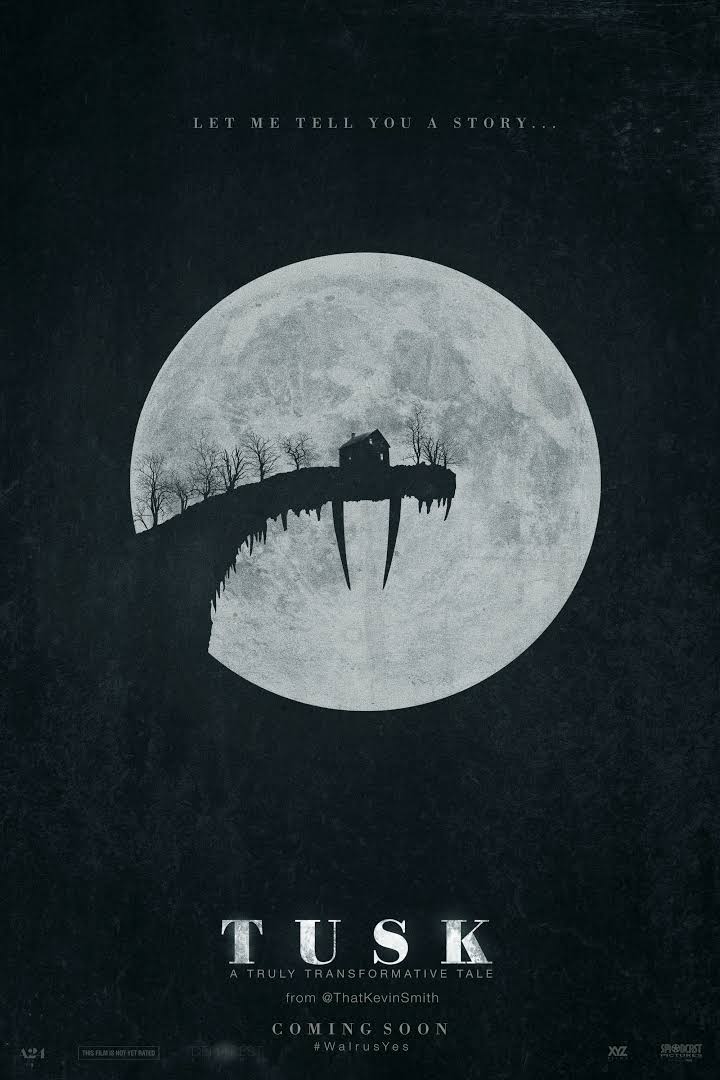
In an early scene in Kevin Smith’s Tusk (2014), Wallace Bryton (Justin Long) tells his girlfriend that it was worth it for a guy who lost his leg because he became famous for it. By the middle of the film, Bryton, who had let fame go to his head and now found himself at the mercy of a mad man bent on making him into a walrus, would no doubt wish to retract his former position. This is the overlying message of the film –that personal relationships and being a decent person are more important than money or fame – but one could be forgiven for not seeing past the odd antics that Smith puts on display.

Tusk began as a conversation on Smith’s SModcast podcast where they riffed on an idea inspired by an actual news article and reached out to listeners to decide if a film should be made about it. This is certainly not the strongest basis on which to found a film, but it makes for an interesting experiment, and an experiment is perhaps the best way to approach the movie.

Smith has a legion of loyal fans who will defend him to Judgment Day as well as detractors who are equally as vehement in their opposition. Smith’s movies were an important part of my formative years in the 90s, and of his films that I’ve seen and had occasion to revisit, I’ve liked about half of them. This puts me about dead-center in the Smith debate, which is a way of saying that I was neither expecting to love nor hate this film upon sitting down to watch it. I’d certainly heard strong opinions on both sides, but I cleared my mind as best I could and was determined to give it as fair a chance as possible.

There’s a lot in this film that works. Firstly, it’s well-cast: Justin Long does a convincing job in his reactions and emotional transitions and Michael Parks as the Dr. Frankenstein-like walrus-lover Howard Howe commands the screen each time he’s present. Smith appears to take some inspiration from Quentin Tarantino with long scenes of dialogue between animated characters, and those between Long and Parks really work, especially when Howe is recounting his oceanic adventures to a slowly drugged Bryton. Some of the absurdist comedy sticks, and I admit to laughing aloud at a few scenes, particularly at an unexpected walrus battle late in the film.

All that being said, there is just as much in the film that doesn’t work, and these closely relate to what has already been said. The long dialogues which come later in the film drag on too long and pale in comparison to the former. A certain flashback scene involving an overly-acted Québécois detective and the killer is painful to watch. Also, the humor involving Canada and the “ugly American” stereotype falls flat. Lastly, Smith should be commended for going “full walrus” in this film, but the narrative begins to stutter and scenes feel more and more like filler as the film shuffles to its rather unsatisfying conclusion.

Like a shoddily stitched walrus suit, Tusk is an uneven amalgam that manages to remain interesting even when it’s struggling to remain afloat. There’s some good filmmaking on display, but to enjoy it requires considerable viewer patience and good will to see it through.

Grade: C+

Horror’s “Worst” Films – Plan 9 from Outer Space (1959)

This review is part of the Horror’s “Worst” Films: Tasteless Entertainment or Endurance Test? series.

Horror’s “Worst” Films – Plan 9 from Outer Space (1959)

Is there a more famous “bad movie” than Ed Wood’s Plan 9 from Outer Space, or a more infamous director than Ed Wood, who had a 1994 biopic made about him by none other than Tim Burton which starred Johnny Depp? Uwe Boll is certainly bad and well-known, but Ed Wood’s Plan 9 was the holy grail of bad films for generations of tasteless movie connoisseurs and continues to be the standard by which all other schlock is judged. And rightly so.

Plan 9 From Outer Space 1959 still2

Though released in 1959, Plan 9 didn’t receive the negative recognition we’ve come to associate with it until it was chosen as the “worst movie ever made” by Michael and Harry Medved in their 1980 book The Gold Turkey Awards. Stephen King has written negatively about the movie for what he perceived as its exploitation of a morphine-racked Bela Lugosi. Indeed, Lugosi was about as far from his glory days of 1931’s Dracula, or from his fame as a premiere actor in his native Hungary preceding that time, than one could get when he died in 1956. Before he passed, however, he had performed some silent test footage with Wood for what was intended to be Tomb of the Vampire, some of it outside actor Tor Johnson’s home, who would also appear in Plan 9 (nor is this the last time we’ll see Johnson on this list). Rather than discard that meager footage, Wood built Plan 9 around it and cast his wife’s chiropractor to play Lugosi’s double even though he looked nothing like the actor, covering his lower face with a cape. What King saw as exploitation may have been tribute, as Wood and Lugosi allegedly became close in the actor’s final years.

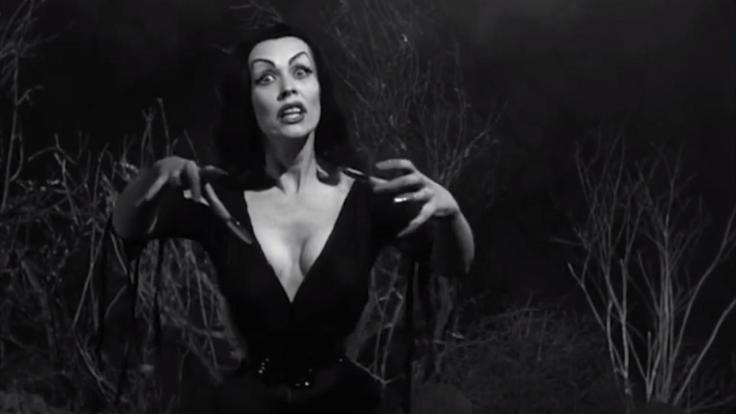
Nevertheless, that Wood was in a sense making Lugosi’s last movie attracted many actors to the project who’s better judgment would have otherwise kept them at bay, such as Maila Nurmi, more famously known as the wasp-like Vampira, TV’s incredibly influential first horror host. Nurmi reportedly insisted that her character be mute because she found the dialogue dreadful.

Plan 9 From Outer Space 1959 still

Ed Wood is what one gets when they combine enthusiasm and determination with absolutely no talent or taste. Plan 9 manages to be a fast-paced, entertaining ride mostly because it never sits still. It’s easy to count the short-comings, such as the bizarre rambling narration by Wood’s friend, the eccentric and famously inaccurate psychic Criswell (“And remember my friend, future events such as these will affect you in the future”), and well as the cheap sets, the bad acting, the pathetically poor costumes and special effects, and lack of editing continuity as sequences go from night to day to night again, and so on. Plan 9 is a bad film, undoubtedly, but it’s never a boring one.

Create a free website or blog at WordPress.com.

Up ↑