One of my favorite horror subgenres can perhaps be classified as historical period horror (“period horror” sounds too much like something else entirely). As a student and educator of history I am always on the lookout for great historical period dramas – it even allows me to enjoy romance movies with my wife as she can concentrate on the budding love story and I ogle at the historical details of the sets, props, and costumes. Of course, these details usually mean larger budgets, something Hollywood is very rarely willing to bestow upon horror. So it is with excited anticipation each time I sit down to watch a blending of these two genres.
2002’s Below, directed by David Twohy, infuses haunted house tropes into a WWII submarine thriller. Written by Twohy, Lucas Sussman, and Darren Aronofsky, the film takes place in 1943 and follows a United States Navy submarine that experiences dangers both supernatural and temporal while on patrol in the Atlantic Ocean.
With interior sets modeled on the World War II-era U.S. Navy submarine USS Silversides, and using exterior shots on the actual vessel, the film effectively creates a claustrophobic atmosphere, using an incredible sound design to sustain the sense that there is never much room behind the camera’s lens. Truly, the film excels as a wartime thriller, making the most of its setting. One scene in particular stands out as “splashers” sink down from an attacking vessel, exploding charges all around them, and one that has yet to explode can be heard bouncing along the submarine’s hull. In that confined space, every sound is amplified and becomes uncanny, from items scraping against the exterior to whale songs drifting dreamlike into their cramped little world. I am largely ignorant about submarine operations, though I have been on a few vessels, yet the mechanical explanations throughout the film were rational and intriguing, at least for me.
The cast is strong and the characters are given distinctness, though one might expect a real crew to be comprised of younger men than what we see. Holt McCallany is an intimidating figure on the vessel and Zach Galifianakis provides some brief comic relief in an early role as Weird Wally. The scene in which the men surmise that they may be in the afterlife is a particularly good one.
The supernatural elements are largely secondary to the plot and, when present, are executed with uneven success. Some scenarios build great tension while others fall flat, and the film never quite fulfills the potential of its premise. That’s a shame, because the idea of a haunted submarine is scary as hell, yet the ghosts never seem as threatening as the Germans or the very ocean in which they travel.
Below is a taut historical thriller with some supernatural smatterings. Despite some minor quibbles, it remains an effective and overall satisfying experience.
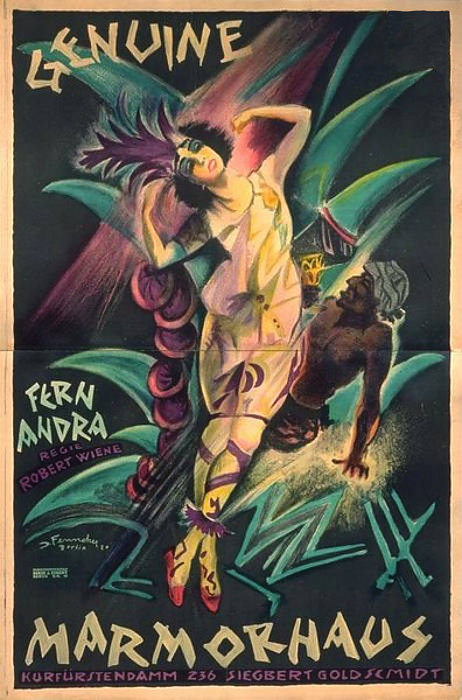
Movie Review – Genuine: A Tale of a Vampire (1920)
In February of 1920 German director Robert Wiene released the groundbreaking horror classic and German Expressionist masterpiece The Cabinet of Dr. Caligari, a transformative milestone in cinema. Later that year he released another work of Expressionist horror, Genuine: A Tale of a Vampire, to much less success. In fact, contemporary critics considered the film a failure (fortunately, his 1924 The Hands of Orlac would reestablish his reputation as a horror master).
Genuine is the titular “vampire” – which at the time was a reference to her status as a femme-fatale. Vampires in film were not generally associated with blood-suckers until F.W. Murnau’s Nosferatu (1922), but were instead seen as beautiful, manipulative women (“vamps”). Genuine, the former priestess of a conquered tribe who is sold into slavery, seduces men and drives them to madness, pushing them to commit heinous acts.
What is available to the public today is a 44-minute condensed version, only half of the film’s original length. The longer version can only be viewed at the time of this writing at the Munich City Film Museum archives. This trimming could of course account for the many confusing aspects of the narrative, which is brimming with plot holes. However, other aspects of the film, having nothing to do with editing, weigh it down like a wet blanket, and inevitable comparisons to Caligari only serve to accentuate its overall inferiority.
Whereas the sets of Caligari evoked a dream-like world with skewed perspectives and sharp angles, the sets designed by Expressionist painter César Klein, while interesting in many respects, are too busy and cluttered. The fact that the costumes often appear designed to blend in with the background, which was in part keeping with Expressionist cinema by matching the wardrobe to the sets, creates a combination which is ultimately an eyesore.
The writing and acting are equally broad and melodramatic. Genuine’s presence, with costumes as busy as the sets, is more irritating than compelling. She is played by the American actress Fern Andra, who was popular during the German silent era. Interestingly, in 1922 Andra would be in a plane crash with German WWI ace pilot Lothar von Richthofen, the younger brother of the Red Baron. Richthofen would perish but Andra would survive, spending a year recovering from her injuries.
The role of Florian, one of Genuine’s conquests and her ultimate nemesis, is played by Hans Heinrich von Twardowski. He was a homosexual who fled Nazi Germany in 1933 and went on to star in prominent anti-Nazi films in America throughout WWII, including the creature-feature-sounding Hitler – Beast of Berlin (1939).
Greater appreciation of Genuine has not been forthcoming in the near century since its release, and the condensed version does nothing to whet one’s appetite for the original installment. Unlike Wiene’s two other horror classics, there’s nothing to recommend this film to modern audiences.
Yeah, I know, I’m late to the party, and I didn’t even bring beer. It’s been nine years since the release of Rob Zombie’s Halloween (2007), a “reimagining” of John Carpenter’s seminal classic – a film which many horror fans regard as the genre’s crowning achievement, and I certainly have a great respect for it. The original film is tightly executed and masterfully builds a Hitchcockian tension and it is the textbook standard for all the slasher-style films which it helped to spawn. Naturally, comparisons will be made between Zombie’s version and Carpenter’s creation, and rightly so. It’s therefore understandable that perhaps no film has been as divisive in the horror fandom in the past decade as Zombie’s Halloween, which garnered strong reactions upon its release. As the years have gone by, I have grown the impression that most adherents to the older film, especially those who grew up with it, have a distinct disdain for the new film, while younger audiences have mostly been receptive and praising of it. Having not seen it myself, I could only wonder if this was simply a matter of generational divide.
As I said above, I am an admirer of Carpenter’s Halloween, but I’m not the devout devotee that many others are. It’s a great film, but I don’t consider it a film that could not be improved upon. There are clear plot holes, thin characterizations, and elements that could certainly be expanded upon to further flesh out the story. Additionally, the franchise was in such abysmal straits after the vomitous Halloween: Resurrection (2002) that a rejuvenation of the Michael Myers brand was badly needed, and Rob Zombie certainly seemed like the kind of filmmaker who could do it. Whenever I sit down to watch a film, especially one I know I will be reviewing, I try to approach it with as open a mind as possible, and this was even more self-consciously so with this film.
So after finally watching it, what did I think?
Zombie does a lot right. 2007’s Halloween showcases clever cinematography and great lighting. Casting Tyler Mane as the adult Michael Myers adds a physical gravitas to role, and Mane’s attacks are brutal and animalistic. Similarly, having Danielle Harris, who played the child protagonist Jamie in Halloween 4 and 5, return to the franchise was a risk which pays off as her scenes are some of the best and her cries of desperation brutally realistic.
However, as much as I try to give respect where it’s due, as I watched I couldn’t help but be distracted by the film’s many problems. Zombie’s decision to explore Myers’s roots is ill conceived, poorly executed and ultimately needless, adding nothing to the tension of the second half of the film which is closer to Carpenter’s original and noticeably stronger as a result. The dialogue is poor – nobody in this film talks like a real person – and the acting, particularly in the beginning, is unable to overcome it. Even seasoned veterans like the amazing Dee Wallace come off as amateurish with this material. It is therefore unsurprising that the depiction and explanation of Michael Myers’s decent into homicide is unconvincing and not at all compelling. There’s too much style over substance and we get caricatures rather than real characters.
Throughout the film there is an unnecessary exploitation influence that keeps me from taking it seriously, such as all the women dying naked, over-the-top misogyny, a gratuitous rape scene, and a hackneyed abundance of foul language (fuck… see, I can say it too). The result is a lack of suspense or any real terror. Again to draw a comparison, Carpenter followed Hitchcock’s model of anticipation, letting the audience know that the danger is coming but letting it linger, never being fully confident quite when it will drop. Zombie instead just moves from kill to kill in a mechanical, assembly-line fashion.
Ultimately, Zombie shows too much where he should show restraint, and too little where further exploration would have been beneficial. Instead of centering on Myers’s background, it might have been more effective to give more back story on Laurie’s friends and family, adding something to Carpenter’s film that would have made the kills even more intense. Yet for all his explaining, he still does not justify Myers’s ability to keep moving unhindered when riddled with bullet holes or many other tropes that cannot be rooted in a difficult family life.
Yet perhaps the most egregious shortcoming is one that has certainly been said before by many other detractors. I had heard their criticism but waited until I saw the film myself before laying judgment. By dispelling the mystery of Myers it removes the one thing that made Myers an effective “shape” – now he’s just another “white trash” serial killer, and not even a very interesting one. His only distinguishing characteristic is that he gets to wear that iconic William Shatner mask. When Laurie says to Dr. Loomis in the 1976 film, “It was the boogeyman…” and he responds with, “As a matter of fact, it was,” those lines mean something. Myers worked best as a mystery – the blank mask allowed the audience to paint their own motives and emotions upon the character. The boogeyman is the indefinable embodiment of fear, and Carpenter’s Myers fit that perfectly. Zombie’s script plays lip-service to it, but when his Laurie asks, “Was that the boogeyman?” it no longer has meaning, and even sounds odd and inappropriate coming from her lips. It isn’t at all the point of Zombie’s film – his intention is to assault the audience rather than invite them into the experience so that they might place their own impressions upon it. His Myers is an attack dog, not a boogeyman, and to have Laurie still say those words makes me question just how much Zombie was aware of this.
Zombie’s Halloween is a decent slasher film, but not a very good Halloween one. Of course, most are not very good as the franchise isn’t known for an abundance of quality entries, and this is certainly not the worst or weakest among them. However, as a reimagining of the classic original it, like Myers’s mask, pales in comparison. I can see why many would enjoy this film, but the shortcomings are too glaring for me to take any real satisfaction in watching it.
Three Norwegian film students secretly follow a man into the woods, believing him to be a bear poacher who they expect to catch in the act and to expose. As they search the dark forest, flashes and roars emanate from behind a hill and the man they’ve stalked runs down screaming, “Trolls!” Disbelieving at first, they soon find that his frenzied warning is genuine and begin a trek through the north of Norway, following the government-contracted trollhunter (Otto Jespersen) as he puts down dangerous trolls and watching the government’s haphazard attempts to hide the truth from the public.
Trollhunter (2010), written and directed by André Øvredal, is a docu-style horror fantasy replete with dry Scandinavian humor and some beautifully rendered creature effects. Trolls, we learn, come in all varieties and sizes, and a lot of the fun derives from seeing their multitude of forms. They feed mostly on rocks and coal but sometimes kill animals and humans when they stray too far from their protected habitats. Ultraviolet light is fatal to them – the old ones turn to stone while the young ones explode. Also, they can smell the blood of Christians, making the majority-godless Norwegians safer as a result. Some of the lore is drawn from myth, and some the filmmakers make up, but there are peppered throughout allusions to troll stories like the Norwegian fairytale “Three Billy Goats Gruff” which involves a particularly humorous encounter. If this sounds fun to the present reader, this movie is for you.
The characters drive through gorgeous landscapes, the camera revealing Scandinavia’s natural beauty as waterfalls cascade like ribbons down vibrantly green hills. The script touches upon themes of environmentalism as we hear radio stories about climate change or the trollhunter looks back gloomily at his record of extermination in the name of human greed and profit. Some subjects are more national in nature, such as the continuous controversy of Norwegians not wanting huge wire towers going through their lands. However, the film is not heavy-handed in its messages and instead focuses on the adventurous aspects of the story.
Trollhunter is a fun ride that sparks the imagination and brings out the inner child of the viewer. Despite one’s previous inclinations, you’ll find your mind occupied by bulbous-nosed trolls for days after.
Yesterday afternoon I received a message from Marknado of The HorrorCastpodcast asking if I would be willing and available to fill in as a guest co-host that evening. I had been communicating with the show’s hosts over the past few months and the idea had been mentioned, but the timing here was totally unexpected. Of course, Marknado apologized for the short notice and kindly emphasized that I was under no pressure, and if I accepted it would mean watching two movies back-to-back and downloading and learning Skype within a four hour period. Luckily he caught me on a rare day when I had no other pressing obligations, and I decided to hell with it, I’ll give it a try, and my supportive wife quickly taught me Skype and allowed me to hide in our bedroom to binge-watch horror movies while hurriedly taking haphazard notes on a tiny note pad while she made dinner and took care of our son. Every geek should be so fortunate. I finished the second film with mere minutes to spare and found Marknado and HorrorGal Susan patiently waiting for me on Skype.
My preferred medium when it comes discussing horror has always been the written word – hence the blog – and I wasn’t sure how I would take to podcasting, but both of the hosts were gracious and instantly made me feel comfortable and confident as the recording began and the discussions flowed easily. I thank them both for the fun, rewarding opportunity and hope that we can find the time for more of the same in the future.
The HorrorCast is a great show that usually also features co-host Walshy, who was unable to record that night, and is one of the few family friendly horror podcasts that I can listen to in the car with my son present, which is of no small value to me. Their regular format is to review an older film, which they reserve the right to spoil, and a newer film, the discussion of which remains spoiler free.
In Episode 7 we review two films: 1981’s Just Before Dawn and 2014’s Clown. Marknado and HorrorGal Susan also interview director Chad Archibald of the upcoming horror release, Bite. To hear the episode, download it on iTunes or listen to it on Stitcher or Podomatic.
After the success of 1996’s Scream, horror became self-referential. The trend affected many films in the immediate years that followed, such as 2000’s Jason X, where franchises and the genre as whole showed greater self-awareness. Hell, in 1999 even Troma went “meta”. Terror Firmer is filled with references to the production company’s history and nods to its previous films. Lloyd Kaufman, Troma’s co-founder and the film’s director, plays a parody of himself as a blind filmmaker trying to make a new Toxic Avenger movie while a killer picks off people associated with the production. The film is written by James Gunn and loosely based upon Kaufman’s own 1998 autobiography, All I Need to Know about Filmmaking I Learned from the Toxic Avenger.
Terror Firmer is balls-out insane, even by the standards of a company like Troma which prides itself on tasteless humor and exploitation. It follows the manic formula of Airplane! (1980), having a joke every three seconds because if one joke fails you can quickly move on to the next one. It throws everything on the screen hoping enough will eventually stick, and I’m not just talking about the copious amounts of gore. Just as Airplane! is a parody of the 1970s disaster genre, Terror Firmer is in many ways a parody of the production company’s already satirically exaggerated filmography. Troma die-hards will find plenty of “Easter eggs” with which to keep busy as the film is Troma’s love letter to itself – the equivalent of cinematic masturbation.
Terror Firmer is probably the most purely Troma film, completely unfettered. It is replete with over-the-top, unconvincing but no less disgusting, gore, gratuitous nudity, jokes revolving around bodily fluids, and juvenile jokes meant to offend as many people as possible. It’s what you come to Troma for, and here Kaufman gives it to you in spades. However, all its excess reveals that Troma is at its best when it’s reined in just a little, more in style than in substance. The jokes run too long (which is itself sometimes the joke) and a lot of the immature humor falls flat. The hermaphrodite jokes in particular already feel tiresomely outdated.
I wish I had seen this film when it first came out, around the time I would have been graduating high school. I would have been at the point in my life when I would have best appreciated the film’s humor and antics, for my friends and I were busy making our own purposefully terrible Troma-esque movies. I’m not claiming that maturity has ruined me for Kaufman’s exploitative humor, as I remain a fan of both The Toxic Avenger (1984) and Poultrygeist: Night of the Chicken Dead (2006), I just think that the satire, gags, and overall pacing work better in those films than in this one – in fact, as I’ve grown older I’ve come to value absurdist humor more, because the more we conform to the realities of adult life the more difficult it becomes to tap into that ridiculous creativity that came so easily in adolescence. For keeping that alive, I will always salute Lloyd Kaufman.
Throughout much of Terror Firmer I was bored or impatient for a tired joke to move on, but much of that was saved by the last act. Will Keenan, who played Tromeo in 1996’s Tromeo and Juliet, commits to his role with an admirable gusto, channeling an emotionally broken Dr. Frank N. Furter, adding a dedication to character in a film where bad acting is the norm. Keenan, in my opinion, makes what came before worth it retrospectively. Nevertheless, I can always support Troma’s methods, summed up by one of the film’s characters: “Sometimes pissing people off is the only way to get them to look at shit.” While Kaufman doesn’t always embrace subtlety, he undoubtedly understands art.
Movie Review – The Golem: How He Came into the World (1920)
While filming The Student of Prague (1913), Paul Wegener heard the 16th century legend of Rabbi Loew, who tradition says saved the Jews of Prague from persecution by creating a Golem – a clay statue infused with life – to protect them. Wegener became captivated by the story and made a film version inspired by it in 1915 called The Golem, and then in 1917 The Golem and the Dancing Girl, considered the first film sequel (if one does not count serials). Wegener was dissatisfied with the first film, which was set in a modern Germany in which a Golem is found and raised by an antiques dealer and goes on to commit murders before falling to its own demise from a tower, and also with the sequel which was more of a comical take on the legend. Unfortunately, both movies are lost, though a few minutes of footage from the first remain and serve to confirm Wegener’s feelings about it. Nevertheless, his 1915 performance appears to have affected viewers much in the way Boris Karloff would do sixteen years later. As one reviewer, Arnold Zweig, writes in a contemporary issue of the theater magazine Die Schaubühne, “What makes the film worth discussing is only Wegener’s embodiment of the Golem… In lyrical passages Wegener demonstrates possibilities of the film which transcend those of the theatre” (as quoted by S.S. Prawer in Caligari’s Children: The Film as Tale of Terror).
The Golem (1915)
In his 1916 lecture Wegener described his inspiration for the creature and what his first Golem film meant for his vision of the future of cinema:
“I got the idea for my Golem from the mysterious clay figure brought to life by the Rabbi Loew, according to the legend of the Prague ghetto, and with this film I went further [than The Student of Prague] into the domain of pure cinema. Everything depends on the image, on a certain vagueness of outline where the fantastic world of the past meets the world of today. I realized that the photographic technique was going to determine the destiny of the cinema. Light and darkness in the cinema play the same role as rhythm and cadence in music.”
In 1920 Wegener again returned to the legend, rounding out his horror trilogy (another first), with The Golem: How He Came into the World. As the title implies, this story establishes the origins of the creature, making it perhaps the first prequel, as well. In it Rabbi Loew reads danger in the stars for the Jews and soon he’s informed that the Christian Emperor has decreed that the Jews must be expelled from Prague. Loew creates a Golem, possessed by a demon, to help his people and brings it to the emperor’s court where he has been called to entertain, not so much to intimidate as to astound. As Loew shows them magical images of the Jewish patriarchs the court laughs and the palace begins to crumble, but the Golem is instructed by Loew to save them and does so, securing the promised safety of the Jewish people by the emperor, at least for the time being. The Rabbi returns to tell the good news, however, the Golem begins acting odd and Loew soon learns that the Golem is destined to turn on its creator and so decides to deactivate it by removing a star, the source of the Golem’s power, from its chest. However, another plot involving an illicit affair collides and the Golem is reactivated, causing havoc in the ghetto.
The Golem is a prime example of German Romantic cinema, though it’s often mistakenly classified as Expressionist. As Steve Haberman writes in Silent Screams: The History of the Silent Horror Film:
“Expressionism and Romanticism have much in common. Both emphasize emotion over intellect, and both conjure dreamscapes of the mind over objective reality. But Expressionism responds with despair over the lust, violence and hate of society, especially following the horrors of World War I. In cinema, this results, of course, in distorted sets and sharp, tortured camera angles, all lit with chiaroscuro shadows” (pg. 52).
The Golem is Romantic in nature because, though it is still stylized, it is meant to be a believable world, unlike the nightmarish landscapes of The Cabinet of Dr. Caligari which resemble shards of broken glass. Expressionism seeks to evoke negative reactions from its audience – to shock and disturb them – while Romanticism seeks the general acceptance of its viewer, even if certain aspects of the film are exaggerated for artistic effect. Indeed, though Caligari deserves credit for influencing the genre to immeasurable degrees, it remains that the majority of silent German horror films which followed took their cues mainly from Wegener’s work.
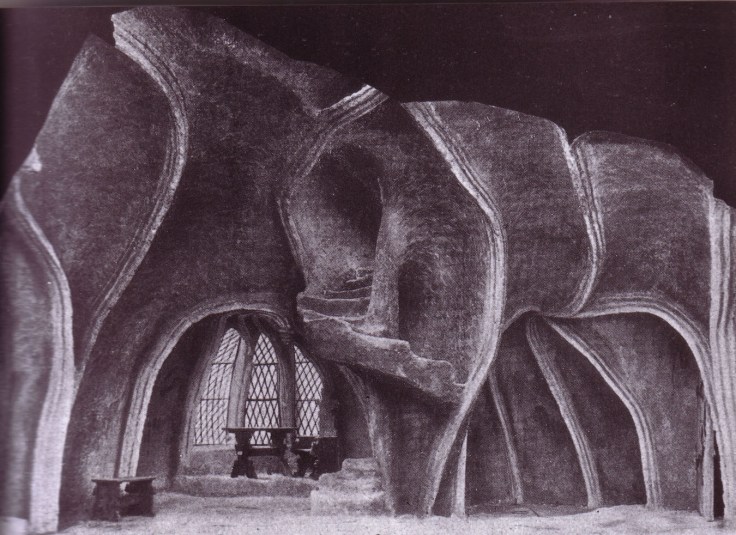
Rather than embracing Expressionism, Wegener was most influenced, as were most of his fellow German filmmakers, by the experimental stage director Max Reinhardt. Reinhardt was a pioneer in the use of lighting on stage to evoke atmosphere and to signify scene changes, making the most of limited budgets and churning out productions at near lightning speed. Many of Reinhardt’s most successful innovations would be lovingly imitated by German silent film directors and production designers. The production designer which Wegener chose for The Golem was the revered architect Hans Poelzig, who in his lectures proclaimed that, “The effect of architecture is magical”. When Poelzig conjured images such as magic, he wasn’t just speaking figuratively. He was a student of the occult and an adherent of mysticism, hosted séances in his home for his medium daughter. In his notebook he wrote: “Film… the magic form… the form of magic… Devil’s Mass”. During his time working on The Golem he mentored a teenaged Edgar Ulmer who would go on to direct 1934’s The Black Cat, and Ulmer showed his appreciation by naming Karloff’s villainous character (who was also an architect and Satanic high priest) “Hjalmar Poelzig” in his honor. When Poelzig died in 1936 Wegener, in his eulogy, called him a “gothic mystic” (Haberman, pg. 45).
What Poelzig designed was indeed impressive. It did not resemble reality but still felt real and created a world unto itself. As Wegener boasted proudly in an interview, “It is not Prague that my friend, the architect Poelzig, has built. Not Prague and not any other city. Rather, it is a city-poem, a dream, an architectural paraphrase on the theme ‘Golem.’ These alleys and plazas are not intended to resemble reality; they create an atmosphere in which the Golem breathes” (Haberman, pg.45). The architecture of the Jewish ghetto of which Wegener speaks is made of leaning lines, as though the buildings have grown organically from the soil, like hovels, or have been crafted from clay like the creature. Many of the set pieces are massive and triangular, and I wonder if this was meant to evoke the Star of David which is featured heavily in the film.
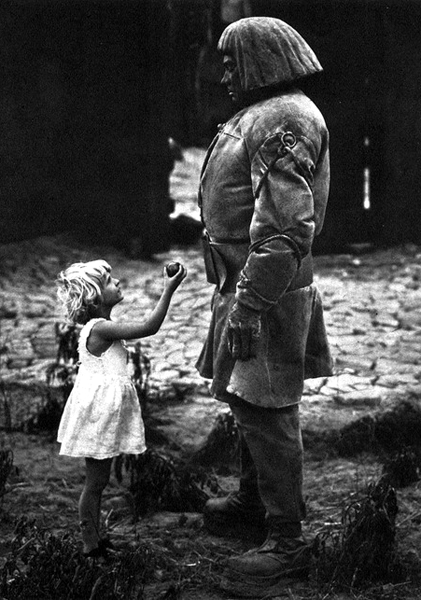
The Golem’s birth scene is imaginative and memorable, and the difficulty of pulling off such effects at that time, which had to be accomplished in camera, is no doubt underappreciated by most modern viewers. The unblinking performance of Wegener, cinema’s first horror icon, as the Golem effectively evokes menace and inhumanity. His vision for the Golem had an undeniable influence upon James Whale’s Frankenstein (1931), and many scenes here clearly inspired those in that later film. Unlike Karloff’s monster, the Golem is at first far less sympathetic, especially as it drags a young woman around by her long pigtails as though she were a plaything that has captured its curiosity. However, like Karloff’s monster, the Golem shows eventual signs of yearning for humanity, which ultimately proves its undoing.
All of this is filmed with the terrific lighting and cinematography of Karl Freund, a master of his craft, who would go on to film Fritz Lang’s Metropolis (1927), which many consider to be a defining masterwork of the silent era. In 1929 Freund immigrated to the United States and in 1931 he filmed Dracula for Tod Browning. However, the scheduling was so chaotic that Browning was sometimes absent, and therefore many consider Freund to be an uncredited co-director (ironically, there’s little cinematography to appreciate in that film). The following year Freund would sit in the director’s chair to helm The Mummy (1932), starring Boris Karloff, and then again in 1935 for Mad Love, starring Peter Lorre. In 1937 he would briefly return to Germany to fetch his daughter as the Nazi pogroms began to protrude their claws. His ex-wife would be interred in Ravensbruck concentration camp during the war. (As an odd addendum to his career, given his horror credentials, Freund would be hugely influential in television as the cinematographer for I Love Lucy, designing the “flat lighting” system which eliminated shadows and allowed cameras to be moved between shots but the lighting to remain the same. It’s still the standard for TV sitcoms.)
The Golem was well-received upon its release, and when it arrived in the U.S. in 1921 American critics were once again forced to concede the superiority of the German offerings at that moment in time. A review from The New York Times sums up the sentiment:
“The black magic of the Middle Ages, sorcery, astrology and all of the superstitious realities of people so legendary in appearance and manners that the unnatural seems natural among them have been brought to screen… in The Golem, the last motion picture to come from the explorative innovators of Germany. The photoplay gives the impression of some fabulous old tale of strange people in a strange world, fascinating, exciting to the imagination and yet so unfamiliar in all of its aspects that it almost seems remote, elusive even, when one would like to get closer to its meaning… This power is derived mainly from a combination of exceptional acting and the most expressive settings yet seen in this country” (Haberman, pg. 47).
All of this is well and good and entirely deserving of praise, however, one cannot discuss The Golem, given its subject matter and the time and place in which it was made, without addressing the subject of anti-Semitism. Is the film anti-Semitic? Wegener would go on to become the actor of the state for Nazi Germany, making many propaganda films, so one might assume the answer is an obvious affirmative. The Jews in the film are depicted as the exotic “other” who dabble in black arts, and some stereotypes certainly make themselves shown, such as the camera locked onto the hands of a bribed Jewish gate-keeper, eagerly taking the silver coins being offered to him. Wegener clearly had no real understanding of Jewish religion, as the symbols and rituals which are shown have nothing to do with actual Judaism. The Jews in this film have about as much in common with real Jews as the “Injuns” of classic Western cinema have with real Native Americans. They’re stage Jews, meant to reflect the existing notions of the viewer. Furthermore, is the Golem meant to be evidence that Jews can only make flawed works of art? Perhaps.
Nevertheless, there’s more nuance here for which Wegener deserves credit. The Jews here are seen as the sympathetic party. We’re meant to feel their plight as they suffer in poverty. Their very safety is at the whim of a frivolous Christian emperor. Loew is well-intentioned and, though flawed, not at all a villain. He simply wants the best for his people. The Christians, on the other hand, are entirely depicted as self-centered, arrogant, and vain. When the Christian women of the court see the Golem, they are clearly sizing him up, if you catch my meaning. The anti-Semitism in the film is more by circumstance and perhaps Wegener’s own limited understanding than in anything intentional.
To further focus on Wegener and his intentions, and rather than present only the opinions only of this author – a white male American humanist of Christian upbringing – I offer a quote from a website offering rabbinic commentary on films called “Rabbi at the Movies”. It states, “Paul Wegener was no Nazi. He was an actor and a pacifist, interested only in telling his stories… [The film is] worth studying by the student of anti-Semitism, precisely because Wegener had no axe to grind: he was simply telling a good story, using images that he thought would captivate. What those images reveal about the hearts of his audience, however, may be truly chilling.”
Additionally, S.S. Prawer, whose family was among the last to flee the Nazis in 1939, has said this about the subject of the anti-Semitism of this era’s German cinema, and may very well help to support the claims above:
“Each age, each nation, incarnates the uncanny in a different way. It is fed by, and may be made to nourish, popular prejudices: sinister monks and nuns invade the Gothic novel in the wake of the Gordon Riots, sinister scientists appear in greater and greater numbers in the course of the nineteenth century, and the use made of grotesque Jewish figures in the consciously uncanny works of such writers as Meyrink, Ewers, Panizza, and Strobl should have given the wise food for thought.
The same might be said of the use of actors with pronounced Jewish features, or made up to simulate such features, in German films made during the Weimar Republic. There was rarely any conscious anti-Semitic intent in this… [Most often just copying what they saw] the film-makers were usually oblivious of what they were doing; but the subliminal influence of their work was none the less powerful for that” (Caligari’s Children, pg. 132).
I’ve been unable thus far to substantiate the claims, but I’ve read that Wegener secretly hid people from the Nazis, financed resistance groups, and scrawled anti-Hitler speech on walls. After the war he indeed helped to rebuild Berlin’s art scene. It’s of course difficult to know just what Wegener thought as he made The Golem, but it appears to me that he was perhaps accidently anti-Semitic in certain aspects of his storytelling, but considering what the film could have been it is remarkably and undeniably on the Jews’ side, perhaps for the last time in Germany until the fall of the Third Reich.
2010’s Monsters is a sci-fi horror filmed on a micro-budget of less than $500,000. Director Gareth Edwards shot the film guerilla-style on location in Central America and Texas with a small crew consisting of himself, the two main actors (Scoot McNairy and Whitney Able), a sound operator, a line producer, a Mexican fixer, and a driver for their van. Edwards did not write a script or storyboard for the film and instead allowed the actors to carry much of the dialogue and narrative, being sure to hit certain important marks in the story. The extras in the film were locals who happened to be around and who agreed to be filmed. Shot in three weeks with digital cameras, Edwards then edited and created the special effects himself on a laptop.
Despite its humble origins, Monsters feels much grander than it actually is. This is largely accomplished by concentrating the film on the romantic tension of its two protagonists who trek across landscapes both depressing and beautiful, and by only showing the monsters in rare but gracefully rendered and effective moments. Edwards has created creatures – really alien life seeded here by a returning probe – that appear to be a cross between the monsters from The Mist (2007) and something reminiscent of Cthulhu, and he manages to create awe each time they appear, including one scene towards the end that will remind any Trekker of “Encounter at Farpoint” (1987).
The creatures roam an area of northern Mexico called “the infected zone” which our two American characters have to cross to get home. This of course invites viewers to read into the film commentary on immigration, American exceptionalism, and even American interference as the locals tell our characters that American fighter planes agitate the creatures. Despite what may very well be valid readings, Edwards has maintained that any of these themes are unintentional.
Monsters succeeds whenever the creatures are present, and the landscape is reason enough for viewers to keep their eyes on the screen. However, the central love story is generally weak. Though McNairy and Able were a real life couple at the time and would eventually marry, the film doesn’t sell their story beyond some sexual tension. McNairy’s character is more developed than Able’s, but only barely. The actors’ performances are fine, but the narrative does nothing to invest the audience into their budding relationship.
Monsters is a quiet creature feature, especially when compared to Edwards’s next outing, 2014’s Godzilla. In that film the monsters were awesome but the humans around them were flat and uninteresting, and Monsters at least manages to make the peripheral characters feel real and interesting. Monsters is a better film and well worth the time of people who appreciate the lengths filmmaking can reach when so few resources are at the filmmaker’s disposal.
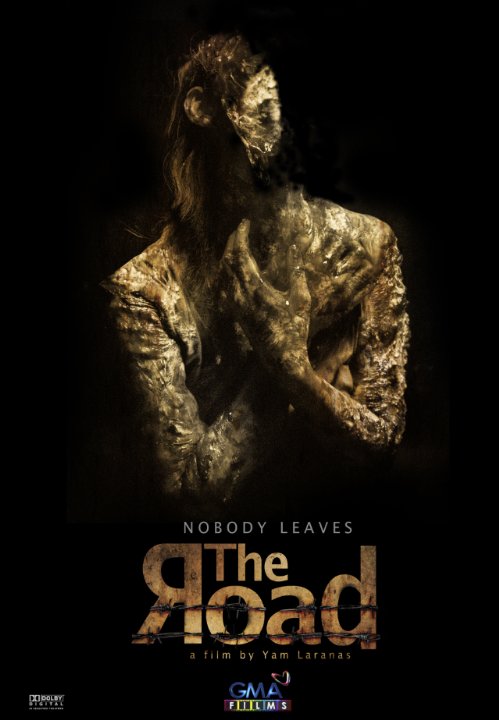
The Road (2011) is a Filipino psychological horror directed by Yam Laranas. It is a non-sequential ghost story which concerns a number of deaths along a remote road, taking the viewer from 2008 to 1998 and finally to 1988, essentially telling a Norman Bates-style tale in reverse. This makes for some interesting storytelling techniques, such as revealing the origins of ghosts as the film goes on, and it succeeds in displaying some nice cinematography and some genuinely creepy imagery.
Unfortunately, whatever dread is conjured is regularly dispelled by awkward editing, two-dimensional characters, and a chronology that can become confusing. This isn’t helped by failure of basic math, for in the opening scenes, which take place in 2008, we learn of a twelve-year-old cold case file of two girls who went missing in 1998. Read that last sentence again – those years are correct, there isn’t a typo. Suspense is lost as the film continues, and is lost entirely in a highly improbable twist ending that viewers will not only see coming, but will be left scratching their heads at just how they’re supposed to swallow what the filmmaker tried feeding them.
The Road is a film with great elements that never coalesce into a satisfying whole. Sure, the scenery is nice, but the potholes make for a rough ride.
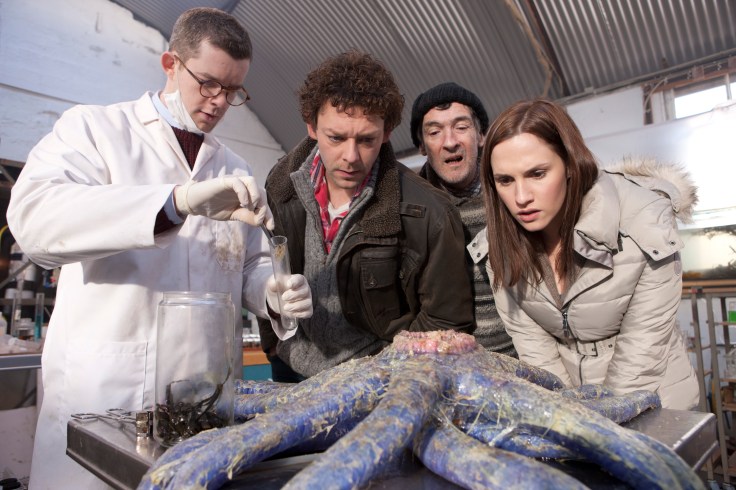
2012’s comedy-horror Grabbers is, I believe, Ireland’s first ever monster movie. Directed by Jon Wright and written by Kevin Lehane, the film centers around an alcoholic cop and his new workaholic partner as the two battle alien sea creatures while, as is the way with such movies, recognizing a romance budding between them. They learn that the largely aquatic monsters, who need only water and blood to survive, are poisoned by the toxicity of alcohol in the blood-stream. They thus devise a plan to get the town shitfaced in a pub in order to survive a rain-drenched stormy night. Much of the comedy, naturally, revolves around the protagonists trying to function and defend themselves while fighting through the copious amounts of booze they’ve ingested.
Grabbers showcases stunning cinematography, capturing much of Ireland’s natural beauty, and impressive CGI creature effects. The creature designs pay homage to the face-huggers in 1979’s Alien. In terms of both tone and comedic set pieces, the film owes a lot to earlier movies of a similar vein, especially 1990’s Tremors, but also 2004’s Shaun of the Dead. If you enjoyed those two movies, Grabbers easily fits within that niche. The characters are colorful and the actors do a convincing job of acting drunk, having filmed themselves intoxicated and self-studied their own quirks before filming.
Grabbers is funny, though not hilarious and while it’s got some great creature moments, it’s not particularly scary. Over all, the film rides a comfortable line between humor and horror but as I watched I kept hoping that it would stray further into either territory to really give me something to remember. It never does, and while it’s a thoroughly enjoyable film there’s not enough there to distinguish it to make it truly remarkable. Grabbers is still worth seeking out and perhaps even viewing with some friends and copious amounts of alcohol.
The 2013 documentary Birth of the Living Dead, directed by Rob Kuhns, traces the seminal zombie film Night of the Living Dead (1968) from its modest origins to its eventual cultural influence. Along the way interviews with George Romero and various academics trace the filming process, which was itself pioneering of modern independent cinema, and the context in which it was made and released. It’s eye-opening to realize just how involved the cast was in other aspects of the film and how much they worked to ensure its success.
The film effectively sets the stage for 1968 and persuasively examines why various elements of the film resonated so deeply with contemporary audiences, taking into account such turbulent events as the urban race riots or the media coverage of Vietnam. Focus is especially and rightfully paid to the performance and dignity of Duane Jones as Ben and the impact this character had on African-American viewers at the time.
Birth of the Living Dead is an informative and entertaining documentary that will give fans a deeper appreciation for an already much loved classic horror film. I think it’s a stronger and smarter film than the more popular zombie documentary Doc of the Dead, which released the following year. Be sure to stick around for a post-credit interview with the late Bill Hinzman, the original Cemetery Living Dead.
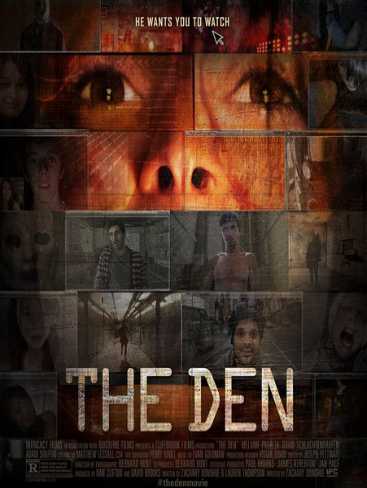
The Den (2013) is the directorial debut of Zachary Donohue. It is a found footage slasher that exploits web-paranoia to an admirably effective degree. Told entirely through web-feeds, computer and phone screens, and security cameras, the story follows a researcher whose grant involves continuous activity through a chat-roulette-like site called, as the title would suggest, The Den. She becomes witness to a murder and is soon being stalked by a killer who uses technology to target her unsuspecting friends and quickly destroy her life.
The Den moves swiftly and provides an inventive premise for a found-footage film – one that would be imitated the following year by 2014’s Unfriended – though aspects of it become increasingly absurd, especially towards the end. I’m admittedly not a technophile and my knowledge of computers is limited, but even I could gather that it’s best not to think too much about the technology on display and how it’s presented. For every effective scare there is one that strains believability. For instance, the killer lures a woman away from her home and plays a lame trick on her only to dump her body back where she started – wouldn’t it have been a better use of time and resources to just kill her in her house?
It leans heavily upon its gimmick, but for the most part that’s enough to see it through. Regardless of its shortcomings, The Den is an entertaining experience that has an energetic, suspenseful finale and will make you think twice before clicking on an unsuspecting link – in case you needed reminding, that is.
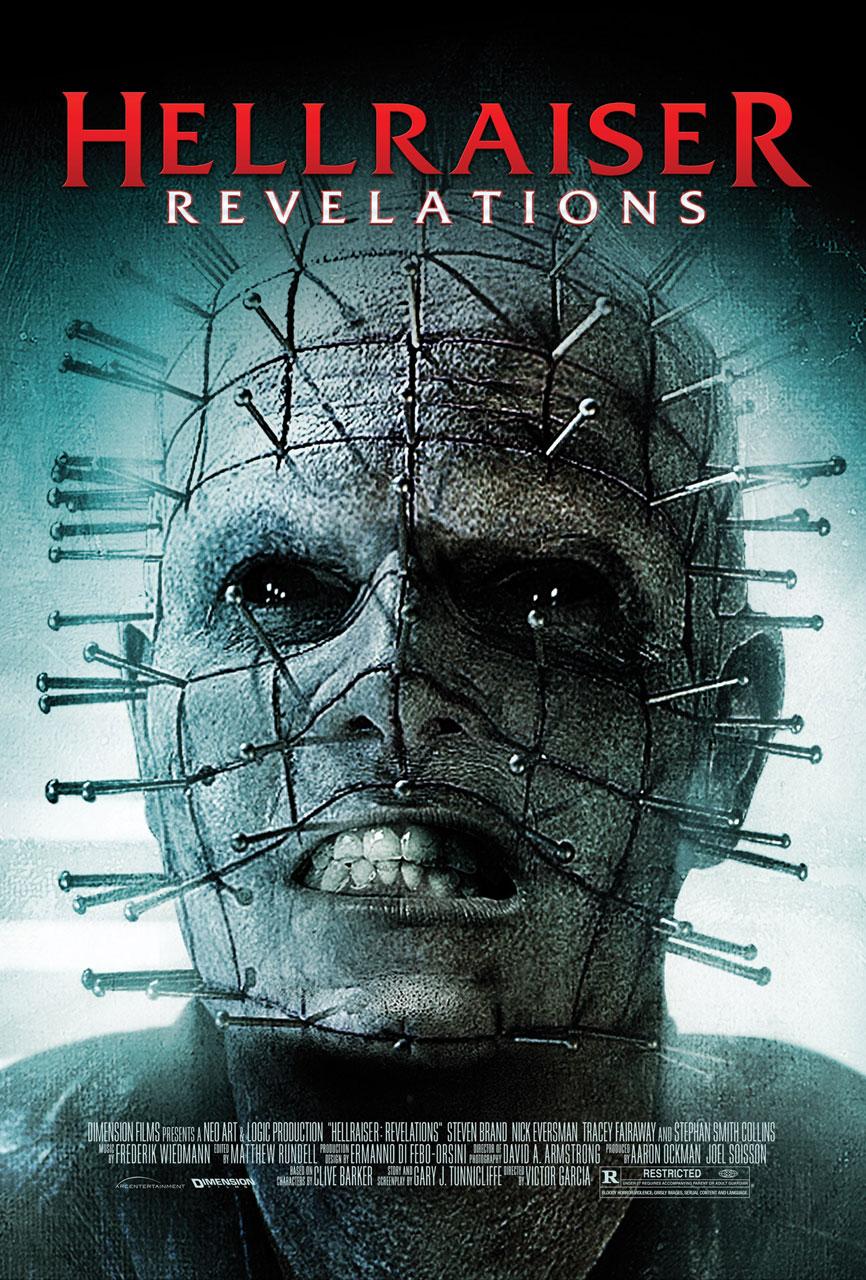
In 2010 Dimension Films had a revelation. They realized that if they did not make another Hellraisersequel fast they would lose the rights to the franchise. Like a procrastinating student cramming an hour before an exam, they quickly threw the ninth Hellraiser film together for a paltry $350,000, filming over just three weeks. Doug Bradley declined to reprise his role as the iconic Pinhead, not submitting to the meager sum which they offered him, and the role went instead to Stephan Smith Collins.
The deck was clearly stacked against this film, and the budget constraints and reckless speed with which it was made are painfully apparent. The sets look cheap, the camerawork is sloppy, the acting is generally poor, the script is weak and the dialogue is stilted, and the story is mostly an unimaginative rehash of the first Hellraiser, with a heavy dose of incomprehensible tropes thrown in (why do their friggin’ cars disappear?). They copy the imagery of Clive Barker’s directorial debut but they don’t fully understand it. Do I need to even mention the families being named Bradley and Craven? Plus, Collins is given the short shrift with fan loathing by not having his voice properly reverbed in post-production, making his delivery sound ridiculous. This is no fault of his own and while the circumstances would have been better served to create a new Cenobite – maybe even another Lament Configuration – had he been given the appropriate treatment his Pinhead would have been passable.
Honestly, this is truly a shame. Revelations is the first Hellraiser movie to be written as an original entry into the series since 1996’s Hellraiser: Bloodline. While it’s a thin rehash of the original film and doesn’t quite understand its source material, it actually comes closest to embracing the themes of the first film. After a victim gets his face ripped off, Pinhead speaks of “pain and pleasure, indivisible.” The characters are once again attracted to the Lament Configuration for its promise of extreme experiences, particularly pleasures.
Had this script gone through more rewrites and been given adequate care, there may have been a decent Hellraiser film in there. Alas, such a film we were not given. Hellraiser:Revelations is a low point, even after the terrible Hellraiser: Hellworld. The mythos which Barker created is still relevant to our era and deserves better.
2014’s Animal, directed by Brett Simmons and produced by Drew Barrymore, is a creature feature whose formula is about as imaginative as the title would suggest – a group of friends go hiking and get attacked by a creature, joining with another group inside an abandoned house before being picked off one by one.
Despite being generic to a fault, Animal still manages to make the most of its obviously limited budget with a decently designed creature and competent direction. The movie looks good and the film provides for some effective jump scares as well as at least one tension-filled scene involving portable two-way radios, no doubt inspired by 1979’s Alien (a film that proves a basic title needn’t necessitate an unoriginal plot). The cast, too, is generally capable: Keke Palmer plays a strong role as Alissa and Paul Iacono as Sean gives a good performance, particularly in a well-acted but ultimately unnecessary scene where his character is cracking under the pressure and wishes to reveal painful secrets before it’s too late. The film tries to create some depth with the characters, which is appreciated, even if it doesn’t always succeed.
Yet it could have been more. We never learn about the lore of the creature, and certain aspects are hinted at but frustratingly undeveloped. For instance, the friends are going hiking to enjoy the forest because it’s going to be cut down in a few years. Then a road is closed due to “forest regeneration,” which suggests that the forest was already cut down and is now being allowed to re-grow. We then get a quick bit of dialogue about how they’re uncertain the trees will be cut down at all. Perhaps there was a conspiracy plot point that was dropped. It’s no matter, because it all goes nowhere.
While Animal doesn’t excel in originality it also doesn’t have much to offend. Unlike its characters it sticks to the well-worn trail and it gets where it needs to in the end, and provides a passably entertaining experience along the way.
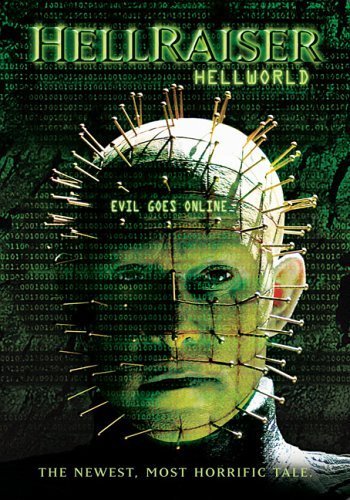
Rick Bota returns to direct his third installment of the Hellraiser series, the eighth in the franchise, Hellraiser: Hellworld (2005), released just three months after his Hellraiser: Deader (2005). Unlike the previous couple of films in the franchise, the script is based not on an unrelated horror spec but on a short story called “Dark Can’t Breathe” by Joel Soisson.
Bota had directed the fan-favorite Hellraiser: Hellseeker (2002) and the almost passable Deader, and all indications pointed to him being able to finally deliver a capable Hellraiser film for his third try. It makes the film’s failure, therefore, all the more painful. The implausible plot follows a group of thinly veiled stereotypes who are also recovering video game compulsives. They once played an online game called Hellword, based upon the Hellraiser universe, until one of their “addicted” friends lit himself on fire. Two years after his death they’ve all been invited to an exclusive Hellworld party at a mansion deep in the woods where they slowly get isolated and picked off. The film is at its heart a teen slasher, though it still manages to still give us the now obligatory it-was-all-a-phsychological-hallucination-until-the-big-reveal-at-the-end franchise sequel formula. Nevertheless, Pinhead (Doug Bradley) is nothing more than a wise-cracking slasher who kills quickly (and at least one time painlessly) whenever a death is needed. That Hellraiser had nothing to do with the original story is clear, but it’s made painfully apparent in the continued misapplication of the mythos by the supposedly obsessive characters: the history is wrong, the Lament Configuration is mispronounced, the Cenobites don’t torture, and after eight films I can tell immediately that when the puzzle box is solved in the film, it’s solved backwards. Really, Bota already made two of these – how do you fuck up the little Hellraiser that’s in the movie that badly?
Unfortunately, Hellraiser isn’t the only thing this film gets wrong. Though released in 2005 its depiction of the internet and gaming world is shown more like Hollywood’s depictions of them in 1995 – as dangerous, almost mystical realms unto themselves. Those who designed the Hellworld game might have known less about gaming than they did about the internet, yet with the video game as a plot device the script shows clear influence from Scream (1996) as it attempts a cringe-worthy meta-analysis through poor dialogue and lame jokes.
Other problems abound. The script can’t keep its characterizations consistent, such as when the anti-social Jake (Christopher Jacot) suddenly becomes a social butterfly just when it’s convenient in the plot to reveal that he’s invisible. Other plot devices either go nowhere or are immediately shown to be nonsensical. For instance, at the party there are masks with numbers on the forehead, and those who wish to partake in anonymous sex can wear them and use cell phones to call the numbers of the people they’re interested in. Except that everybody almost immediately takes off their masks to hit on each other and the whole thing is essentially forgotten. The characters wander alone around the mansion, snooping into places they shouldn’t until it’s convenient to kill them off. For every odd item they uncover a cliché is there to be found. Even the dependable Lance Henriksen, who plays The Host, can’t redeem his corny dialogue.
As a teen slasher Hellword is subpar and as a Hellraiser film it is atrocious. That this was Doug Bradley’s swan song as Pinhead its shortcomings are amplified. As The Host says, “Like a bad horror movie, isn’t it?” Yes it is, Lance, yes it is.














 The Revenant Review