Search

The Revenant Review

Horror Film History, Analysis, and Reviews

Category

Uncategorized

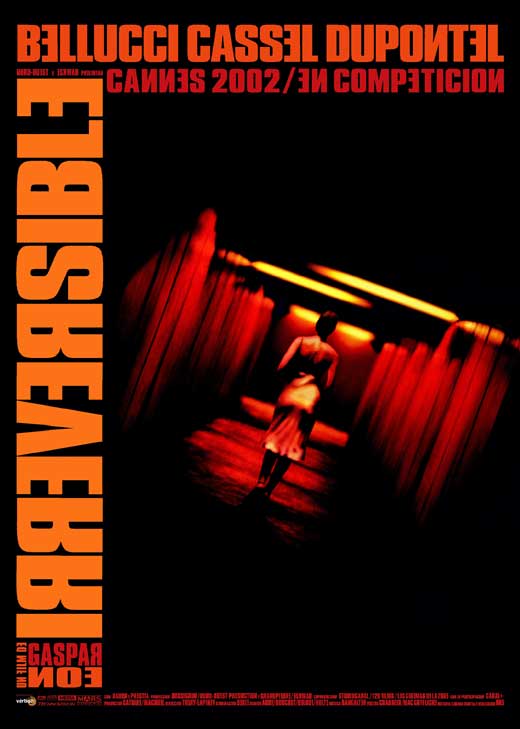
Movie Review – Irréversible (2002)

Movie Review – Irréversible (2002)

Films associated with the New French Extremity movement, by their transgressive nature, evoke strong reactions from viewers, most of which are negative. When 2002’s Irréversible was released at the Cannes Film Festival some fainted and hundreds walked out. Nevertheless it won the top award at the 2002 Stockholm International Film Festival and no less a critic than Roger Ebert, whose distaste for violent horror was generally well-known, gave it a positive review.

Irréversible is a work of body horror which early on shows unfettered perversity with a graphic murder of a man in a night club. Worse still, halfway through there is a minutes long rape and beating of a woman named Alex, played by Monica Bellucci. Throughout most of the film the camera sways and swirls, always moving and floating through walls like a ghost as a dolphin might come up for air. For the first thirty minutes a low hum is heard, designed to inflict nausea on the audience. But during this terrible violation the scene is continuous and the camera is still, locked on the attacker and his victim in each moment of agony. We hear all too clearly the grunts and muffled screams echoed in the red-walled underpass. It dares the viewer to confront the reality of rape by not allowing any means of escape. Like The Last House on the Left (1972) or I Spit on Your Grave (1978), Irréversible is not a film you are supposed to enjoy while watching. It’s a visceral experience that is meant to showcase violence in its true ugliness.

These elements are reason enough for most people to steer clear from this movie. However, for those willing to dig deeper there is an undeniable artistry in this film that moves it beyond gratuitous exploitation. Director Gaspar Noé, Bellucci, and co-star Vincent Cassel conceived of the story together. Only the framework of the tale was completed before filming and the dialogue one hears is almost entirely improvised.

The ever-moving camera, which could easily cause motion-sickness in some, is actually relevant to the narrative structure. The story told is non-linear beginning with the ending and working its way back, much like Christopher Nolan’s Memento (2000). As each scene ends we go back in time to the scene before. In terms of the narrative, the reason is suggested in what is actually the films first chronological scene where Bellucci’s Alex is reading the book An Experiment with Time by John William Dunne. Published in 1927, the book deals with concepts such as precognition and posits that all time is happening now and that past, present, and future are constructs of our mind’s inability to perceive it all at once. Therefore the camera may in fact be the perspective of a time traveler – it may in fact be Alex herself.

But there are artistic reasons for the structure as well. Each scene is given a weight that would not be there otherwise. With the gift of hindsight we see the decisions that the characters make that, while seemingly small in the moment to them, will have profound effects. As Roger Ebert in his review poignantly noted: “To know the future would not be a blessing but a curse. Life would be unlivable without the innocence of our ignorance.” Monica Bellucci is an exquisite woman, but already knowing her fate before seeing her in her silky, body-hugging dress makes her look more vulnerable than attractive. Sex features heavily in the story, and Noé gives us the terribleness of it in the first half, but he leaves us with the love and intimacy of it by the film’s end, if not the story’s. It’s a bit of salve to heal our mental wounds.

Irréversible has been criticized for its perceived homophobia, though Noé has been adamant that this is not the case, even going so far as to himself play a masturbating client in the seedy gay night club. Nevertheless, homosexuality is depicted as largely degenerate. Though I believe this is more to prey on the fears of insecure men who will no doubt be watching the movie, placing them emotionally in the sexually compromised position of all too common female rape victims, it will no doubt be yet another element that will rankle audiences.

The title can be applied many ways to the film, but like the name suggests, Irréversible is a movie you can’t unsee, and it’s not a film most will want to watch a second time. Regardless, it’s an abrasive yet interesting movie that is smartly conceived and manages to say something valuable about the human experience.

Grade: C+
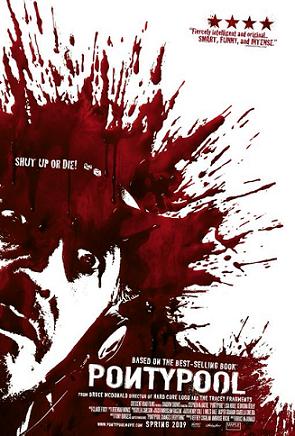
Movie Review – Pontypool (2008)

Movie Review – Pontypool (2008)

“Pontypool. Pontypool. Panty pool. Pont de Flaque. What does it mean?… In the wake of huge events, after them and before them, physical details they spasm for a moment; they sort of unlock and when they come back into focus they suddenly coincide in a weird way. Street names and birthdates and middle names, all kind of superfluous things appear related to each other. It’s a ripple effect. So, what does it mean? Well… it means something’s going to happen. Something big. But then, something’s always about to happen.”

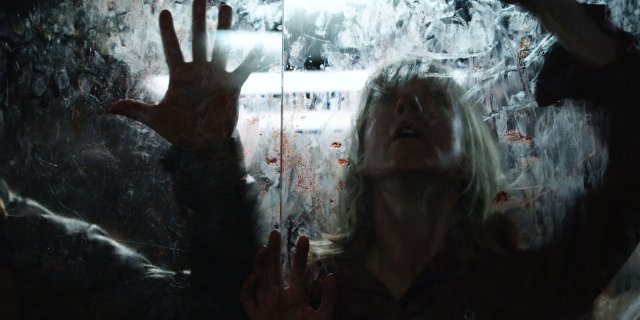
Pontypool (2008) is a Canadian horror film written by Tony Burgess, adapted from his novel Pontypool Changes Everything, and directed by Bruce McDonald. Inspired by Orson Wells’ 1938 “The War of the Worlds” radio broadcast, which infamously caused (likely overstated) panic in its unsuspecting audience, Burgess’s story was produced as both a feature film and as a radio play. A fresh take on the zombie narrative, the movie takes place almost entirely in a make-shift radio station during a snow storm, as a recently fired shock jock tries to adjust to his new gig as a small town disc jockey. Played perfectly by Stephen McHattie, Grant Mazzy is gruff and resentful toward his perceived demotion, but has such a mastery of linguistics due to his job that as the virus spreads via language (specifically English) words for him have become already so malleable as to be meaningless that he alone can keep a clear head. His producer, Syndey, is played by Lisa Houle (McHattie’s wife). We see little of the horror but rather hear it through phone calls and broadcasts, and we have to piece together the puzzle along with the characters.

Pontypool still 2008

Unlike many other Canadian horror movies, Pontypool wears its maple stains clearly on its sleeve and pulls its narratives from that country’s unique experiences. We see themes of language duality in a country with two official languages and of the perceived disparate statuses that both languages appear to hold. The three main characters we see, residents of Ontario, are Anglophones whose knowledge of French is meager. We here of French separatists and a radio transmission which seeks to save only those who can understand French.

The film plays heavily with the notion that truth is subjective. Throughout the first half of the film the characters cannot determine if what they’re hearing is real, a hoax, or a misunderstanding. They’re reluctant to take things at face value, as they’re largely in the business of illusion. Their traffic reporter’s “Sunshine Chopper” is actually a van on a hill. Sydney knows the small town’s secrets but helps to keep up the appearance of normalcy. Words, too, are given deep examination. Their meanings can have profound effects on us, and as Mazzy demonstrates, sometimes talking – taking the diplomatic approach – can be more effectual than physical force.

Pontypool is one of those “bottle movies” – predominately taking place in a single location – for which I have a great fondness (other examples include Twelve Angry Men, Rear Window, Rope, The Breakfast Club, The Mist, etc.). It allows the actors to really use the space and allows the audience to concentrate on their performances. Pontypool is a quiet but still effective horror film with enough humor to keep things fun and fresh.

“I’m still here, you cocksuckers.”

Grade: B+

Movie Review – The Dunwich Horror (1970)

Movie Review – The Dunwich Horror (1970)

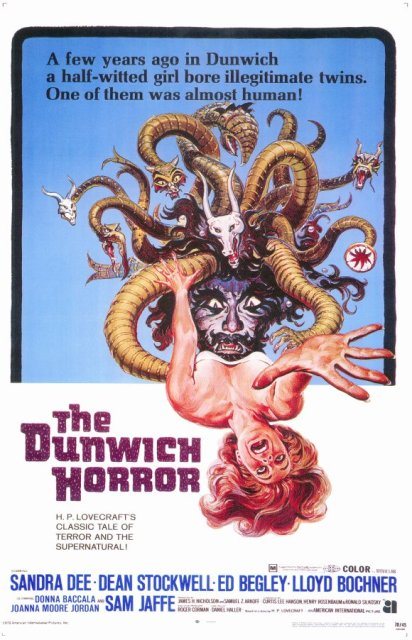
In the 1950s Daniel Haller met low-budget horror producer-extraordinaire Roger Corman who persuaded him to become an art director for his pictures throughout the 1960s. In 1965 he tried his hand at directing and made Die, Monster, Die! for American International Pictures, a very early adaptation of an H.P. Lovecraft story. In 1970 he returned to the genre to make another Lovecraft adaptation, The Dunwich Horror.

The Dunwich Horror is a B-movie starring Dean Stockwell as the occultist Wilbur Whateley, who steals the Necronomicon from Dr. Henry Armitage, played by Ed Begley in his last film role – he died of a heart attack three months after the movie was released. Whateley deceives and draws under his influence Nancy Wagner – played by Sandra Dee in a role that sheds her squeaky clean teen image – who he plans to use as a vessel to summon the Old Ones.

The film reflects the fascination with the occult that was being experienced at the time. The 1960s were a time of turbulence and upheaval, and the combination of a society that felt like it was perhaps seeing the end of their civilization with hippie counterculture, whose “Dawning of the Age of Aquarius” suggested pre-Christian models for living, meant a mixture of occult and witchcraft in popular media. No movie embodied this more than the classic Rosemary’s Baby, released in 1968, and the seduction and dreamlike rituals to which Nancy succumbs are very much reminiscent of that film’s rape scene.

The Dunwich Horror is a low-budget affair that can move at a snail’s pace, though it gets creative with its limitations through point-of-view attacks by the supernatural creature in the woods, relying on sounds and colors to signify the assaults. The camera moving through the woods is a technique Sam Raimi would adopt in The Evil Dead (1981). Nevertheless, the movie has not aged nearly as well as some of its contemporaries, such as the previously mentioned Rosemary’s Baby. The ending is especially awkward and the actors appear confused as to the actions which they are meaning to convey.

Haller would turn to television the following year, having a fairly successful run up through the 1980s. The Dunwich Horror is interesting as a curio of its era, but there is not a lot that will whet the appetites for modern horror fans.

Grade: D

Movie Review – Bedevilled (2010)

Movie Review – Bedevilled (2010)

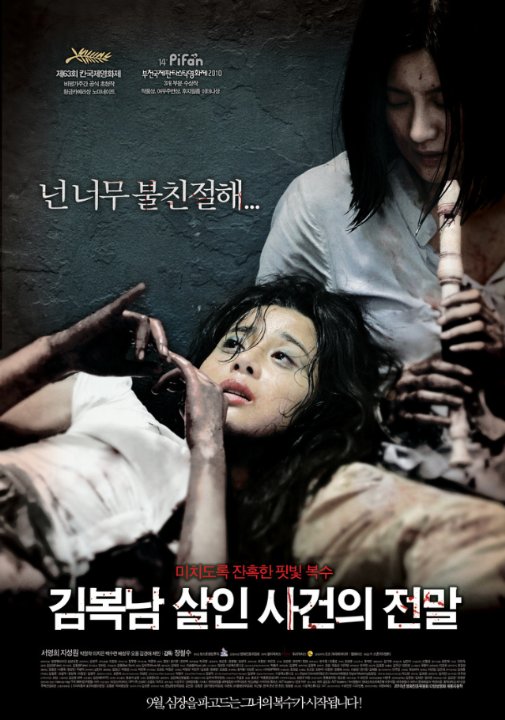
2010’s Bedevilled, the feature directorial debut of Jang Cheol-soo, is a South Korean horror film which won numerous awards upon its release. It stars Seo Young-hee in a terrific performance as Kim Bok-nam, a woman living in a small community on an under-developed island who is treated as little more than a slave by those around her. Her husband beats her, his brother rapes her, and the old women of the island glorify these men and heap mental hardship upon her, bullying her into submission and exhausting her with the most physically demanding chores. They’ve all conformed to a cruel pack-mentality which I wish I could say is unrealistic.

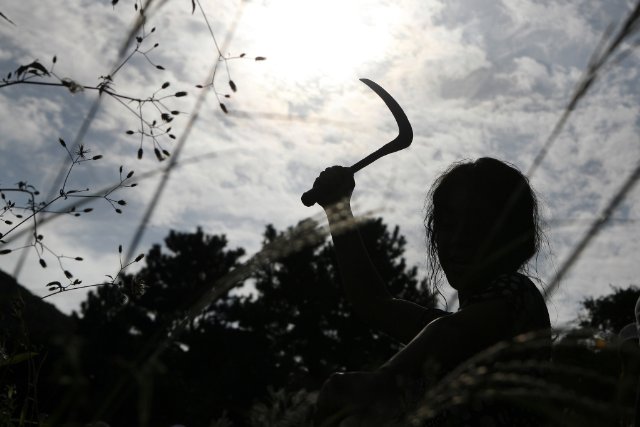
There are two strings of hope upon which Bok-nam tentatively grasps, the first being the 15-year-old promise of a childhood friend, Hae-won (Ji Sung-won), to bring her to Seoul but who has been ignoring her letters for years and who has now returned for a short stay. The second is the well-being of her young daughter who she begins to suspect is being sexually abused by her husband. When she resolves to escape with her daughter things go from difficult to unbearable, and Bok-nam’s sanity is pushed to the limits, at the end of which is a blood-soaked sickle.

Bedevilled 2010 still

It’s difficult to watch Bok-nam’s abuse, which never seems to be in a hurry to be done with, and the movie moves at a glacial pace. This is all as it should be, given the gravity of the torment. Nevertheless, Cheol-soo’s direction, the cinematography, and especially Young-hee’s performance make for an eminently watchable experience. The sexual abuse, while shown, never devolves into exploitation. The script is more than a straightforward I Spit on Your Grave (1978) woman-scorned-style rehash, but is interwoven with its own symbolism and some deep psychological character study. It’s not just male misogyny that is to blame, but female indifference or acceptance of it as well. In particular, Bok-nam’s relationship and history with Hae-won is slowly revealed, and we come to understand both women in unsettling ways to the extent that, when Bok-nam turns to stalking Hae-won, we aren’t sure who we should be rooting for. For their part, they seem unsure as well.

Bedevilled, which is also known by the English translation of its Korean title, The Whole Story of the Kim Bok-nam Murder Case, is raw in its violence, but also in its emotion – a rare combination, unfortunately – and it is one of the best of its kind in the “Day of the Woman” revenge subgenre.

Grade: B+

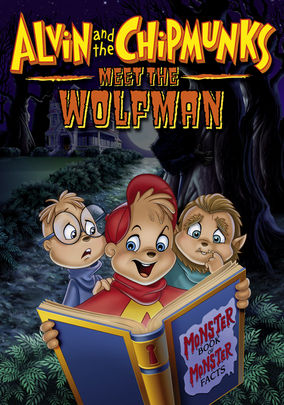
DADDY DREADFUL – Alvin and the Chipmunks Meet the Wolfman (2000)

This review is part of the Daddy Dreadful review series.

Daddy Dreadful Review – Alvin and the Chipmunks Meet the Wolfman (2000)

As I wrote in my review for Alvin and Chipmunks Meet Frankenstein (1999), the Chipmunks were a staple of my 80s childhood and the two comedy-horror direct-to-video films put out by Universal in 1999 and 2000 are the last appearances of that incarnation of “the boys”. In their first film I mostly enjoyed their antics with Frankenstein but found the experience generally uneven and unfocused. Nevertheless, I was interested to see what they would come up with in their meeting with the Wolfman.

After the film was over I still had a smile playing on my face. Alvin and the Chipmunks Meet the Wolfman (2000) has a lot for horror fans to enjoy. The script is funny and smart – it had me laughing aloud several times – and it shows knowledge of and respect for the genre. Those who know the classic Universal monsters will pick up on the names, references, and visuals used throughout the movie. Additionally, like the werewolf and Jekyll/Hyde movies that came before, the dual nature of man is the theme, reflected in the timid Theodore discovering through lycanthropy that he has other sides to himself. Whereas the previous movie derived its humor from Hollywood clichés and jokes about celebrity, this time the writers looked directly to the horror genre for inspiration and managed to mine some gold. The music, also, is of the top-quality Chipmunk variety.

My son enjoyed the film, especially the songs, but the feature-length run-time left his attention straying towards the second half. Of course, the more nuanced elements went right over his head. However, my interest never wavered. Whereas Alvin and the Chipmunks Meet Frankenstein felt disjointed and unpolished, Alvin and the Chipmunks Meet the Wolfman truly feels like a squeaky-voiced love letter to the genre’s early film history. Perhaps due to this, the horror elements may be strong for more sensitive young children, but they’ll certainly keep their parents’ attention.

Recommended Age: 5+
Final Thoughts: Strong recommendation, especially for Universal monster fans. Kids passed the toddler stage will likely have the attention span to follow the plot without difficulty.

DADDY DREADFUL – Alvin and the Chipmunks Meet Frankenstein (1999)

This review is part of the Daddy Dreadful review series.

Daddy Dreadful Review – Alvin and the Chipmunks Meet Frankenstein (1999)

As a very young kid I cherished two albums in my slim vinyl collection above all others: The Best of The Monkees and 1982’s Chipmunk Rock, which just so happened to have the first mention of the Chipettes. Beginning in the mid-1980s Alvin and the Chipmunks became a regular part of my Saturday-morning cartoon line-up. Naturally, as I got older I stopped following the squeaky-voiced trio but managed to somehow see the 2007 live-action movie on television and wasn’t at all impressed. I was unaware until recently of the two horror-comedy direct-to-video movies that were put out by Universal in 1999 and 2000, and which effectively showcased the last appearances of the 1980s version of the Chipmunks that I grew up with – characters with a surprising amount of depth which was unfortunately lost in their later re-imagining.

Universal’s first release was Alvin and the Chipmunks Meet Frankenstein (1999) which sees the trio performing at an amusement park which is an obvious stand-in for Universal Studios. The park unwittingly hires the real Dr. Frankenstein and his creation at first runs amok but eventually befriends the Chipmunks. The angry mad scientist tries to get revenge on the boys and antics ensue.

My son cracked up at the slap-stick humor but from an adult perspective the overall film is disjointed – it feels like three different movies were crammed into one, especially when Alvin is transformed into a Looney Tunes-style cartoon and Frankenstein’s creature is all but forgotten for a large portion of the film. The story has a tendency to lose focus and go on long tangents and some of the humor feels like Hollywood in-jokes that don’t translate terribly well to a general audience. It has its moments and the songs are decent, but parents will likely find their attention tried even as their kids are having a blast watching the movie. In my opinion, the following year’s Alvin and the Chipmunks Meet the Wolfman (2000) is the superior film.

Recommended Age: 3+
Final Thoughts: Innocent fun and catchy Chipmunk music. Recommended for the kids.

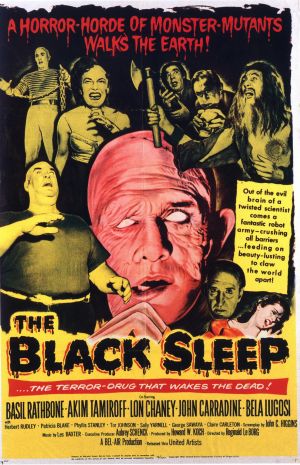
Movie Review – The Black Sleep (1956)

Movie Review – The Black Sleep (1956)

1956’s The Black Sleep feels more like a 1940s Gothic monster mash than most of its contemporary films. Directed by Reginald Le Borg, who was known for his low-budget horrors from the 1940s, the film features an all-star cast of genre greats.

Basil Rathbone plays Sir Joel Cadman who puts victims into a death-like coma and operates on their brains. Rathbone is best remembered for his turns as Sherlock Holmes throughout the 1940s but found fame in various genres. Lon Chaney, Jr. (1941’s The Wolf Man) and Bela Lugosi (1931’s Dracula) once again reunite. They had been featured in movies together many times and this, unfortunately, would be Lugosi’s last feature film role – one in which he does not even have a speaking part. Lugosi’s career sputtered through the 1940s and 50s, being relegated to bit parts in poverty-row horror movies, and he would die the year of this movie’s release, being buried in his Dracula cape.

John Carradine, who took over Lugosi’s role of the Count in House of Frankenstein (1944) and House of Dracula (1945), has a small part. The bald, hulking Swedish wrestler and micro-budget horror actor extraordinaire Tor Johnson also stars, looking much like he would in Ed Wood’s Plan 9 from Outer Space (1959) and 1961’s The Beast of Yucca Flats, which even for schlock fans can be a test of endurance.

The Black Sleep takes its time and can occasionally lull, though Rathbone’s magnetic presence draws the audience in and makes even the most dialogue-heavy scenes engaging. The viewer feels his absence from the screen like an uncomfortable draft, save for Akim Tamaroff’s scene as Udu the Gypsy where he seduces a vain woman to her own demise. The finale, however, is entertaining, as it can only be when a woman is running through the halls with her back aflame.

Grade: C

Movie Review – Entity (2012)

Movie Review – Entity (2012)

Entity (2012) is a British supernatural tale written and directed by Steve Stone that mixes found-footage with more traditional, albeit hand-held camera work. Taking place in Siberia (though filmed in Northern England), it tells of a reality television show that investigates a location where authorities had found the bodies of dozens of unidentified people out in the wilderness. Accompanied by a medium, they soon find an abandoned government facility which houses disturbed and bitter spirits.

The film has capable performances and generates an effectively somber, unsettling mood. With a modest budget, the movie makes the most of its location. Nevertheless, it offers nothing new, has a predictable ending, and while I generally enjoy what is often described as “slow burn,” the pacing here is overly slow and we lose the urgency that we should be feeling from the characters. Speaking of these characters, those slow moments could have been filled with a bit more dialogue or something to give greater insight into them, but we really only learn about one of them. We know nothing of the others’ pasts and therefore have little from which to generate sympathy.

Entity has a few choice moments, but they don’t congeal to make a worthwhile viewing experience. It succeeds in creating a creepy atmosphere but does not provide enough story to justify it.

Grade: C-

Movie Review – Frontier(s) (2007)

Movie Review – Frontier(s) (2007)

Writer-director Xavier Gens’s Frontier(s) (2007) is a French amalgam of The Texas Chainsaw Massacre (1974), Hostel (2005), and The Hills Have Eyes remake (2006). It is another European offering in the extreme gore subset, and though it is not a subgenre I generally gravitate toward, I was pleasantly surprised at how much I enjoyed it. It was originally meant to be a part of 2007’s Horrorfest but was pulled due to receiving an NC-17 rating from the MPAA for its graphic violence.

Set in the future of a right-wing takeover amidst civil unrest, four outlaws try to flee the country – the main character, Yasmina, doing so mainly to receive an abortion so her child will not be born into “this type of world.” This setting may at first seem rather unnecessary and contrived until the nature of the murderous family they encounter is revealed, in their deadly splendor, as Nazis. To make sense of this, one must take into account France’s history as well as the destructive riots that occurred in Paris back in 2005, which resulted from high youth unemployment and the failure of French society to integrate its immigrant population. One of our protagonists is a Muslim, which is certainly significant. The movie stakes itself as a morbid morality tale about the dangers of fascism and intolerance, with the murderous Von Geisler family serving as the horrifying culmination of both. Whether this metaphor succeeds or not is debatable. Nevertheless, it does offer an interesting layer to ample amounts of blood that splatter seemingly every frame in the second half of the film.

Maud Forget and Karina Testa in Frontier(s).

Yasmina and her friends are subjected to unspeakable torture via eugenics and cannibalism. This is not merely a torture flick, however, it is also a revenge one, and the best gore is reserved for the dispensing of the Nazis. A scene with a table saw, though predictable, is nonetheless incredibly satisfying.

Truly, if one were to simply read the script the film would sound awfully hokey, but a talented and well-chosen cast brings the characters and dialogue to life. The deformed daughter and mother to the subterranean mine children, especially, is a presence that captures one’s attention and sympathy. Despite some poor cinematography, the film succeeds. In the wrong hands, Frontier(s) could indeed have easily been terrible, but it manages to be an entertaining ride despite some of its narrative shortcomings.

Grade: B-

Blog at WordPress.com.

Up ↑