Search

The Revenant Review

Horror Film History, Analysis, and Reviews

Tag

Horror

Movie Review – Witching & Bitching (2013)

Movie Review – Witching & Bitching (2013)

2013’s Witching & Bitching, known in Spain as Las brujas de Zugarramurdi, is a horror-comedy co-written and directed by Álex de la Iglesia. José and Tony are two dimwitted, misogynistic men who rob a pawn shop at Madrid’s Puerta del Sol with José’s young son in tow. In their escape they kidnap a taxi driver and the three men bond over their grievances with women, who they claim have emasculated them and broken them down little by little. Unluckily for them, they become the target of a coven of man-hating witches who want José’s son for a sacrifice.

The film is light-hearted and energetically shot, never taking itself too seriously, and succeeds in creating a distinct visual style. Some scenes are genuinely funny and the gross-out humor is used effectively. The characters are colorful if not fully fleshed out, the result of a fairly thin plot that is stretched to its limits. Really, not a great deal happens in this film, and the middle of the movie is mostly the guys running from wall-climbing witches throughout the corridors of a huge Gothic mansion. There is also a love subplot that is terribly forced and entirely unbelievable.

The misogyny of the men is cartoonish and meant to be satire; however, the film never does the job of convincing the viewer that it does not ultimately hold their view. All but one of the females in the film, and there are many, are manipulative, misandrist, evil creatures with no redeeming values. The men may be buffoonish, but they are the clear victims in this battle of the sexes. The only woman to be by the end considered a heroine is still depicted as emotionally unstable and needlessly violent. It’s a message that can’t be shaken after watching the film, and it can’t help but taint one’s perspective of the movie as a whole. The English title doesn’t help matters.

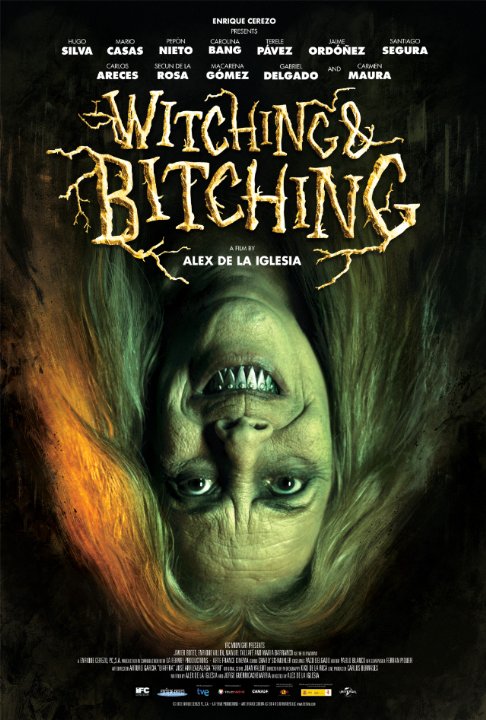
Despite this problem, Witching & Bitching is enough of an entertaining ride that most viewers will likely enjoy it regardless. After all, it won the most awards at the 28th Goya Awards, which honored the best Spanish films of 2013. Admittedly, there are things to admire the audacity of, such as a giant Venus of Willendorf walking around like the Stay Puft Marshmallow Man. That’s something you don’t unsee.

Grade: C

Movie Review – Antiviral (2012)

Movie Review – Antiviral (2012)

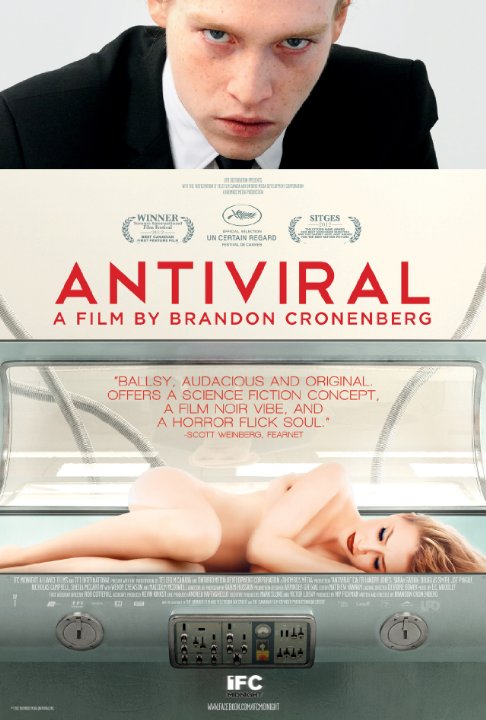
For genre fans, the name Cronenberg is synonymous with body horror, tales where the body betrays the host through disease, deformity or ethical reasoning. David Cronenberg perfected the style, especially in films like 1986’s remake of The Fly. So it was with great anticipation that I watched his son’s debut film, 2012’s Antiviral. Brandon Cronenberg shows us a near future in which celebrity worship has gone to extremes, where obsessed fans pay huge money to be infected with their favorite stars’ diseases. As the movie progresses, like a true pox, the obsession grows deeper and more distasteful.

Cronenberg fills his beautiful shots with white sterile spaces, making the blood stand out when it is introduced. We see many shots of needles piercing arms and the main character, played effectively by Caleb Landry Jones, growing weaker as his body is overtaken by infection. We’re never truly sure how much he buys into the celebrity obsession until the final scene. The script is smart and the younger Cronenberg has shown that he is a worthy successor, and not simply a duplicate, of his father. The direction shows a confidence and clear vision that is the work of a promising filmmaker. Where Antiviral is lacking is largely in character development. We never learn much about the characters, and they generally serve as tools to move the plot along rather than to take on lives of their own.

Antiviral 2012 still

Regardless, the movie is thought provoking and serves as a disturbing metaphor for the lengths to which people will go to fill their lives with meaning. They live vicariously through the famous, no longer searching for meaning in their own lives, no longer looking within for answers and direction. At one point an accomplished doctor says he’s always regarded belief in God as infantile, but expounds the meaning he’s found in grafting celebrity skin onto himself, effectively replacing one deity with another, the former which is invisible and esoteric, the latter which he can physically see and caress. It’s not enough for people to admire celebrities: they must own them, consume them, and dominate them. It’s celebrity worship heightened to zealotry and frightening fetishism. It’s a sickening vision, and one that someone is not likely to forget the next time they pass the tabloids in the supermarket or their channel surfing pauses on E! Entertainment.

Grade: B-

Movie Review – Zombie Lake (1981)

Movie Review – Zombie Lake (1981)

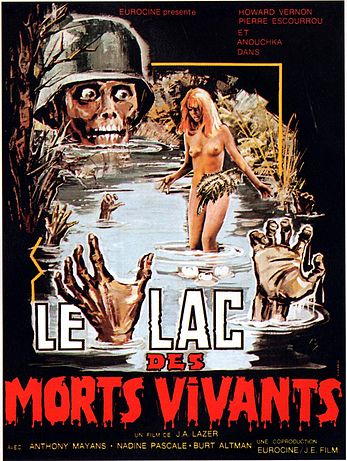
French director Jean Rollin had made a name for himself in the 1970s as a maker of low budget fantastique movies such as The Rape of the Vampire (1968), and The Nude Vampire (1969), and for directing sexual exploitation films and pornos under various pseudonyms. When production company Eurociné’s scheduled director for Zombie Lake (1981) walked off, they called upon Rollin on short notice to try to salvage the project. This, perhaps, only partly explains why the movie turned out so poorly. Behold, amateur hour.

Known in France as Le lac des morts vivants, Zombie Lake is almost unwatchable if not for the bevy of beautiful nude women who were somehow persuaded to appear in the film. The story involves a small French village which during WWII had ambushed and killed a group of Nazis and tossed their bodies into a local “lake” (which is actually a muddy pond). They place a sign that warns against disturbing the water, but a buxom skinny dipper disregards this ill omen and is dragged down by zombie Nazis (which are actually men in atrocious green makeup). These reanimated fascists then repeatedly go into town, by some amazing coincidences find nude or scantily clad females, and inexplicably overpower everyone they meet with their slow, lumbering movements. There’s another subplot involving a Nazi’s daughter, but who really cares at this point?

The laziness of the movie can make one’s eyes glaze over. We find out that the story is supposed to take place in the 1950s despite there being no effort to make it look like anything other than 1980, when filming occurred. The acting is, well, not to be found here. The action appears done in single awkward takes and the sound quality, too, is terrible. Even Rollin was embarrassed by the film, and for years afterward refused to acknowledge he had had any hand in it. For a more competent Rollin film, which mixes sexuality and horror more effectively, see 1979’s Fascination.

Is there anything worth seeing in this film? That answer is simple: nude women, full frontal. I’m at a stage in life where that doesn’t do much to keep my interest. However, the younger, budding pubescent me would have loved to have gotten his hands on a VHS copy of this movie. Unfortunately, I’m a few decades too late, but for that insatiable horndog, I’ll give the film a…

Grade: D-

Movie Review – Starry Eyes (2014)

Movie Review – Starry Eyes (2014)

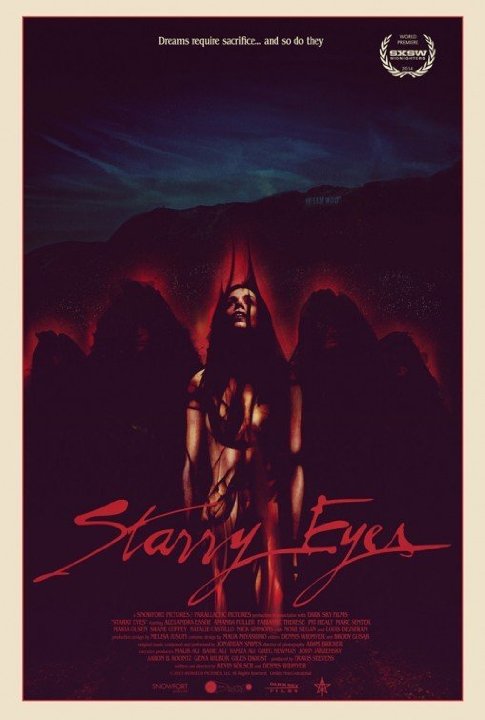
Starry Eyes (2014), written and directed by Kevin Kölsch and Dennis Widmyer, was partially funded by Kickstarter and made a big splash at film festivals in 2014. The film follows Sarah, played by a very talented Alex Essoe, whose desperation to become a Hollywood starlet leads her to the influence of movie studio Satanists and a dark, especially gory transformation. We meet her as she teeters on the edge, having fits of self-loathing anger and yanking her hair out, and follow her down as she falls ever deeper.

Starry Eyes is well-cast and displays some impressive cinematography, and has an electronic score that is reminiscent of John Carpenter. There is a lot to admire about the film, particularly its striking visuals and its use of metaphor. Sarah’s transformation is itself a metaphor for the ugliness of Hollywood made flesh. As her occultist producer tells her, “Ambition: the blackest of human desires. Everyone has it, but how many act on it?” He goes on to say, “This industry is a plague, Sarah. A plague of unoriginality, hollow be thy name. Yes, it’s a plague all right… You cut through the fog of this town and you get desperation, plastic parishioners worshiping their deity of debauchery. But that’s what I find interesting, Sarah. That’s what I want to capture in this film – the ugliness of the human spirit… This world is about the doers, the people who don’t just talk about what they’re going to do, they just do it! And that’s you.” This speech is key to understanding the changes in Sarah that come after, especially in how she views the mostly supportive friends which surround her. She is told that if she wants to succeed she must kill her old life and be reborn, not realizing yet just how literal this recipe is. The film takes a graphic, brutal turn in the final act, which employs some very impressive practical effects.

Starry Eyes 2014 still

The film as a whole is strong, though some aspects could have been better represented to strengthen it further. The influence of 1960s and 70s Satanist films, seen clearly in the design of the opening title as well as in various plot points, is underutilized. Sarah’s physical transformation, while compelling to watch, stalls the storyline instead of invigorating it. Also, we never really sympathize with her, our central character. We also don’t get to know the friends that surround her and how far back their connection with her goes, so when the story takes a dark turn towards them we’re left to simply marvel at the gore instead of feel emotionally affected. Also, we never see the filmmaking process even though it’s widely referenced – or do we? It’s difficult to discern if Sarah is preparing for a role or already starring in it, or both. Admittedly, this last point may not entirely be a weakness.

Starry Eyes has many strengths and its perceived weaknesses are likely to be more subjective to the individual viewer. It is certainly good filmmaking which comments effectively on the underbelly of its own industry, and it should undoubtedly be praised for that.

Grade: B-

Movie Review – Madhouse (1974)

Movie Review – Madhouse (1974)

Madhouse (1974) is a collaboration between American International Pictures, whose horror films were often recognized by their vibrant colors and odd lenses and angles, and Britain’s Amicus Productions, which specialized in contemporary horror (leaving Hammer to pursue the period Gothic). Directed by Jim Clark, the film features two of horror’s giants, Vincent Price as Paul Toombes and Peter Cushing as Hebert Flay. In addition, Robert Quarry stars as Oliver Quayle, who played the titular Count Yorga, Vampire (1970), and is at one point seen at a costume party looking very much like the count (Peter Cushing is also seen in a vampire costume as an ironic nod to his portrayal as Van Helsing in Hammer’s 1958 Horror of Dracula). Quarry was originally set to succeed Price as AIP’s main horror star, but the declining favor of period Gothic films meant that this never came to fruition. Adrienne Corri nearly steals the show as the damaged and creepy Faye, who resides in Herbert’s basement with her spiders, which she calls her “babies.”

The plot of Madhouse is intriguing in its conception, but largely frustrating in its execution. We meet horror icon Paul Toombes at a party where he announces his engagement to the much younger Helen, who he then finds out from Quayle had previously done adult films. He reacts expectedly poorly to this news and Helen retreats to her room where she meets a masked killer. Toombes goes up to her room to apologize, only to have her head fall off and to have Price give a priceless reactionary scream. Placed into a mental asylum, Toombes is released and asked by his friend Herbert Flay to revive his popular role as Doctor Death for a new film. Of course, more bodies start piling up and Toombes goes between fits of declaring his innocence to suspecting that perhaps he is the one to blame.

The first half of the film is actually quite strong. The plot is clear and the kills are stylistic. However, by the second half the narrative becomes jumbled and unbelievable. There were inklings of a great premise, promising psychological complexity, which ultimately becomes too bogged down in literalism. The film’s unimaginative commitment to have everything on screen taken at face value ultimately stilts the experience and strains the audience’s ability to suspend disbelief. More examination of alternate perspectives and of our faulty notions of reality would have quickly compelled this movie into another league. Heavily influenced by Italian giallo films, the literalism creates far too many plot holes, not the least of which is that the person who is revealed to be the killer is very clearly in a different place when one of the killings is being committed. With a more psychologically nuanced script, what comes off as campy and uncontrolled would quickly become creepy and compelling.

All this is not to say that Madhouse is not an entertaining film. Seeing Vincent Price and Peter Cushing sharing the screen is reason enough to watch and derive enjoyment from it. This would be the last AIP film for Price, and the movie is in many ways a goodbye love-letter to Price celebrating his horror career with them. We see clips of Price’s earlier AIP movies throughout the film, played as clips of Toombes’s Doctor Death films (this also accounts for the odd opening credits which read: “With special participation by Boris Karloff [and] Basil Rathbone,” both of whom were dead by this time but who appear in the film clips). Also, the song heard over the end credits is sung by Price.

Fans of Price and Cushing will have plenty to keep themselves entertained throughout Madhouse, even if it is not an especially good film, despite its potential to be so.

Grade: C

Movie Review – It Follows (2014)

Movie Review – It Follows (2014)

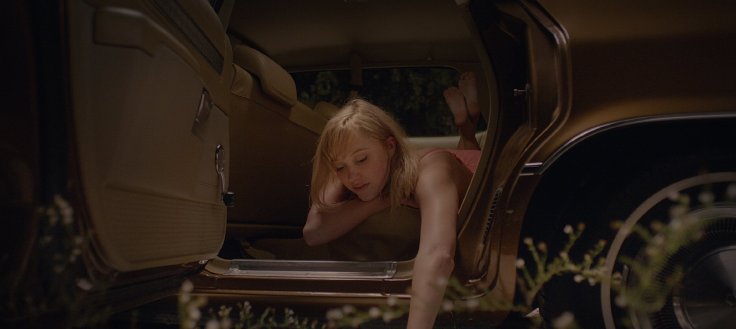
David Robert Mitchell’s second film, It Follows, inspired by a recurring nightmare which the filmmaker experienced, made a big splash with both fans and critics when it was released in early 2015. Filmed in the Detroit area, the movie follows Jay (Maika Monroe), a teenage girl experiencing sexual awakening who contracts a supernatural sexually transmitted disease. The boy who gives it to her, Hugh (Jake Weary), informs her that the entity will follow her wherever she goes, always walking slowly toward her, and if it reaches her will kill her. It can appear as a stranger or someone she knows. All she can do to save herself is pass it on to another. On the bare surface, the film appears like a teen’s cautionary tale about sex, and the complete lack of prophylactics would support that reading, but like a real STD there appears to be more going on beneath the surface.

Horror films, especially slashers, are often described as inherently moralistic cautionary tales. Teens are butchered for sexual and chemically-induced transgressions, and the slasher is God’s wrathful hand. However, I feel this misunderstands the purpose of horror and misinterprets its methods. Horror doesn’t seek to instill new fears into viewers, but rather to examine and exploit those already present, if sometimes unrecognized. It doesn’t say “don’t do this or this will happen,” but rather “here’s where your fears and insecurities lie, now get ready to confront them.”

Jay and her friends are in a transition period, confronting the realities of sex and entering adulthood. Jay believes the act of coitus will be freeing, but instead she finds it is a rather banal part of the human experience. Sex is neither celebrated nor condemned in the film – it simply is. It becomes another element of their mundane existence, just as taxes will one day be. Nevertheless, its introduction into their lives marks a loss of innocence, and the film’s mood emits a somber gloom regarding this. Hints of it abound: the first victim is seen apologizing to her father on the phone for being so difficult; when Jay asks Hugh who he would like to trade places with he chooses a young boy, happy and without adult worries; when Jay runs from her home the first time by riding a bicycle, she seeks the refuge of a nearby playground – a symbol of a more innocent time. The pool we see Jay floating contentedly in at the beginning, also symbolic of her childhood, is dried up after she may or may not have seduced three boaters to pass on the disease. Even though the characters are sexually active, the plan they hatch to kill “it” is the sort a child might come up with after taking too many notes from Scooby Doo, Where Are You?
It follows 2014 still 2

Sexual anxieties are also explored in various forms. Jay and her friend Paul (Keir Gilchrist) reminisce about finding porn magazines as kids and not understanding them. Later, Paul finds porn magazines in the abandoned house and thumbs through them, understanding them all too well, surrounded by discarded tissues. Will they too be used and discarded sexually by another? When we see what “it” does, in an especially Freudian manner, those fears are confirmed.

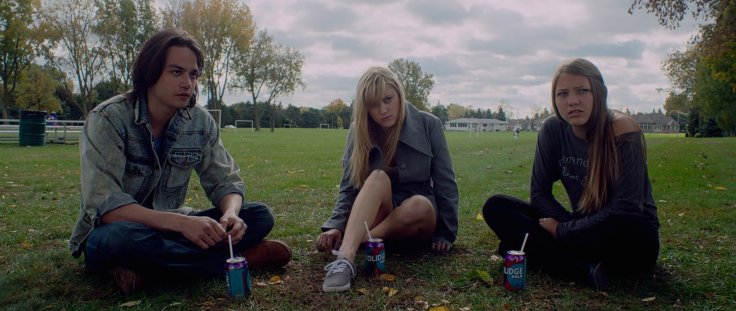
Loss of innocence is also explored in terms of class. As Yara (Olivia Luccardi), another friend, states, “When I was a little girl my parents would not allow me to go south of 8th mile. And I did not even know what that meant until I got a little older. And I started realizing that. That was where the city started and the suburbs ended. And I used to think about how shitty and weird was that. I mean I had to ask permission to go to the state fair with my best friend and her parents only because it was a few blocks past the border.” They live in a middle class neighborhood in the suburbs and, to escape, go either to the dilapidated neighborhoods of Detroit, whose abandoned decrepitude serves as a reminder of their own privilege and probable fate, or to the comfort of nature which, be it a cabin or the lakeshore, is a place associated with childhood memories. However, their escape to these settings, especially to nature, is partly out of practicality. Despite their relative economic privilege these are latchkey kids whose parents care only when they take the rare opportunity to notice. They have no adult guidance to assist them through their transition. Jay’s mother is mentioned but scarcely seen and is not viewed as a figure upon which to depend. When we see Jay drive off to the lakeshore and sleep on the car hood we are reminded that she is without income – there are no hotels to stay in, no plane tickets to buy – and she must eventually return to the comforts of the suburb.

Aside from being rich in subtext and symbolism, It Follows is also beautifully shot with an effective electronic score reminiscent of the synth scores from the early 80s or of John Carpenter’s early work, and which will likely be running through the viewer’s head long after the movie has ended. The era is purposefully indiscernible, mixing visual cues from the last few decades in a manner that keeps the viewer off kilter while allowing audiences who were born in different decades to relate in some way to the world which Mitchell has created. Yara reads off a technologically modern clam-shell e-reader, but we see the teens passing time watching old movies on an old television set or playing cards – the kinds of activities typically seen engaged by teens in movies of the late 70s or early 80s.
It Follows 2014 still

Another strong element which Mitchell uses is the camera’s gaze, which is decidedly male, lingering on the girls to emphasize their blooming sexual nature and, at times, unconscious desirability. As Hugh says of Jay, “It should be easier for her, she is a girl. Any guy would be with you.” Here he is openly acknowledging Jay’s physical desirability to those around her. Also, at one point the camera lingers on Yara’s legs, a character who throughout the film appears to have not viewed herself as particularly attractive. Ready or not, these girls are sexual objects.

The movie succeeds on many artistic levels, giving the viewer a lot to ruminate upon long after the movie has finished, and it is effectively creepy. It’s certainly one of the smartest films to come out of the genre recently. Personally, I appreciated the ambiguous ending, which may frustrate those viewers looking for concrete closure. Whether or not It Follows has the strength to maintain its longevity only time will tell.

Grade: A-
Movie Review – The Canal (2014)

Movie Review – The Canal (2014)

Ivan Kavanagh’s The Canal (2014) is an Irish production about a film archivist named David, played by Rupert Evans, who finds 1902 crime scene footage which took place in his current residence. Shortly afterwards his wife, who he discovers is having an affair, goes missing. He becomes convinced of a supernatural connection to the 1902 murder and his wife’s disappearance and tries to save his son from the malevolent entity he sees stalking them. Of course, as has become cliché with these types of films, we are meant to wonder if the haunting is real or a manifestation of his disturbed psyche.

The Canal has some striking imagery, especially in the final fifteen minutes, and there are obvious influences from The Ring (2002) and many other films which the seasoned viewer will recognize. Unfortunately, much of the film lags on its way to get to the ending and when it finally does, it’s difficult to care. The middle act stretches thin, feeling more like disjointed vignettes than a cohesive narrative. Granted, this is perhaps the filmmaker’s attempt to place us in the main character’s confused and paranoid state, but it quickly becomes apparent that the plot isn’t progressing. The script structures itself as a mystery, but even a casual horror viewer will see the results coming long before they are finally revealed.

There are also some excellent elements introduced into the plot which the movie does not delve deeply enough into, such as the 1902 film or the use of the antique turn-crank camera. (Additionally, as someone who has watched a great deal of silent films, the crispness and clarity of the unrestored turn-of-the-century film was utterly unrealistic, but that is perhaps a personal nitpick.) In a beginning scene David is showing an old film to high school students and refers to the screen actors as ghosts because they’re all dead. This could have served as an intriguing plot device or an analogy but ultimately it all seems to go nowhere. It is left dangling like many other threads whose potentials go unsewn.

With a tighter or more unique script The Canal could have been something notable, but its impressive finale at least allows it to pass with a recommendation, albeit an unenthusiastic one.

Grade: C

Movie Review – Bedevilled (2010)

Movie Review – Bedevilled (2010)

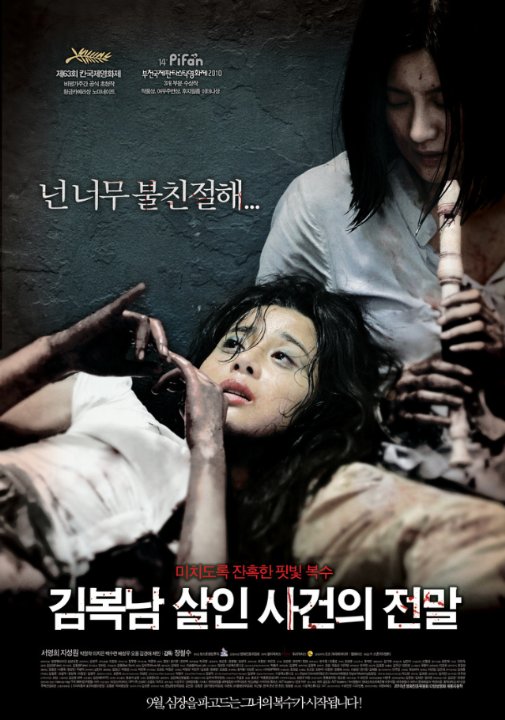
2010’s Bedevilled, the feature directorial debut of Jang Cheol-soo, is a South Korean horror film which won numerous awards upon its release. It stars Seo Young-hee in a terrific performance as Kim Bok-nam, a woman living in a small community on an under-developed island who is treated as little more than a slave by those around her. Her husband beats her, his brother rapes her, and the old women of the island glorify these men and heap mental hardship upon her, bullying her into submission and exhausting her with the most physically demanding chores. They’ve all conformed to a cruel pack-mentality which I wish I could say is unrealistic.

There are two strings of hope upon which Bok-nam tentatively grasps, the first being the 15-year-old promise of a childhood friend, Hae-won (Ji Sung-won), to bring her to Seoul but who has been ignoring her letters for years and who has now returned for a short stay. The second is the well-being of her young daughter who she begins to suspect is being sexually abused by her husband. When she resolves to escape with her daughter things go from difficult to unbearable, and Bok-nam’s sanity is pushed to the limits, at the end of which is a blood-soaked sickle.

Bedevilled 2010 still

It’s difficult to watch Bok-nam’s abuse, which never seems to be in a hurry to be done with, and the movie moves at a glacial pace. This is all as it should be, given the gravity of the torment. Nevertheless, Cheol-soo’s direction, the cinematography, and especially Young-hee’s performance make for an eminently watchable experience. The sexual abuse, while shown, never devolves into exploitation. The script is more than a straightforward I Spit on Your Grave (1978) woman-scorned-style rehash, but is interwoven with its own symbolism and some deep psychological character study. It’s not just male misogyny that is to blame, but female indifference or acceptance of it as well. In particular, Bok-nam’s relationship and history with Hae-won is slowly revealed, and we come to understand both women in unsettling ways to the extent that, when Bok-nam turns to stalking Hae-won, we aren’t sure who we should be rooting for. For their part, they seem unsure as well.

Bedevilled, which is also known by the English translation of its Korean title, The Whole Story of the Kim Bok-nam Murder Case, is raw in its violence, but also in its emotion – a rare combination, unfortunately – and it is one of the best of its kind in the “Day of the Woman” revenge subgenre.

Grade: B+

Movie Review – The Black Sleep (1956)

Movie Review – The Black Sleep (1956)

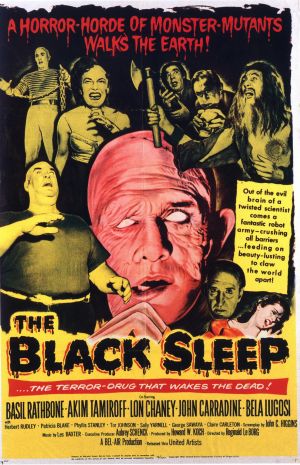
1956’s The Black Sleep feels more like a 1940s Gothic monster mash than most of its contemporary films. Directed by Reginald Le Borg, who was known for his low-budget horrors from the 1940s, the film features an all-star cast of genre greats.

Basil Rathbone plays Sir Joel Cadman who puts victims into a death-like coma and operates on their brains. Rathbone is best remembered for his turns as Sherlock Holmes throughout the 1940s but found fame in various genres. Lon Chaney, Jr. (1941’s The Wolf Man) and Bela Lugosi (1931’s Dracula) once again reunite. They had been featured in movies together many times and this, unfortunately, would be Lugosi’s last feature film role – one in which he does not even have a speaking part. Lugosi’s career sputtered through the 1940s and 50s, being relegated to bit parts in poverty-row horror movies, and he would die the year of this movie’s release, being buried in his Dracula cape.

John Carradine, who took over Lugosi’s role of the Count in House of Frankenstein (1944) and House of Dracula (1945), has a small part. The bald, hulking Swedish wrestler and micro-budget horror actor extraordinaire Tor Johnson also stars, looking much like he would in Ed Wood’s Plan 9 from Outer Space (1959) and 1961’s The Beast of Yucca Flats, which even for schlock fans can be a test of endurance.

The Black Sleep takes its time and can occasionally lull, though Rathbone’s magnetic presence draws the audience in and makes even the most dialogue-heavy scenes engaging. The viewer feels his absence from the screen like an uncomfortable draft, save for Akim Tamaroff’s scene as Udu the Gypsy where he seduces a vain woman to her own demise. The finale, however, is entertaining, as it can only be when a woman is running through the halls with her back aflame.

Grade: C

Movie Review – Entity (2012)

Movie Review – Entity (2012)

Entity (2012) is a British supernatural tale written and directed by Steve Stone that mixes found-footage with more traditional, albeit hand-held camera work. Taking place in Siberia (though filmed in Northern England), it tells of a reality television show that investigates a location where authorities had found the bodies of dozens of unidentified people out in the wilderness. Accompanied by a medium, they soon find an abandoned government facility which houses disturbed and bitter spirits.

The film has capable performances and generates an effectively somber, unsettling mood. With a modest budget, the movie makes the most of its location. Nevertheless, it offers nothing new, has a predictable ending, and while I generally enjoy what is often described as “slow burn,” the pacing here is overly slow and we lose the urgency that we should be feeling from the characters. Speaking of these characters, those slow moments could have been filled with a bit more dialogue or something to give greater insight into them, but we really only learn about one of them. We know nothing of the others’ pasts and therefore have little from which to generate sympathy.

Entity has a few choice moments, but they don’t congeal to make a worthwhile viewing experience. It succeeds in creating a creepy atmosphere but does not provide enough story to justify it.

Grade: C-

Movie Review – The Toxic Avenger (1984)

Movie Review – The Toxic Avenger (1984)

Troma Entertainment was founded by Lloyd Kaufman and Michael Herz in 1974 and has been known henceforth as the foremost purveyor of Z-movies – films of such low budget, standard, and taste that they don’t qualify even as B-films. And millions of horror fans have loved them for it. They have become the category standard by which all intentionally terrible movies are judged, which is a testament to their value as valid entertainment. As an eighties kid Troma movies were a rite of passage. Their overt nudity, violence, and surrealist mania was known among the playgrounds from kids whose older siblings had let them watch a beat up rental cassette. If you hadn’t seen a Troma film, you probably lied and said you had.

No Troma film was more well-known to us elementary schoolers than The Toxic Avenger (1984), an R-rated offering that oddly became even more popular with kids after it was made into an environmentalist children’s cartoon in the early 1990s called Toxic Crusaders. I can even remember the jingle that accompanied the toy line: “Toxic Crusaders – they’re gross, but they still get girls.” I think I still have some action figures somewhere. It’s similar to the unlikelihood of Rambo – a Vietnam vet who experiences violent flashbacks and who burned down a small American town – also becoming a cartoon hero in 1986. The Toxic Avenger represents the surprisingly uncommon coupling of the comic book superhero and horror. With an overflowing abundance of low-brow humor, gore and exploitation to fill it out, Toxie has since become Troma’s flagship icon.

As a kid I loved Troma films. They were beyond anything I had ever seen while still keeping to well-worn 1950s horror tropes; they were a combination of the bizarre and the comfortably familiar. They were intentionally bad movies that tried to cross into the so-bad-it’s-good realm, offering unapologetically crass entertainment. Troma movies are ones to watch when you’re in the right mood, and preferably with the right companions. The Toxic Avenger is certainly one of their films that still manages to hold viewers’ attention and even generates intentional laughs from its endearing, irresistible awfulness.

For those who don’t know, the movie tells of a skinny nerd who works as a janitor at a gym who gets harassed and pranked and ends up falling into a barrel of toxic waste – while wearing a pink tutu, of course. The radioactive chemicals result in deformities, super strength, and an unstoppable impulse to vanquish evil in all its forms. If that sounds like a plot you’d be interested in seeing on screen, even out of purely morbid curiosity, Toxie might be worth checking out for you. However, the movie is filled with cartoonish characters, terrible acting, worse dialogue, blatant stereotypes, gory but unconvincing special effects, and of course boobs. We even get hilarious dubbing. If that generates further interest, then Toxie is definitely worth checking out.

Troma movies aren’t for everyone. Most of the time, they aren’t even for me. But I’ve seen The Toxic Avenger many times over the years and I’m sure one day I’ll share it with my son so he can tell all the kids on the playground about the crazy-ass Troma film he just saw.

Grade: C-

Movie Review – Henry: Portrait of a Serial Killer (1986)

Movie Review – Henry: Portrait of a Serial Killer (1986)

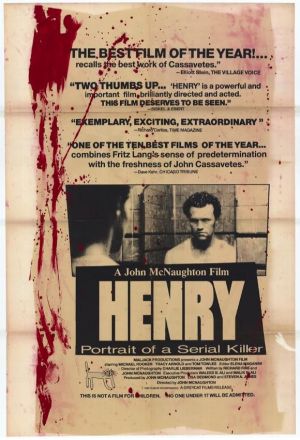
The horror genre is no stranger to controversy, and one of the most controversial films of the 1980s is 1986’s Henry: Portrait of a Serial Killer. The film began when director John McNaughton was hired to helm a horror film for a meager budget. At first unsure of what to make, McNaughton came upon a 20/20 episode about the serial killer Henry Lee Lucas who was convicted of eleven murders and claimed (mostly unsubstantially) to have killed hundreds more. Taking inspiration from Lucas’s life and his outlandish claims, and his friendship with fellow killer Otis Toole, McNaughton crafted a loose adaptation that was disturbing in its realism. It was filmed on 16mm film in less than a month for only $110,000, and yet it shocked audiences upon its general release four years later, with its realistic portrayal of murder, and garnered an “X” from the MPAA, further cementing its base reputation.

Michael Rooker was a janitor when he was cast as Henry in his first film role. His performance sells the apathy and impulse of the killer. Other performances are memorable, if not completely strong, though Tracy Arnold, who plays Becky, Otis’s sister, is quite natural.

Henry’s Chicago seems devoid of law and order. It is a gritty concrete corpse that the characters occupy like insects, feasting on the weak like nature’s cruel creations. Henry kills on a whim but still functions in society, never standing out enough to draw suspicion. In one brilliant but disturbing sequence, the audience sees the murder of a family via a home video made by Henry and Otis like an early but effective found-footage snuff film. The two men sit lazily watching it from the couch. When it’s done, Otis rewinds it. When Henry asks what he’s doing, Otis says he wants to see it again, but this time he uses the slow motion feature.

Henry 1986 still

There’s plenty here to make the audience uncomfortable, but the filmmaking is actually quite good and, in a way, compelling. Unlike most 1980s slashers, there’s no flair to these killings. Murder is quick and cathartic, and the fragility of life is fully displayed. Despite the increase in killings, Henry never seems close to being caught, and one can’t help but wonder how many murders go unsolved each year, and whether or not the stranger one sits beside at the bar has killed innocents without hesitation and is willing to do so again.

In a 2013 study in the Journal of Forensic Sciences two Belgian psychiatrists looked at the depictions of serial killers in film and found that most are entirely unrealistic, with a few notable exceptions. One of those was Henry, which they thought effectively fit the profile of common serial killers. They wrote: “Another realistic interesting example is Henry (inspired from Henry Lee Lucas)… in this film, the main, interesting theme is the chaos and instability in the life of the psychopath, Henry’s lack of insight, a powerful lack of empathy, emotional poverty, and a well-illustrated failure to plan ahead.”

Perhaps Henry disturbs so much because it offers a depraved truth devoid of the Hollywood tropes that so often soften the subject matter. It is visceral in its presentation and is a movie that, despite one’s wishes to the contrary, will stick with the viewer long after seeing it.

Grade: B

Movie Review – Zombeavers (2014)

Movie Review – Zombeavers (2014)

Zombeavers (2014) – wait, read that title again. If that word combination does nothing to spark your interest in seeing this film, you are obviously not the target audience. Clearly, the film is a horror-comedy, and it is one which combines The Killer Shrews (1959) with Night of the Living Dead (1968) and Evil Dead II (1987). The first of those films is often a title mentioned when one feels the need to deride the terribly cheap drive-in movies of the 1950s (e.g., dogs dressed up as giant shrews), while the latter two movies are held as a modern classics, and rightly so. But I enjoy them all and love the idea of combining them into a modern, campy B-movie. In this respect, Zombeavers, directed by Jordan Rubin, doesn’t disappoint.

While most of the characters are unlikable and obnoxious, the beaver hand-puppets, ample gore, and practical effects are enough to satisfy any good-humored genre fan, and a few of the many jokes are actually quite funny. Plus, just when the notes begin to grow stale, especially as tired horror tropes are played for comedic effect, the script is smart enough to add some twists to keep things interesting, getting increasingly absurd in a comical, entertaining way.

Zombeavers is not high art and it doesn’t try to be. It’s a B-movie that wears its bloody beaver heart on its sleeve, and I can’t help but find that endearing.

Grade: C+

Movie Review – The Fly (1958)

Movie Review – The Fly (1958)

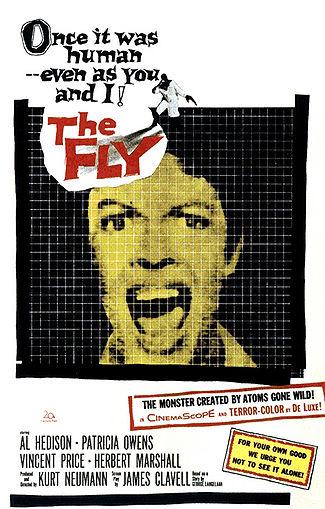
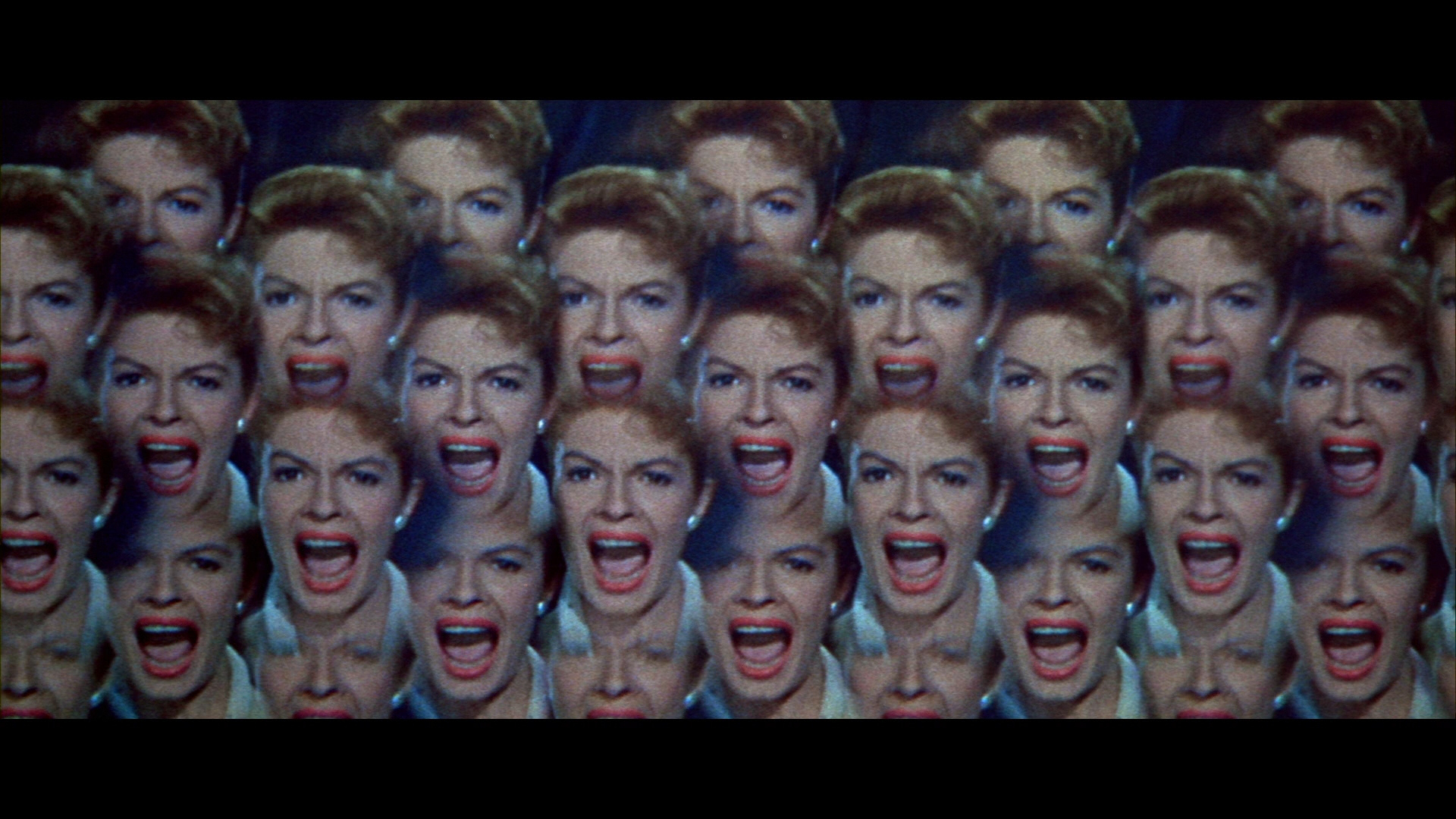
The Fly (1958), starring the legendary Vincent Price in a rather secondary role, is a notable example of the shock cinema of the late 1950s. It tends to cause two different reactions among viewers as it walks a fine line between schlocky fun and unsettling science-fiction horror. Some scenes which could easily be funny, such as the reveal of the fly head, still have the ability to effectively catch viewers off guard. Others, such as the little fly with the human head shrilly screaming “help meee!” on the spider web, can make one chuckle while still getting under one’s skin, mostly because the actors play it completely straight (although Price would later recall trying to film the scene and he and fellow actor Herbert Marshall bursting out laughing at the flailing animatronic figure that they used as a reference point).

Beautifully filmed with vibrant colors, the story of a scientist who accidentally turns himself into a giant fly is a parable about the dangers of interfering with the order of things, and of the unrelenting cruelty of nature. It is a theme that had been widely exploited since both the atomic age and the Holocaust made Americans fear the side-effects of science run amok. While the movie is a little slow and subdued in places, the direction and acting keeps everything grounded, never letting it stray too far into either camp or dullness. It remains determined to present a character-driven story as David Hedison, who plays the scientist both in and out of the fly make-up, gives a sympathetic performance.

The Fly 1958 still

Directed by Kurt Neumann, this film would be his biggest box office success. Unfortunately, he would not live to see it. He died of natural causes after the premiere but before the film’s general release. Perhaps more famous than this version, The Fly would be remade and re-imagined in 1986 by David Cronenberg with some of the most memorable scenes of body horror ever committed to film. This original 1958 production is very much a product of its time and is, generally, best enjoyed as such.

Grade: B-

Movie Review – You’re Next (2011)

Movie Review – You’re Next (2011)

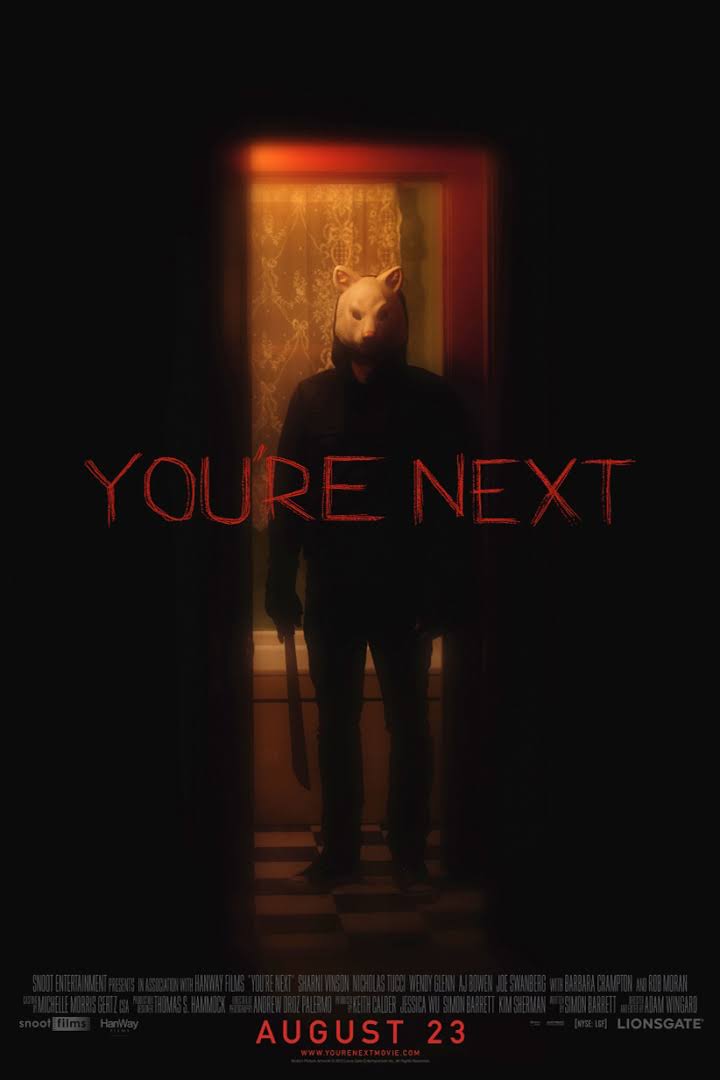
You’re Next, directed by Adam Wingard and written by Simon Barrett, quickly made a reputation for itself when it first premiered in 2011. As a home invasion film, the aesthetic owes a lot to 2008’s The Strangers – inspiration can clearly be seen in some superficial ways, such as the shot compositions, the use of music, the lighting, and of course the masked intruders. However, whereas as The Strangers was a straight-forward, self-serious slow-burn, You’re Next is a romp of gore and bloody antics.

The plot involves a family reunion at a house deep in the countryside. Two wealthy parents have invited their adult children and their significant others to gather for a long weekend, but almost immediately find themselves assailed by masked men wielding crossbows, machetes, and axes. However, one of the guests – the girlfriend of one of the son’s – is surprisingly capable and competent in this intense situation and begins to fight back like a blood-bathed Kevin McCallister.

The plot is too predictable to be scary or shocking, but the gore is practical, abundant, and well-utilized. The film gets rolling quickly and invites the audience to come along for the ride, giving us one of the most memorable final girls we’ve had in years. Really, the majority of the film is generally run-of-the-mill, but the final act makes up for much of that.

There are some flaws. The shaky cam is overused and gratuitous and we learn almost nothing about most of the characters. Having the crux of the film involve close family members requires exceptional acting to portray the grief of losing loved ones, and few of the performers, though some may be notable within the genre, are able to accomplishing this. You never really get a sense that this is a family with history. One actor, however, should be mentioned: Ti West, one of horror’s current notable directors whose films include The House of the Devil (2009), The Innkeepers (2011), and The Sacrament (2013), self-referentially plays a pretentious filmmaker.

In terms of a home invasion film, You’re Next is heavy on gore but light on scares. It’s a fantasy fulfillment we all have (at least I hope it’s not just me) of taking out intruders with extreme prejudice. It’s that body-count kind of slasher where you look forward to the next kill to see what practical effects will be employed, but not because you care a thing about the characters.

Grade: C+

Create a free website or blog at WordPress.com.

Up ↑