Search

The Revenant Review

Horror Film History, Analysis, and Reviews

Tag

Movie Review

Movie Review – Alien Abduction (2014)

Movie Review – Alien Abduction (2014)

You arguably can’t get a more generic a title than 2014’s Alien Abduction (well, okay, Alien is certainly more generic). Its blandness lets you know exactly what you’re in for and the lackluster poster leaves little to whet one’s interest further. That this is yet another found-footage horror is reason enough for most genre fans to pass on it. Despite all that’s stacked up against this film, I still gave Matty Beckerman’s directorial debut a shot after hearing Dr. Shock (of DVD Infatuation) favorably review it on Horror Movie Podcast, and I must say I’m glad I did.

Alien Abduction follows the Morris family as they camp on Brown Mountain in North Carolina. Their journey is being documented by the autistic son Riley, who uses the camera as a coping mechanism to help him focus. This clever justification allows the filmmaker to answer the question so often posed to found-footage films, being why anyone in their right mind would continue filming when their life is in danger. Beckerman allowed the actors to adlib most of their lines, helping to generate a mostly natural dialogue between the characters. The acting isn’t stellar – nothing about the film is – but it’s certainly adequate enough to not be a distraction. When the family’s circumstances become ever odder and the extraterrestrials make themselves known, pursuing their victims relentlessly, the film moves quickly and provides for some very well-crafted jump scares.

Ultimately, Alien Abduction adds nothing new to the genre, but what it sets out to do it does well. It seeks to create a fun ride for viewers and it succeeds. As a first-time director, Beckerman is entirely competent and shows some promising creativity. If you’re looking for something light and entertaining, you could do a lot worse than Alien Abduction.

Grade: C

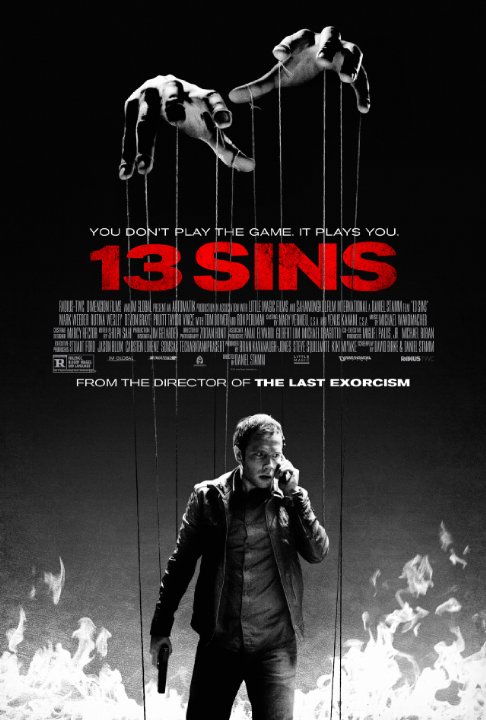
Movie Review – 13 Sins (2014)

Movie Review – 13 Sins (2014)

13 Sins (2014), also known as 13: Game of Death, is a remake of the 2006 Thai horror-comedy film 13 Beloved. Directed and co-written by Daniel Stamm, the story follows Elliot (Max Weber), a nice guy who is drowning in both debt and personal responsibility. One day he receives a mysterious phone call claiming he can win money by completing thirteen tasks, but soon the tasks become more destructive and criminal, transforming Elliot from a meekly passive person into an assertive individual who begins to wrestle with serious moral questions as the game delves into ever darker territory.

Already anyone reading this is likely to recognize elements of the story from many other films. Truly, the film’s strong point is not originality. However, what it lacks in new plot points it makes up for in great execution and a strong performance by Weber, who makes Elliot’s transformation, which Stamm meant to reflect drug addiction, sympathetic and convincing. Elliot finds his self-image continually compromised for the promise of wealth, but slowly begins to question whether that wealth is worth it.

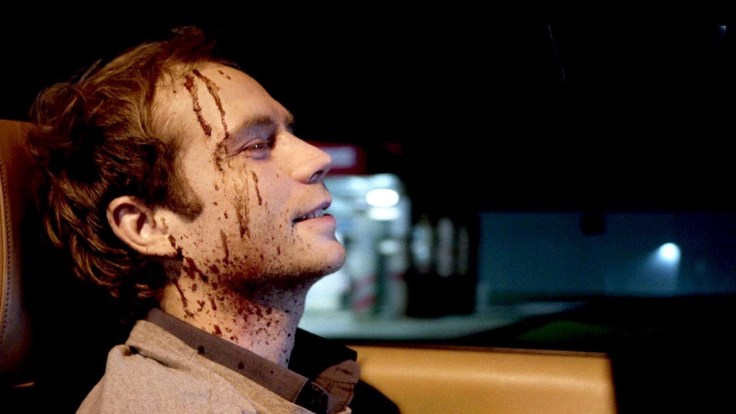
13 Sins 2014 still

In a movie like this, predictability is inevitable, yet even when I saw a scene coming it’s generally done so well I didn’t mind. There are some twists at the end which, although not entirely surprising, are pulled off perfectly. Good practical effects help to ramp the horrific aspects of this mostly psychological thriller, and there is just enough humor infused to make the watching highly entertaining.

13 Sins’ only sin is unoriginality. Nevertheless, it manages to rise above this shortcoming to offer a fun, wholly satisfying viewing experience.

Grade: B-

Movie Review – Twixt (2011)

Movie Review – Twixt (2011)

In an early scene in 2011’s Twixt, the main character, Hall Baltimore (Val Kilmer) – a second-tier horror writer whose career and finances are on the decline – explains that he no longer wants to write what is expected of him by others. He wants to write something personal, something that speaks to and matters most to him. In many ways this is director Francis Ford Coppola talking to the audience, explaining the rationale for the rather bizarre film to which they are bearing witness. Coppola is a rightfully celebrated filmmaker, praised for the artistic masterworks he created in the 1970s, and he is no stranger to horror. He first cut his teeth directing the 1963 Roger Corman produced Dementia 13, and then in 1992 returned to the genre in the visually dense, operatic Bram Stoker’s Dracula, which functions effectively as a love letter to the vampire character’s portrayal in cinema since 1922’s Nosferatu. Horror fans were therefore justifiably excited when it was announced that Coppola was returning to the genre.

Twixt follows Baltimore as he stops at a small town on a flailing book tour and becomes inspired by a local murder mystery. In his sleep he is visited by a mysterious adolescent girl named V and is given a tour and literary input from the master of macabre himself, Edgar Allan Poe. Add to this vampires, child murder, religious zealotry, a clock tower where the Devil may reside, and a quirky sheriff who wants to be a horror writer. All of this and more make for an intriguing plot, but it unfortunately never comes together in a cohesive manner. Too many plot points are thrown into the mix and too few end up paying off.

Coppola had originally conceived of the project in a dream, and he wanted to perform live editing before live audiences like an orchestra conductor, adjusting the movie to the reactions of the viewers. This is all very ambitious and interesting, but it proved too unwieldy and eventually he had to settle on a final cut, one which is tonally uneven and ultimately unsatisfying. There is black humor throughout, but the handling of it is sometimes so awkward that instead of laughing, I felt uncomfortable. The performances are adequate, but nobody is turning in their best work or elevating the drab dialogue.

Looking back at his take on Dracula, it’s almost difficult to believe that the man who put poetry on celluloid in such a fluid, beautiful manner in that film created the Gothic scenery in Twixt. A veneer of artifice effects nearly every scene – what might have been surreal instead looks cheap. It’s not an aesthetically pleasing film despite its best efforts. The title refers to Baltimore’s state as being “betwixt” reality and the dream world, but neither realm is ever very convincing.

I really wanted to like this movie. As someone who admires Poe, a film that is very much an ode to that influential American author is one I want very much to succeed. Yet other than providing trivia for me to catch and a few allusions, the scenes with Poe don’t end up adding much to the plot. Will we ever get a great film deserving of that great author? I truly hope so, but this is not it.

Grade: D+

Movie Review – Sauna (2008)

Movie Review – Sauna (2008)

The year is 1595. After a decades-long war between Sweden and Russia a joint team of representatives from both monarchies are trekking through Finland to mark the border between the two powers. The Swedes are led by two brothers, the younger Knut (Tommi Eronen) – a gentle, hopeful scholar – and Eerik (Ville Virtanen), a veteran of the conflict whose body is betraying him with age and who is finding it difficult to transition from bloodthirsty soldier to peacetime diplomat. As the Russian Semenski says to Eerik, “You are scared of peace, because the end of war will take away the justification for the murders that you have on your conscience.” He is haunted by his past misdeeds in ways which seem to manifest on their journey, especially as the team comes across a remote, uncharted village with a mysterious sauna on its periphery.

“What if Hell is not a fiery furnace beneath the continents?” one of the Russians asks, “What if it’s just an unclean place without the presence of God? A time and place behind God’s back?”

Sauna 2008 still

Finland’s Sauna (2008), directed by Antti-Jussi Annila, unfolds within this fantastic historical backdrop. Themes of conflict permeate the film, with Eerik often serving as the volatile nexus, be they between nations, religions, the past and the future, or, as suggested by the sauna, salvation and damnation. The cinematography is gorgeous. The muted colors and intimate camerawork serve to bring the characters and era to life. All of the actors, but particularly Virtanen and Eronen, are well-cast. Virtanen especially evokes Max von Sydow’s crusading knight in Ingmar Bergman’s brilliant The Seventh Seal (1957).

The film tackles many themes and has some truly striking images, but its messages and meanings are largely not forthcoming. Sauna is more like a puzzle box which we know does not have all the pieces in it, but has just enough to give us some kind of picture. The filmmaker leaves many elements open to interpretation – particularly the ending – making the experience a surreal, almost Expressionist one, and one that the viewer is likely to mull over days after watching. Its approach is heavily atmospheric and psychological, relying upon various forms of symbolism to convey many of its plot points. Viewers would be wise to pay close attention to the dialogue and images so as not to miss potentially vital information.

Sauna is not a film for all horror fans. It’s a contemplative, patient film with very few jump scares, and it is purposefully enigmatic, perhaps frustratingly so to viewers who want clear answers from the movies they watch. However, it’s the sort of film that gives hope to discerning viewers that the genre still has new places to go and filmmakers willing to take the journey to go there.

Grade: B

Movie Review – Fascination (1979)

Movie Review – Fascination (1979)

My only prior experience with French director Jean Rollin was his nearly unwatchable, schlocky Zombie Lake (1981). I was aware that he had had a prior reputation for effective erotic horror and so I decided to give his Fascination, released in 1979, a try. The film opens in 1905 in an abattoir where wealthy women have gathered to drink ox blood as a fashionable treatment for anemia. The scene is framed wonderfully, the colors creating a macabre palette, and sets the tone for the film, combining the lustfully tempting with the physically repulsive.

This being 1970s erotica, there are plenty of nude women and stilted, awkward sex scenes. The two lesbian lovers who harbor a sanguineous secret, Elizabeth and Eva, are played by the beautiful Franca Maï and Brigitte Lahaie (then a porn actress), respectively. The story centers on a thief on the run who hides out in the girls’ chateau, curiosity leading him to stay with them to find out what secret activities these bourgeois women and their friends are up to at night. Themes of class conflict run through the narrative, and the title refers to fascinations of all kinds, be they sexual or morbid.

Overall the cinematography is very appealing, helped by soft and natural lighting, yet the editing is uneven as scenes tend to run on too long and the pacing suffers as a result. The physical effects are almost laughable when compared to contemporary films. It takes much more inspiration from the early, sexually charged vampire Hammer films where a bit of blood was the extent of the gore, and feels dated as a result. Also, the dialogue is repetitive and could have been better served to add more characterization.

Nevertheless, Fascination is certainly a far better movie than Zombie Lake. It’s effectively erotic (if Sapphic kissing is your thing) and the story it ends up telling, when it gets around to it, is actually quite dark, sinking its teeth into the themes of obsession, privilege, and whether what fascinates us about the people we are attracted to is what they are willing to offer, or what we are compelled to covet.

Grade: C-

Movie Review – The Company of Wolves (1984)

Movie Review – The Company of Wolves (1984)

There are certain memories which are personally defining to one’s childhood, but are so specific to a certain generation that their children will never know them. For my grandparent’s generation it was buying candy at the Five and Dime. For me and my friends growing up in the 80s, there were the video rental stores. We’d wander the aisles of VHS tapes and feast our eyes on the covers. The horror section always beckoned me, and certain covers would burn into my brain and make me wonder at the nightmares that those spools of film contained, such as the looking skull of 1987’s Evil Dead II or the ponytail noose of 1986’s April Fool’s Day.

However, none captured my imagination more than 1984’s The Company of Wolves, showing Little Red Riding Hood looking at a man who has a wolf snout painfully protruding from his mouth. It fascinated me then but over the years, as I finally saw many of those films which had tempted me, I somehow forgot about it. Recently, however, I stumbled upon that image again while tumbling down one of those internet rabbit holes. There it was, those rental store memories flooding back. I instantly opened my Netflix account and placed the film in my DVD queue, moving it to the top.

The Company of Wolves 1984 VHS cover

The Company of Wolves is an early directorial effort by Neil Jordan, who went on to do 1994’s Interview with the Vampire, a film which had a significant impact on me when it was released, and 2012’s beautifully crafted though sadly underappreciated horror-fantasy Byzantium. The screenplay was written by Jordan and Angela Carter, adapted from one of Carter’s short stories turned radio play of the same name.

Wolves is very much a Gothic fantasy, rich with dream logic and symbolism. The film opens in the present day with a girl banging angrily on the door of her younger sister’s bedroom as her sibling sleeps restlessly on her bed wearing her sister’s lipstick. We immediately enter the younger girl’s dreams, which take place in a fairytale forest. We see the older sister running terrified through the gloomy wood, being accosted by the younger girl’s giant toys and then by hungry wolves which devour her, letting a smile play on the dreamer’s lips.

The dreaming girl is the framing device for rest of the film which takes place within the fantasy world, in both the forest and the village which it surrounds, and in the stories that the characters tell. And so we often times have a story within a story within a story. The narrative delves into the sexual subtext of Charles Perrault’s Le Petit Chaperon Rouge, first published in 1697. Unlike later versions of the Little Red Riding Hood story, this original telling was heavily moralizing. Red Riding Hood is tricked into giving the wolf directions to her grandmother’s house, who then eats the grandmother and convinces Red to crawl into the bed with him before eating her too. There is no woodsman in this version to save the day or seek vengeance. In case his readers missed the point, Perrault lays it out for them:

“From this story one learns that children, especially young lasses, pretty, courteous and well-bred, do very wrong to listen to strangers, And it is not an unheard thing if the Wolf is thereby provided with his dinner. I say Wolf, for all wolves are not of the same sort; there is one kind with an amenable disposition – neither noisy, nor hateful, nor angry, but tame, obliging and gentle, following the young maids in the streets, even into their homes. Alas! Who does not know that these gentle wolves are of all such creatures the most dangerous!”

The wolves in the film, and in particular werewolves, represent the carnal desires in men and serve as a warning to the main character, Rosaleen (Sarah Patterson), an adolescent girl on the threshold of sexual awareness. Perrault’s moralizing is echoed by her Granny, played by Angela Lansbury. She tells Rosaleen that some wolves are furry on the inside, cautioning her against the advances of amorous men. “Oh,” she states, “they’re nice as pie until they’ve had their way with you. But once the bloom is gone… oh, the beast comes out.”
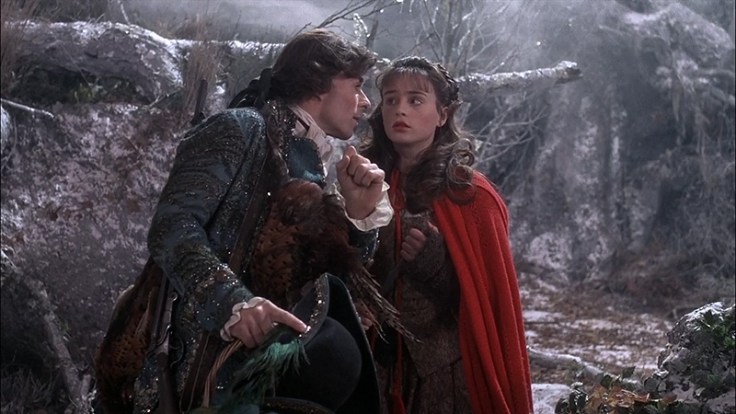
The Company of Wolves 1984 still

The forest is a place of wonder, fear, and compelling curiosities, and is a stand in for sex. Her grandmother instructs Rosaleen to always stay on the path, for if you leave it you’re forever lost. When an amorous neighbor boy asks her to go walking, he declares that they will stay on the path, meaning a veiled preservation of virginity. When Rosaleen meets the sexually charged and handsome huntsman, he comes to her from the forest, a place of forbidden knowledge which she finds most tempting.

Rosaleen, like her sleeping counterpart, is becoming knowledgeable of her own sexual desirability. In a strange sequence fit for a dream, Rosaleen climbs a tree to hide from the amorous neighbor boy and finds a stork’s nest. In the nest is red lipstick, which she applies, and a hand mirror, with which she admires herself. The eggs in the nest crack open and instead of chicks we see baby figurines. All of this, I presume, is meant to symbolize her growing sexuality and fertility.

The Company of Wolves 1984 still 2

Though the werewolves are used mostly as symbolic warnings to girls about men’s passions, the film is not ready to adopt Granny’s perspective on things. Female initiative and power are strong currents through the narrative, as is the notion of not judging men solely by their sexual desires. When Granny laments that Rosaleen’s sister was “all alone in the wood, and nobody there to save her. Poor little lamb,” Rosaleen then asks, “Why couldn’t she save herself?” Later Rosaleen is talking to her mother about her grandmother’s views, to which her mother responds, “You pay too much attention to your granny. She knows a lot but she doesn’t know everything. And if there’s a beast in men, it meets its match in women too.” Rosaleen begins to adopt this very view, telling stories about a vengeful witch who displays female empowerment, and a harmless, misunderstood she-wolf. The men we hear about in the stories are carnal predators, but the one’s we see, particularly Rosaleen’s father, are fairly gentle men who are respectful toward the women in their lives.

The ending of the film, the specifics of which I will not spoil here, is ambiguous, though I believe it is all about breaking that barrier between childhood innocence and sexual maturity, shown metaphorically as the worlds of dream and reality violently crash together and the toys which played so prominent a role early in the film are left lying on the floor. Over this intrusion we hear Rosaleen reciting Perrault’s poetic warning:

Little girls, this seems to say
Never stop upon your way
Never trust a stranger friend
No-one knows how it will end
As you’re pretty, so be wise
Wolves may lurk in every guise
Now as then, ’tis simple truth
Sweetest tongue has sharpest tooth.

The Company of Wolves is not the first film to link female sexuality with bestial transformation, as we saw this in films such as Val Lewton’s 1942 production Cat People, and it is certainly not the last. 2000’s Ginger Snaps and 2011’s Red Riding Hood also link the two, this time adding the lupine aspects. The pairing of werewolves and female puberty is an obvious one as the cycles of ovulation and the Moon have always been symbolically related. Etymologically, the word “menstruation” comes from the Latin menses (month) and the Greek mene (moon), after all.

Though rated-R, I could easily see this film being shown to adolescent girls. The sexuality is present but tame by comparison to what is shown on television today. The horror is relatively light; the visuals focus more on a fantastical dread or gloom save for some gory transformation scenes, which appear inspired more by John Carpenter’s The Thing (1982) than by 1981’s An American Werewolf in London or The Howling. It’s a shame that this film has largely been forgotten, just as I had forgotten it, as it is daring, impressive filmmaking which abounds with deeper meanings. Had it been rated PG-13, it may have become an important film staple in young girls’ lives.

Grade: B+

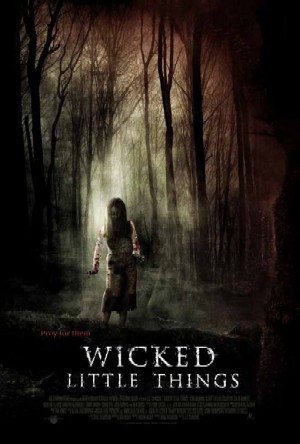
Movie Review – Wicked Little Things (2006)

Movie Review – Wicked Little Things (2006)

2006’s Wicked Little Things (also known as Zombies) is a zombie-esque tale directed by J. S. Cardone, who would go on to write the atrociously bad 2008 Prom Night remake. The revenge plot takes a great deal from John Carpenter’s The Fog (1980) as kids killed in a 1913 mining accident roam the woods each night as murderous, flesh devouring zombies, hacking apart whatever they come across with mining tools. Why? Well, the movie never explains this. Yet unfortunately for a widow (Lori Heuring) and her two daughters, played by genre-favorite Scout Taylor-Compton and a young Chloë Grace Moretz, they move into the accursed Bulgarian – I mean, Pennsylvanian – woods and have to contend with the pasty, ravenous brats.

While the thin premise is still a solid basis for a horror film, Wicked Little Things is a fairly banal, paint-by-numbers affair. There are no surprises and the audience will be many steps ahead of the characters the whole way through. The gore is not excessive and truly, if it had been cut, this film could easily have garnered a PG-13 rating and played on television.

The characters and plotting will likely irritate viewers, as they did me. Here are just a few things that had me glaring at the screen:

  • Emma (Moretz) is way too old to constantly go wandering off all the time.
  • Why is it that only now locals are getting killed when they all seemed to be at least vaguely aware of the curse?
  • If Sarah (Taylor-Compton) would have taken her foot off the gas pedal the guy she was trying to warn might have had a chance to hear her over the revved engine.
  • If a mother can find her daughter in the middle of a strange forest, she should be able to retrace her steps up a hill back to her house…

There’s more, but I’ve dedicated enough time to venting.

Wicked Little Things will kill an hour-and-a-half if you need it to, but so will watching a good horror movie.

Grade: D

Movie Review – What We Do in the Shadows (2014)

Movie Review – What We Do in the Shadows (2014)

What We Do in the Shadows (2014) is a horror-comedy mockumentary that doesn’t try to break new ground with vampires, but retread old tropes in funny, inventive ways. Directed and written by Taika Waititi and Jemaine Clement, who both also star in the film, it’s backward looking in the most endearing way, paying homage to the vampire’s various on-screen forms via the unlives of four vampire flatmates living in Wellington, New Zealand. There is the foppish Viago, played by Waititi, something of a Hammer Films Production dandy, who loves his antiques and pines for a woman he let go many years ago. There is the youngest, Deacon, a New Romantic who takes many of his vampiric cues from the rebels in The Lost Boys (1987). We also have the medieval-minded Vladislav the Poker, played by Clement, who represents a Gary Oldman-style Dracula who has lost his mojo. Finally there is Petyr, an 8,000 year-old feral rat-like figure in the vein of Orlok in Nosferatu (1922), who lives in the basement (which may be a comment on where the traditional vampire now resides in current cinema, thanks to films like Twilight).

Unable to leave their flat during the day, the quartet have been unable to adjust to twenty-first century life and mostly bumble their way through their various bloody conquests. Along the way they meet a young, reckless vampire and his friend Stu, a human IT tech who they inexplicably gravitate towards as he teaches them about new technology.

Stu: [Showing the vampires Google] “Anything you want to find you type it in.”
Viago: “I lost a really nice silk scarf in about 1912.”
Deacon: “Yes, now Google it.”

What We Do in the Shadows 2014 still

Shadows is fast-paced and fun, and even when you see the jokes coming their execution is still effective and hits just the right amount of silliness. Like a This Is Spinal Tap (1984) for vampires, the movie wants these characters to succeed despite their ineptitude (and the fact that they’re serial killers). Some of the funniest scenes involve their rivalry with werewolves (not “Swear-wolves”) who appear to be part of some kind of twelve-step program. There are also many choice lines, such as when Deacon admits, “I think we drink virgin blood because it sounds cool.” To which Vladislav adds, “I think of it like this. If you are going to eat a sandwich, you would just enjoy it more if you knew no one had fucked it.” It’s one of those films that feels like it will get funnier with repeat viewings.

Vladislav: “Leave me to do my dark bidding on the internet!”
Viago: “What are you bidding on?”
Vladislav: “I am bidding on a table.”

Grade: B+

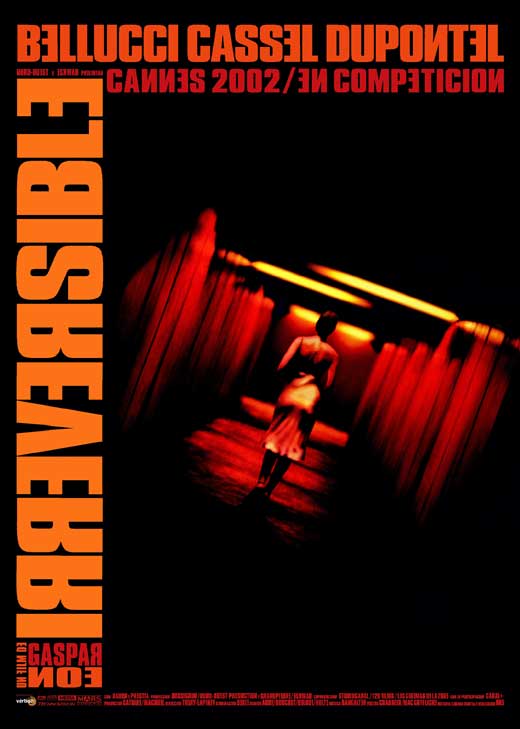
Movie Review – Irréversible (2002)

Movie Review – Irréversible (2002)

Films associated with the New French Extremity movement, by their transgressive nature, evoke strong reactions from viewers, most of which are negative. When 2002’s Irréversible was released at the Cannes Film Festival some fainted and hundreds walked out. Nevertheless it won the top award at the 2002 Stockholm International Film Festival and no less a critic than Roger Ebert, whose distaste for violent horror was generally well-known, gave it a positive review.

Irréversible is a work of body horror which early on shows unfettered perversity with a graphic murder of a man in a night club. Worse still, halfway through there is a minutes long rape and beating of a woman named Alex, played by Monica Bellucci. Throughout most of the film the camera sways and swirls, always moving and floating through walls like a ghost as a dolphin might come up for air. For the first thirty minutes a low hum is heard, designed to inflict nausea on the audience. But during this terrible violation the scene is continuous and the camera is still, locked on the attacker and his victim in each moment of agony. We hear all too clearly the grunts and muffled screams echoed in the red-walled underpass. It dares the viewer to confront the reality of rape by not allowing any means of escape. Like The Last House on the Left (1972) or I Spit on Your Grave (1978), Irréversible is not a film you are supposed to enjoy while watching. It’s a visceral experience that is meant to showcase violence in its true ugliness.

These elements are reason enough for most people to steer clear from this movie. However, for those willing to dig deeper there is an undeniable artistry in this film that moves it beyond gratuitous exploitation. Director Gaspar Noé, Bellucci, and co-star Vincent Cassel conceived of the story together. Only the framework of the tale was completed before filming and the dialogue one hears is almost entirely improvised.

The ever-moving camera, which could easily cause motion-sickness in some, is actually relevant to the narrative structure. The story told is non-linear beginning with the ending and working its way back, much like Christopher Nolan’s Memento (2000). As each scene ends we go back in time to the scene before. In terms of the narrative, the reason is suggested in what is actually the films first chronological scene where Bellucci’s Alex is reading the book An Experiment with Time by John William Dunne. Published in 1927, the book deals with concepts such as precognition and posits that all time is happening now and that past, present, and future are constructs of our mind’s inability to perceive it all at once. Therefore the camera may in fact be the perspective of a time traveler – it may in fact be Alex herself.

But there are artistic reasons for the structure as well. Each scene is given a weight that would not be there otherwise. With the gift of hindsight we see the decisions that the characters make that, while seemingly small in the moment to them, will have profound effects. As Roger Ebert in his review poignantly noted: “To know the future would not be a blessing but a curse. Life would be unlivable without the innocence of our ignorance.” Monica Bellucci is an exquisite woman, but already knowing her fate before seeing her in her silky, body-hugging dress makes her look more vulnerable than attractive. Sex features heavily in the story, and Noé gives us the terribleness of it in the first half, but he leaves us with the love and intimacy of it by the film’s end, if not the story’s. It’s a bit of salve to heal our mental wounds.

Irréversible has been criticized for its perceived homophobia, though Noé has been adamant that this is not the case, even going so far as to himself play a masturbating client in the seedy gay night club. Nevertheless, homosexuality is depicted as largely degenerate. Though I believe this is more to prey on the fears of insecure men who will no doubt be watching the movie, placing them emotionally in the sexually compromised position of all too common female rape victims, it will no doubt be yet another element that will rankle audiences.

The title can be applied many ways to the film, but like the name suggests, Irréversible is a movie you can’t unsee, and it’s not a film most will want to watch a second time. Regardless, it’s an abrasive yet interesting movie that is smartly conceived and manages to say something valuable about the human experience.

Grade: C+

Movie Review – Pontypool (2008)

Movie Review – Pontypool (2008)

“Pontypool. Pontypool. Panty pool. Pont de Flaque. What does it mean?… In the wake of huge events, after them and before them, physical details they spasm for a moment; they sort of unlock and when they come back into focus they suddenly coincide in a weird way. Street names and birthdates and middle names, all kind of superfluous things appear related to each other. It’s a ripple effect. So, what does it mean? Well… it means something’s going to happen. Something big. But then, something’s always about to happen.”

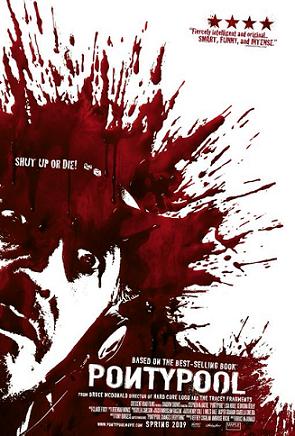
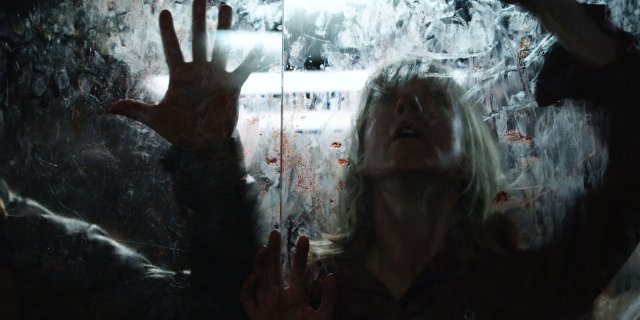
Pontypool (2008) is a Canadian horror film written by Tony Burgess, adapted from his novel Pontypool Changes Everything, and directed by Bruce McDonald. Inspired by Orson Wells’ 1938 “The War of the Worlds” radio broadcast, which infamously caused (likely overstated) panic in its unsuspecting audience, Burgess’s story was produced as both a feature film and as a radio play. A fresh take on the zombie narrative, the movie takes place almost entirely in a make-shift radio station during a snow storm, as a recently fired shock jock tries to adjust to his new gig as a small town disc jockey. Played perfectly by Stephen McHattie, Grant Mazzy is gruff and resentful toward his perceived demotion, but has such a mastery of linguistics due to his job that as the virus spreads via language (specifically English) words for him have become already so malleable as to be meaningless that he alone can keep a clear head. His producer, Syndey, is played by Lisa Houle (McHattie’s wife). We see little of the horror but rather hear it through phone calls and broadcasts, and we have to piece together the puzzle along with the characters.

Pontypool still 2008

Unlike many other Canadian horror movies, Pontypool wears its maple stains clearly on its sleeve and pulls its narratives from that country’s unique experiences. We see themes of language duality in a country with two official languages and of the perceived disparate statuses that both languages appear to hold. The three main characters we see, residents of Ontario, are Anglophones whose knowledge of French is meager. We here of French separatists and a radio transmission which seeks to save only those who can understand French.

The film plays heavily with the notion that truth is subjective. Throughout the first half of the film the characters cannot determine if what they’re hearing is real, a hoax, or a misunderstanding. They’re reluctant to take things at face value, as they’re largely in the business of illusion. Their traffic reporter’s “Sunshine Chopper” is actually a van on a hill. Sydney knows the small town’s secrets but helps to keep up the appearance of normalcy. Words, too, are given deep examination. Their meanings can have profound effects on us, and as Mazzy demonstrates, sometimes talking – taking the diplomatic approach – can be more effectual than physical force.

Pontypool is one of those “bottle movies” – predominately taking place in a single location – for which I have a great fondness (other examples include Twelve Angry Men, Rear Window, Rope, The Breakfast Club, The Mist, etc.). It allows the actors to really use the space and allows the audience to concentrate on their performances. Pontypool is a quiet but still effective horror film with enough humor to keep things fun and fresh.

“I’m still here, you cocksuckers.”

Grade: B+

Movie Review – The Dunwich Horror (1970)

Movie Review – The Dunwich Horror (1970)

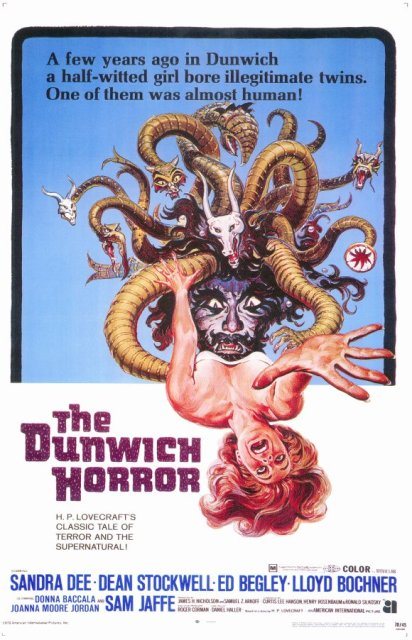
In the 1950s Daniel Haller met low-budget horror producer-extraordinaire Roger Corman who persuaded him to become an art director for his pictures throughout the 1960s. In 1965 he tried his hand at directing and made Die, Monster, Die! for American International Pictures, a very early adaptation of an H.P. Lovecraft story. In 1970 he returned to the genre to make another Lovecraft adaptation, The Dunwich Horror.

The Dunwich Horror is a B-movie starring Dean Stockwell as the occultist Wilbur Whateley, who steals the Necronomicon from Dr. Henry Armitage, played by Ed Begley in his last film role – he died of a heart attack three months after the movie was released. Whateley deceives and draws under his influence Nancy Wagner – played by Sandra Dee in a role that sheds her squeaky clean teen image – who he plans to use as a vessel to summon the Old Ones.

The film reflects the fascination with the occult that was being experienced at the time. The 1960s were a time of turbulence and upheaval, and the combination of a society that felt like it was perhaps seeing the end of their civilization with hippie counterculture, whose “Dawning of the Age of Aquarius” suggested pre-Christian models for living, meant a mixture of occult and witchcraft in popular media. No movie embodied this more than the classic Rosemary’s Baby, released in 1968, and the seduction and dreamlike rituals to which Nancy succumbs are very much reminiscent of that film’s rape scene.

The Dunwich Horror is a low-budget affair that can move at a snail’s pace, though it gets creative with its limitations through point-of-view attacks by the supernatural creature in the woods, relying on sounds and colors to signify the assaults. The camera moving through the woods is a technique Sam Raimi would adopt in The Evil Dead (1981). Nevertheless, the movie has not aged nearly as well as some of its contemporaries, such as the previously mentioned Rosemary’s Baby. The ending is especially awkward and the actors appear confused as to the actions which they are meaning to convey.

Haller would turn to television the following year, having a fairly successful run up through the 1980s. The Dunwich Horror is interesting as a curio of its era, but there is not a lot that will whet the appetites for modern horror fans.

Grade: D

Movie Review – Antichrist (2009)

Movie Review – Antichrist (2009)

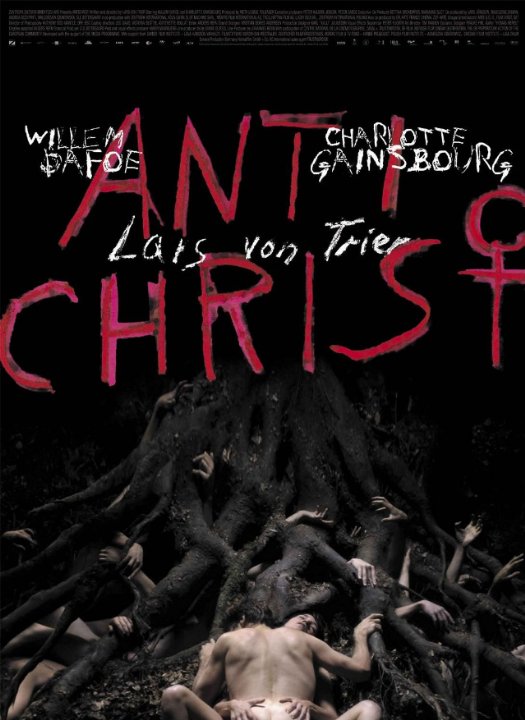
When Lars von Trier’s Antichrist (2009) was shown at Cannes in 2010 it divided opinions immediately. While many praised the film’s artistic merits, its explicit violence and sex caused some to walk out of the viewing and the ecumenical jury, composed of Christian filmmakers, to grant it an “anti-award” for its perceived misogyny. Von Trier’s rather arrogant and abrasive personality, naturally, did not help matters.

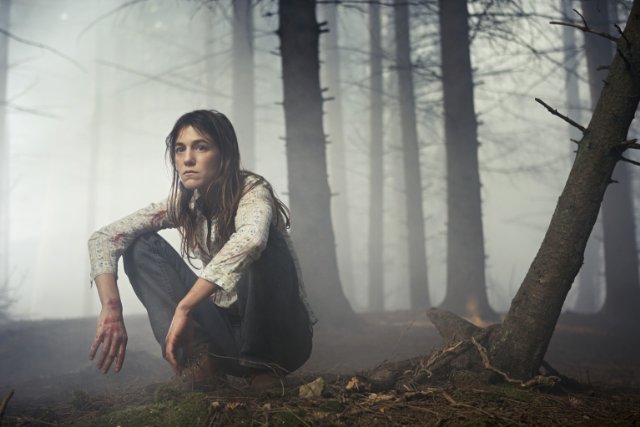
Antichrist is an experimental horror film, heavily reliant on symbolism and disturbing images, that seeks to generate strong reactions from its audience. Basically a two-person play (starring Charlotte Gainsbourg and Willem Dafoe), it begins with a couple having sex while their toddler son climbs out their apartment window and falls to his death. It is shown in gut-wrenching slow motion while one of Handel’s arias plays dreamily over the scene. We are then shown the grief of the parents as they try to cope with their loss. The wife is especially distraught, and the therapist husband decides the best way to treat her is to bring them to their woodland cabin where she had spent the previous summer alone with their son while writing her thesis.

For Antichrist, the forest is not a place one goes to to feel at one with nature. Thoreau be damned. One must defend against it as nature is cruel and self-consuming. The death of their child is reflected in their surroundings, from a hatchling falling from its nest to acorns raining down upon their roof. As the story slowly progresses we add witchcraft lore and learn that deeper troubles are brewing beneath the wife’s already cracked surface.

Antichrist 2009 still

Truly, the film is an adult one, and not only in the sense that the sex is graphic. The themes dig into the fears of adults and particularly of parents – we have not only the fear of losing a child but also of failing as a parent, that we will not act as nature should demand when our child needs us most. We also have the fears of lovers, that when we are naked before another, exposed and vulnerable, we trust that that confidence will not be betrayed. All these and more Von Trier exploits with an impressive artistic hand.

But is it, as the ecumenical jury proclaimed, misogynist? No. The film deals heavily in misogynist themes, but just as a film can deal with racism without being racist, Antichrist explores the history and reality of misogyny without itself being misogynist. However, it is not for the faint of heart and certainly not a movie meant for date night. Though we see a lot of sex, it is never sexy. This is the type of movie that leaves you feeling weighed upon after viewing, even if it does give you a lot to think about, and perhaps even more that you wish you could unsee. Nevertheless, it is a unique experience that the brave among us should experience at least once.

Grade: B-

Movie Review – Big Ass Spider! (2013)

Movie Review – Big Ass Spider! (2013)

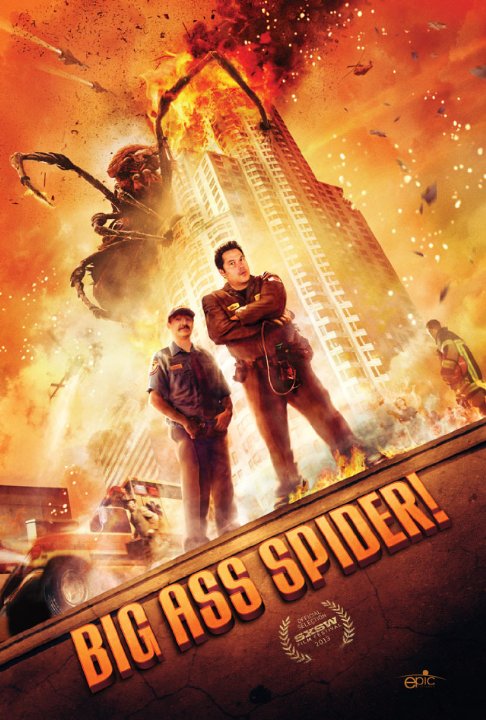
2013’s Big Ass Spider!, a comedy sci-fi with horror-gore elements, is a campy B-movie creature feature that’s a cut above the usual offerings like The Asylum’s Sharknado, which was released the same year. Director Mike Mendez adds a cinematic weight that those other films can’t match, making the movie ultimately better than its simple plotting requires.

The story follows Alex, an exterminator played by Greg Grunberg who teams up with a security guard named Jose, played by Lombardo Boyar, to stop an alien-spider hybrid which is growing exponentially, killing people and wreaking havoc across Los Angeles. There is great comedic chemistry between Grunberg and Boyar and their banter is often hilarious, particularly with regard to Boyar who steals most of the scenes he’s in. At times the character of Jose threatens to devolve into an overly simple stereotype but thankfully his proactive good nature saves him from coming too close to a racist caricature.

The CGI in the film is serviceable, though sometimes shoddy, which is to be expected from movie of this type that doesn’t take itself too seriously, and generally serves to add to the fun campiness. Nevertheless, the animators are able to infuse a bit of much appreciated personality into the spider and give it an intimidating creature design. The practical effects are also notable, particularly an amazing face-melt that is a terrific update on what we saw in Raiders of the Lost Ark (1981).

Big Ass Spider! pays homage to the rampaging creature features which came before, including the one that started it all, King Kong (1933). Likewise, the movie is self-aware of its B-movie roots, featuring a cameo by the king of Z-movies himself, Lloyd Kaufman of Troma Entertainment, as a park jogger.

Despite these strengths, the movie still suffers from many of the usual shortcomings of B-movies like it. There isn’t a lot of character development and the plotting is thin and obvious, hitting the usual marks we’ve come to expect from movies like this. Big Ass Spider! doesn’t do much new, but it does tend to do it better than many others. Given the title, viewers will know if this is the film for them.

Grade: C+

Movie Review – The Host (2006)

Movie Review – The Host (2006)

I first saw 2006’s The Host (known in South Korea as Gwoemul, meaning “Monster”) shortly after its release. The reputation which preceded it was impressive: it won numerous awards, critical acclaim, and became up to that time the highest grossing South Korean film ever. With such a pedigree, one cannot go into the film without high expectations. Unfortunately, the copy I watched at the time was dubbed, which can make the experience of watching a foreign film almost unbearable for me (unless it is an old martial arts movie – in that case, it’s part of the charm). It distracts me from the plot and diminishes the acting on screen. In fact, I haven’t watched a dubbed film since. I found the movie enjoyable, though nothing special, yet I vowed to revisit the film at some point with subtitles to see if my impression would change.

Directed by Bong Joon-ho (who would also do 2013’s well-received Snowpiercer), the story begins with a large creature emerging from the Han River, rampaging and destroying and taking a middle-school-aged girl whose flawed, dysfunctional family attempts to save her. Meanwhile, the authorities believe the creature is host to a viral outbreak and begin quarantining areas. Bong Joon-ho’s script hits many emotions effectively, making the audience laugh in one instant before hitting them with a scare or tragic character moment in the next. Watching it the second time these years later I quickly realized I didn’t remember how the latter half of the film went or how it ended, so many of those tragic moments were still able to strike me undiluted. I certainly was able to better appreciate the performances, especially by Go Ah-sung as Park Hyun-seo, the young girl. The scenes with her and the creature in the sewer are absolutely stellar.

The Host 2006 still

In 1954 Japanese filmmaker Ishirō Honda introduced Godzilla to the world. The big lizard’s first appearance is unlike his later incarnations where he’s seen as some kind of hero. Instead, he was meant to symbolize the destruction of Japan by nuclear weapons which the country had experienced first-hand less than a decade prior. He embodied the fears and resentments of the Japanese stemming from the detonations over Hiroshima and Nagasaki and the firebombing of Tokyo by the United States. Similarly, The Host is a metaphor for American intervention and the South Korean government’s habit of continually acquiescing to U.S. will. In the beginning we see an incident based upon a real account which occurred in the year 2000, and we are given it to be a possible origin for the Han River creature. We see a U.S. army coroner telling his South Korean assistant to dump dozens of bottles of formaldehyde down the drain because the bottles are dusty. The coroner is more concerned about his little personal space than about the effects his actions will have on the environment and the populace, and the assistant is willing to comply even though he knows the chemicals will end up in the river system. Similarly, controversy continually arises in South Korea regarding U.S. bases and their effects on the local populations. In the next scene we see a man commit suicide, leaping from a bridge into the Han River, and he becomes the creature’s first human meal (that we know of). South Korea had seen many such suicides in the early part of the new millennium as the nation was racked by financial troubles, and it’s perhaps symbolic that the first victim is a South Korean man literally throwing his life away. Put these two scenes together and the creature is, in essence, the result of American pollution and arrogance and the failure of South Korea’s willingness to stop it.

The second half of the film becomes more of an outbreak narrative, where we see news reports of the United States (accompanied by footage from the Iraq War) and the W.H.O. blaming the South Korean government for their ineptitude and proclaiming their need to take direct intervention action. They devise a plan to release a chemical called Agent Yellow (an obvious nod to Agent Orange with a satirical flair) which will effectively poison the area, again taking little regard for the local populace. It makes one wonder if the true “host” is actually South Korea housing an American infection.

The film is not entirely anti-American. It shows the bravery of the U.S. military and seems to give an appreciative acknowledge to its proactive approach toward danger. Nevertheless, it appears to be a film about South Korea’s need to wake up and assert itself more effectively. There are those we love and respect who nevertheless need to be put in their place at times. Yet these geopolitical themes aside, The Host is a fun monster movie that both embraces and defies the big creature-feature narratives of the 1950s. It’s smart, suspenseful, and not afraid to be ponderously sad.

Grade: B

Movie Review – Witching & Bitching (2013)

Movie Review – Witching & Bitching (2013)

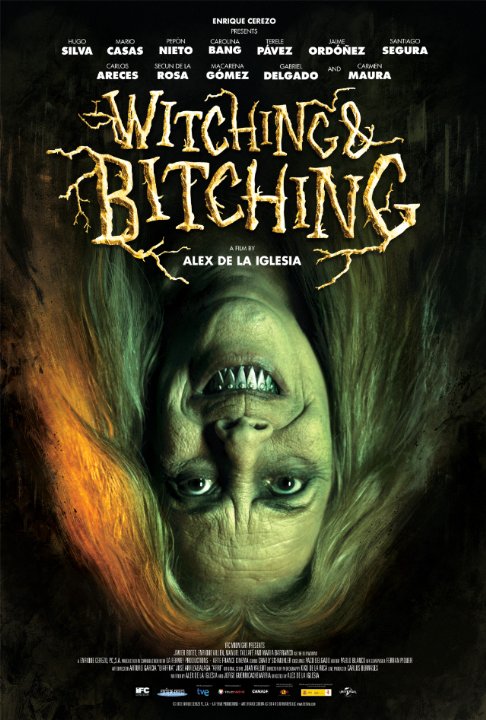
2013’s Witching & Bitching, known in Spain as Las brujas de Zugarramurdi, is a horror-comedy co-written and directed by Álex de la Iglesia. José and Tony are two dimwitted, misogynistic men who rob a pawn shop at Madrid’s Puerta del Sol with José’s young son in tow. In their escape they kidnap a taxi driver and the three men bond over their grievances with women, who they claim have emasculated them and broken them down little by little. Unluckily for them, they become the target of a coven of man-hating witches who want José’s son for a sacrifice.

The film is light-hearted and energetically shot, never taking itself too seriously, and succeeds in creating a distinct visual style. Some scenes are genuinely funny and the gross-out humor is used effectively. The characters are colorful if not fully fleshed out, the result of a fairly thin plot that is stretched to its limits. Really, not a great deal happens in this film, and the middle of the movie is mostly the guys running from wall-climbing witches throughout the corridors of a huge Gothic mansion. There is also a love subplot that is terribly forced and entirely unbelievable.

The misogyny of the men is cartoonish and meant to be satire; however, the film never does the job of convincing the viewer that it does not ultimately hold their view. All but one of the females in the film, and there are many, are manipulative, misandrist, evil creatures with no redeeming values. The men may be buffoonish, but they are the clear victims in this battle of the sexes. The only woman to be by the end considered a heroine is still depicted as emotionally unstable and needlessly violent. It’s a message that can’t be shaken after watching the film, and it can’t help but taint one’s perspective of the movie as a whole. The English title doesn’t help matters.

Despite this problem, Witching & Bitching is enough of an entertaining ride that most viewers will likely enjoy it regardless. After all, it won the most awards at the 28th Goya Awards, which honored the best Spanish films of 2013. Admittedly, there are things to admire the audacity of, such as a giant Venus of Willendorf walking around like the Stay Puft Marshmallow Man. That’s something you don’t unsee.

Grade: C

Create a free website or blog at WordPress.com.

Up ↑