Search

The Revenant Review

Horror Film History, Analysis, and Reviews

Category

Uncategorized

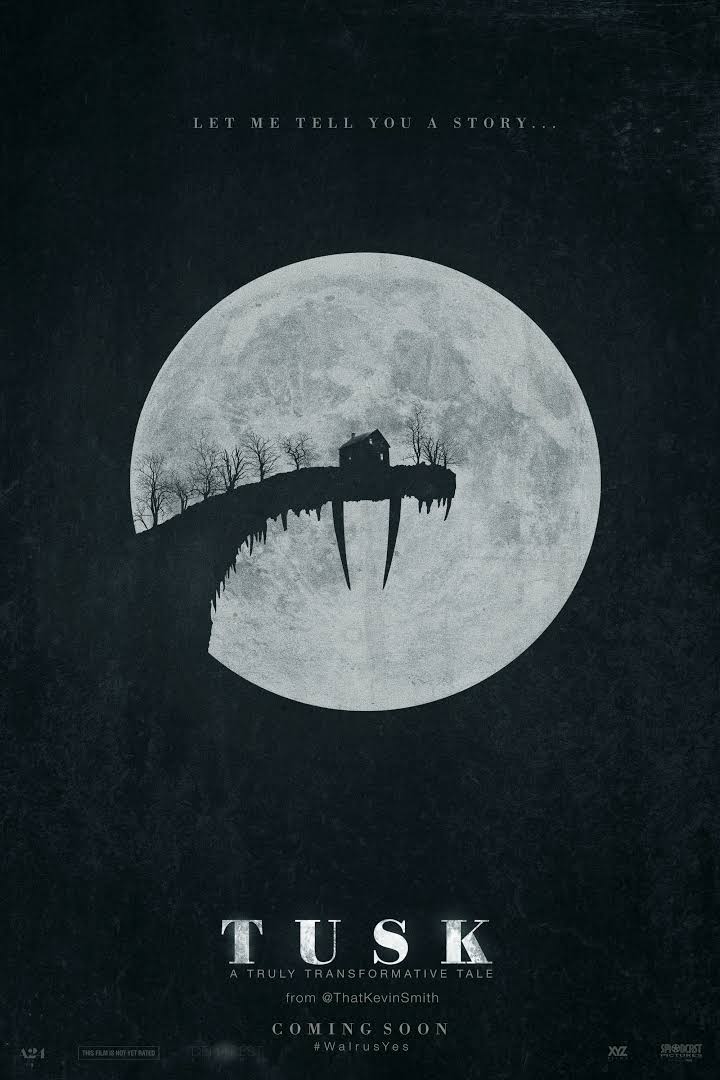
Movie Review – Tusk (2014)

Movie Review – Tusk (2014)

In an early scene in Kevin Smith’s Tusk (2014), Wallace Bryton (Justin Long) tells his girlfriend that it was worth it for a guy who lost his leg because he became famous for it. By the middle of the film, Bryton, who had let fame go to his head and now found himself at the mercy of a mad man bent on making him into a walrus, would no doubt wish to retract his former position. This is the overlying message of the film –that personal relationships and being a decent person are more important than money or fame – but one could be forgiven for not seeing past the odd antics that Smith puts on display.

Tusk began as a conversation on Smith’s SModcast podcast where they riffed on an idea inspired by an actual news article and reached out to listeners to decide if a film should be made about it. This is certainly not the strongest basis on which to found a film, but it makes for an interesting experiment, and an experiment is perhaps the best way to approach the movie.

Smith has a legion of loyal fans who will defend him to Judgment Day as well as detractors who are equally as vehement in their opposition. Smith’s movies were an important part of my formative years in the 90s, and of his films that I’ve seen and had occasion to revisit, I’ve liked about half of them. This puts me about dead-center in the Smith debate, which is a way of saying that I was neither expecting to love nor hate this film upon sitting down to watch it. I’d certainly heard strong opinions on both sides, but I cleared my mind as best I could and was determined to give it as fair a chance as possible.

There’s a lot in this film that works. Firstly, it’s well-cast: Justin Long does a convincing job in his reactions and emotional transitions and Michael Parks as the Dr. Frankenstein-like walrus-lover Howard Howe commands the screen each time he’s present. Smith appears to take some inspiration from Quentin Tarantino with long scenes of dialogue between animated characters, and those between Long and Parks really work, especially when Howe is recounting his oceanic adventures to a slowly drugged Bryton. Some of the absurdist comedy sticks, and I admit to laughing aloud at a few scenes, particularly at an unexpected walrus battle late in the film.

All that being said, there is just as much in the film that doesn’t work, and these closely relate to what has already been said. The long dialogues which come later in the film drag on too long and pale in comparison to the former. A certain flashback scene involving an overly-acted Québécois detective and the killer is painful to watch. Also, the humor involving Canada and the “ugly American” stereotype falls flat. Lastly, Smith should be commended for going “full walrus” in this film, but the narrative begins to stutter and scenes feel more and more like filler as the film shuffles to its rather unsatisfying conclusion.

Like a shoddily stitched walrus suit, Tusk is an uneven amalgam that manages to remain interesting even when it’s struggling to remain afloat. There’s some good filmmaking on display, but to enjoy it requires considerable viewer patience and good will to see it through.

Grade: C+

Horror’s “Worst” Films – Plan 9 from Outer Space (1959)

This review is part of the Horror’s “Worst” Films: Tasteless Entertainment or Endurance Test? series.

Horror’s “Worst” Films – Plan 9 from Outer Space (1959)

Is there a more famous “bad movie” than Ed Wood’s Plan 9 from Outer Space, or a more infamous director than Ed Wood, who had a 1994 biopic made about him by none other than Tim Burton which starred Johnny Depp? Uwe Boll is certainly bad and well-known, but Ed Wood’s Plan 9 was the holy grail of bad films for generations of tasteless movie connoisseurs and continues to be the standard by which all other schlock is judged. And rightly so.

Plan 9 From Outer Space 1959 still2

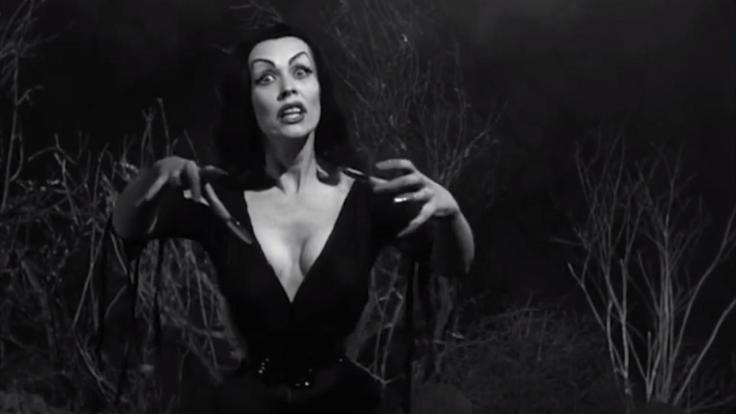
Though released in 1959, Plan 9 didn’t receive the negative recognition we’ve come to associate with it until it was chosen as the “worst movie ever made” by Michael and Harry Medved in their 1980 book The Gold Turkey Awards. Stephen King has written negatively about the movie for what he perceived as its exploitation of a morphine-racked Bela Lugosi. Indeed, Lugosi was about as far from his glory days of 1931’s Dracula, or from his fame as a premiere actor in his native Hungary preceding that time, than one could get when he died in 1956. Before he passed, however, he had performed some silent test footage with Wood for what was intended to be Tomb of the Vampire, some of it outside actor Tor Johnson’s home, who would also appear in Plan 9 (nor is this the last time we’ll see Johnson on this list). Rather than discard that meager footage, Wood built Plan 9 around it and cast his wife’s chiropractor to play Lugosi’s double even though he looked nothing like the actor, covering his lower face with a cape. What King saw as exploitation may have been tribute, as Wood and Lugosi allegedly became close in the actor’s final years.

Nevertheless, that Wood was in a sense making Lugosi’s last movie attracted many actors to the project who’s better judgment would have otherwise kept them at bay, such as Maila Nurmi, more famously known as the wasp-like Vampira, TV’s incredibly influential first horror host. Nurmi reportedly insisted that her character be mute because she found the dialogue dreadful.

Plan 9 From Outer Space 1959 still

Ed Wood is what one gets when they combine enthusiasm and determination with absolutely no talent or taste. Plan 9 manages to be a fast-paced, entertaining ride mostly because it never sits still. It’s easy to count the short-comings, such as the bizarre rambling narration by Wood’s friend, the eccentric and famously inaccurate psychic Criswell (“And remember my friend, future events such as these will affect you in the future”), and well as the cheap sets, the bad acting, the pathetically poor costumes and special effects, and lack of editing continuity as sequences go from night to day to night again, and so on. Plan 9 is a bad film, undoubtedly, but it’s never a boring one.

Movie Review – +1 (2013)

Movie Review – +1 (2013)

What would you do if you were confronted with your doppelganger? Attack it? Embrace it? Feel disgust or fear? Feel compelled to protect it? 2013’s +1 doesn’t dwell too ponderously on these questions and the possible answers, but it does touch upon them in interesting ways. One exchange in particular illustrates the opposing views. One characters states, “From the Book of Talmud: to meet oneself is… is to meet God.” To which another character responds, “Yeah, well in my book to meet God means to be dead.” Our own agendas and perceptions ultimately determine how we see ourselves and whether we fear or embrace change.

The late Oxford scholar of German Language and Literature S.S. Prawer has written of the doppelganger motif in horror, in reference to the essay “Der Doppelganger” (1925) by Otto Rank, one of Freud’s followers, that “the Doppelganger represents, in the first instance, the hidden part of ourself… but it also revives primitive beliefs in the independent, almost bodily, existence of our soul, mirror and puppet magic, demons or gods who amuse themselves by taking on our shapes – and all of these combine to produce a shudder that is full of dim memories” (Caligari’s Children: The Film as Tale of Terror, 118). +1, in one way or another, touches upon all these various aspects of our fears of confronting our doubles.

+1 2013 still

Dennis Iliadis’s film takes a subgenre of film that, in my opinion, reached its nadir in the mid-1990s – the teen-party-sex-comedy where a house party becomes a crucible for cartoonish characters to discover themselves as they stumble upon or seek out love. 1998’s Can’t Hardly Wait is a prime example. Though that film was meant to be a defining feature of my generation’s high school years, I never connected with it. It felt insincere and hollow, and the characters mere shadows of real people meant to represent me and my friends. I was pleased, then, to see Iliadis take that same basic scenario, with comparable characters, and have the mirror come to them, resulting in often violent confrontations.

+1 is a surprisingly beautiful film, with photography by Mihai Mălaimare, Jr. It’s also tightly crafted, allowing for repetition and visual cues to let us know where things stand in terms of the original characters and their doubles. Iliadis takes a risk by giving us an increasingly unlikable central character in David (Rhys Wakefield), but it pays off by giving the traditional teen-party-romance ending a macabre twist. Plus, we get some depth to characters normally relegated to clichés, such as Teddy (Logan Miller), who takes the opposite track from David by becoming increasingly more relatable, or Melanie (Natalie Hall), who goes from the trope of “Hot Chick at the party that Horny Teen wants to fuck” to a viable character with interesting and ambiguous turns.

Though classified as sci-fi, don’t look for science here, as it’s never the story’s focus, nor does it try to explain the source of the doubling in realistic terms. It might as well have been done by an incantation, as the plot would remain the same. The doppelganger is a source of horror going back to the genre’s first feature length film, 1913’s The Student of Prague. +1 updates the idea and allows for more variation, but the scenario forcibly pushes the characters to indulge and act upon their generally dark desires, impulses, and fears. It’s the horror of looking yourself in the eyes and making the judgment we all fear to make.

Grade: B-

Movie Review – Häxan (1922)

This review is part of the A Play of Light and Shadow: Horror in Silent Cinema Series

Movie Review – Häxan (1922)

Danish filmmaker Benjamin Christensen received rave reviews for his 1916 film Blind Justice when it toured in America. While showing the film to prisoners at Sing Sing in Ossining, New York, one convict knifed another, deeply disturbing Christensen. When discussing the incident with famed prison reformer Thomas Mott Osborne during his brief but influential tenure as the warden, he was told that even the most career criminals possessed an emotional humanity that could be reached through the right methods. From this meeting, “Christensen began to think about how a belief in absolute evil caused mankind to dehumanize and persecute those with mental illness, deformity, and in poverty” (Steve Haberman, Silent Screams: The History of the Silent Horror Film, pg. 84).

In 1919, in a Berlin bookshop, Benjamin Christensen found a copy of the Malleus Maleficarum, the fifteenth-century treatise on witch persecution, and spent the next two years studying the history of witchcraft, determined to make an entirely new kind of film that would serve to explore the subject. The causal link between the historical Inquisition and inmate treatment in the modern world, being ignorance and inhumanity, was a pronounced and natural one. Häxan (1922), also known as Witchcraft Through the Ages, is certainly one of the most unconventional films of the silent era, and for a viewer today the experience will be a unique one. Really a horror-docudrama about witchcraft, the film is at turns academic, horrifying, hilarious, and ultimately sobering.

HŠxan (1922) Filmografinr: 1922/06

Christensen takes a rationalist’s approach to witchcraft. He first approached scholars to help him with his film, but the low culture stigma of cinema and the unsavory subject matter meant their refusal. Left to his own devices, the first part of the film is Christensen’s own semi-scholarly lecture complete with artwork, moving diagrams, and a kickass mechanical model of hell. He explains the views of the pre-scientific world and how they shaped people’s absurd ideas about witches. He states, “The belief in evil spirits, sorcery and witchcraft is the result of naïve notions about the mystery of the universe.” Based only upon this dry but nevertheless interesting opening, one might be forgiven for thinking this film will be dull, and they would be entirely, tragically wrong. While he does this presentation, he shows titillating and scandalous images from woodcuts and paintings, promising to show them to us with actors in due time. Christensen is a true showman who is building anticipation in his audience.

The second part is where the dramatic reenactments begin, and this is when the film gets trippy. Here Christensen shows us what medieval people believed was happening, not what truly was. The production quality is superb and is certainly some of the finest to be seen in the silent era. The attention to detail in the costumes, sets, lighting, and especially make-up is extraordinary, especially when Christensen himself enters the scene as the horny horned trickster Satan, with mottled skin and a darting tongue. Heavy with sexual overtones and libidinal metaphors – demons vigorously churn butter in obvious imitation of masturbation – the film features discreet but nevertheless tantalizing nudity and Christensen’s images continually fly in the face of accepted decency. As Steve Haberman writes, “the overall impression is of sex stripped of beauty and romance and made monstrously vile” (pg. 86). Häxan was the most expensive Swedish film up to that point and the effort shows. The quality of the make-up effects and props are not just surprising because of the era, but because they’re superior to most of what would come after for the next few generations. Additionally, there is even included an impressive stop-motion animation of a small demon tearing through a door.

haxan 5

The next part of the film is concerned with the realities of historical witch-hunts and how the infectious nature of accusations was inescapable and how they ruined countless lives. While Christensen employed horror imagery earlier, here he presents us with the true source of horror: ignorance and irrationality. Under the Inquisition the Church becomes a hell on Earth, complete with rotten-toothed, sadistic clergy and all the tortures the human mind can conjure. We see men of science accused of devilry and innocent women suffering for the lust they drive in men. Satan and witches are not horrifying, but the irrational mind frame which creates them is, and therefore “Christensen relates the Church to both ignorance and sadism, giving the impression that religion at its core is inseparable from evil” (Haberman, pg. 88). He mirrors the earlier scenes of demons with those of the clergy, visually driving home the view that they were essentially cut from the same blood-soaked ecclesiastical cloth. The sexual repression of the priests is displaced into deviance and perversion, and women – whose countenances so tempted them – are the objects of their unnatural release.

Finally, the film ends with an examination of modern medicine and offers some scientific explanations for the myths surrounding witches. Attention is especially paid to hysteria (in part what we would today call “conversion disorder”), which was seen as an exclusively female disorder from the nineteenth century until around the time this film was released, when Sigmund’s Freud’s theories were in vogue. Here Christensen is not only offering rational alternatives, but also criticizing the contemporary treatment of women and the less fortunate. He asks of his audience, “We no longer burn our old and poor. But do they not often suffer bitterly? And the little woman, whom we call hysterical, alone and unhappy, isn’t she still a riddle for us? Nowadays we detain the unhappy in a mental institution or – if she is wealthy – in a modern clinic.” He suggests that we haven’t moved as far as we think from the mindset that caused the witch-hunts and need some further self-examination to move forward, especially for the sake of women and those less fortunate who are still the victims of authority and misunderstanding. As Haberman notes, a theme of male apprehension regarding female independence crops up many times throughout the film, and each time it is a male authority figure, often through violent means, who suppresses:

“The final impression of Haxan is that women throughout history have been subjected to the control of men, sometimes mercifully, more often cruelly. Females are tempted and degraded by Satan, unfairly judged and punished by the Church, and diagnosed and shut away in clinics by modern doctors. The implication is that men fear the opposite sex and seek to control them. The final image in the film is a silhouette of the charred bodies of several accused witches bound to stakes after being burned alive: the ultimate method of male restraint and domination” (pg. 91).

Haxan 1922 Devil

The performances are strong throughout the film, with special attention to be paid to Maren Pedersen, whose elderly Maria the Weaver is tortured by the Inquisition as the camera keeps upon her lined face, allowing our imaginations to fill in the rest of what’s happening to her. She was not a professional actress but a woman Christensen found who was selling flowers on the street. According to the director, Pederson told him that the Devil was real and that she saw him sitting by her bed at night. She is truly pitiable and her visage on film is striking, both when she’s hungrily slobbering on stew and when tears are running down her cheeks. These close-up shots of faces in agony, in particular, riled many censors and caused the film to be banned or recut in many countries.

Yet while there are aspects of horror and serious social commentary, Christensen still employs his own morbid sense of humor to liven the film. Many scenes are playful and tongue-in-cheek, especially when dealing with medieval beliefs, such as the witches lining up to kiss Satan’s ass. The scenes are lively and nightmarish and could easily be put to a modern heavy metal soundtrack. And where else can you see Satan pop out and gleefully club a nun on the head? The transitions are almost dreamlike, leaving the viewer to question whether they are witnessing hallucinations or reality. Nevertheless, when dealing with historical or contemporary reality Christensen stays his hand and presents it matter-of-factly so as to not diminish its effect. All the while he maintains a reassuring, almost conversational tone with the viewer, reminding them that despite the seeming chaos on screen, there is method to all the madness.

Haxan 1922 still

Chris Fujiwara, in an essay written for The Criterion Collection, bestows high praise on Christensen’s artistry:

“Under any title and with any modifications, Häxan endures because of Christensen’s tremendous skill with lighting, staging, and varying of shot scale. The word “painterly” comes to mind in watching Christensen’s ingeniously constructed shots, but it is inadequate to evoke the fascination the film exerts through its patterns of movement and its narrative disjunctions. Christensen is at once painter, historian, social critic, and a highly self-conscious filmmaker. His world comes alive as few attempts to recreate the past on film have.”

Many silent films, even in horror, can have a sense of innocence to them. But there is no innocence here. Christensen offers an intelligent yet entertaining adult fantasy filled with adult humor, yet it is all coupled with important contemplations and explanations. In every scene can be felt the deliberate touch of an eccentric, macabre genius. The film was well-received in Denmark and Sweden but was banned in countries like the United States for what was considered graphic depictions of torture, nudity, and sexual perversion. In France, Catholic organizations mobilized against the film because of its negative depictions of the Church.

While largely a critical success, the film’s experimental nature meant limited distribution and audience attendance, making the film a financial failure and putting a pause on Christensen’s career for two years. He had originally intended Häxan to be the first installment of a trilogy, with the other movies being The Saint and The Spirits, which would have further explored themes of suspicion towards Christian institutions and an objective approach to spiritual matters. For The Saint Christensen had planned to explore religious hysteria, and for The Spirits he wanted to assemble the world’s foremost mediums and hold a séance, hoping to capture an actual spiritual manifestation on film. Though a few scenes were shot for The Saint, neither film was finished.

Haxan 1922 still3

In the late 1960s the film received new life from British exploitation filmmaker Anthony Balch who shortened the film and added a jazz soundtrack as well as a narrative by “beat” writer William S. Burroughs. The film became a unique “midnight movie” rediscovered by a generation who appreciated its dark humor and deliberate touches of insanity. It’s time today’s horror fans rediscovered it as well.

Christensen’s 1916 Blind Justice is my favorite pre-Caligari horror/thriller, and Häxan is unquestionably floating, like a witch rubbed with flying ointment, somewhere at the top of my list of favorite silent horror films, and manages to even bespell the eras beyond.

Grade: A+
Movie Review – Lights Out (2016)

Movie Review – Lights Out (2016)

In 2013 David F. Sandberg made a name for himself for his award-winning short horror entitled Lights Out, which starred his wife, Lotta Losten. The viral hit caught the eyes of producers James Wan (Saw, Insidious, The Conjuring) and Lawrence Grey and soon Sandberg was given the opportunity to direct his first feature film based upon his short.

Of the short film, Grey stated in an interview with Showbiz Junkies, “It’s this big genius universal idea. We all know it. We’re all afraid of the dark. We all know that feeling of, ‘I saw that thing out of the corner of my eye. Is that a tree? Is that my laundry? Or is it something more sinister than that?’ There was real craft to how he did it.”

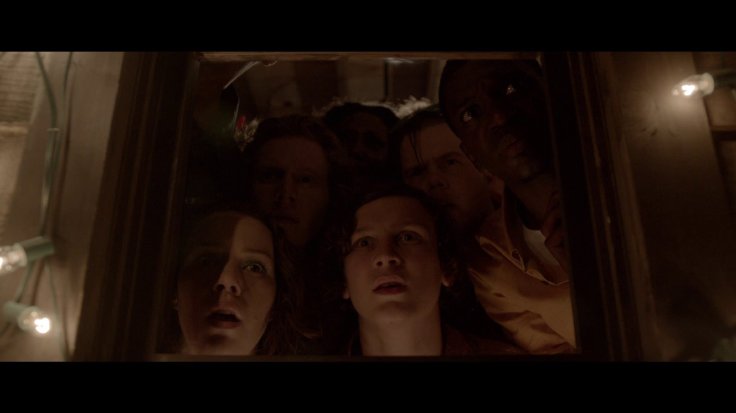
In 2016’s Lights Out Sandberg reveals himself as an astute pupil to Wan, using great practical effects to conjure his dark-dwelling monster and never squandering the audience’s trust with reliance upon fake jump scares. The scares in the film are earned, well-paced, and at times, incredibly fun. While clichés are to be found – and most scares the viewer will see coming – most are easy to forgive because their execution is finely crafted. Eric Heisserer’s screenplay creates characters that have relationships that the audience can connect with, and the roles are well-acted, with Maria Bello as the emotionally disturbed mother especially bringing in a convincing performance. Even Alexander DiPersia, as the underwritten boyfriend, makes the most of his screen time.

Lights Out 2016 still

Viewers will find a lot to enjoy and appreciate in Lights Out, however, it’s not without its shortcomings. While the characters are well-rounded and surprisingly resourceful, the mythology surrounding the supernatural threat is fairly weak and convoluted, and thrown upon the audience in an indolent info-dump. The film has a tendency to drop bread crumbs along the way, but in the end doesn’t explain or justify many of them. When the film deals with the present or explores its gimmick, it excels, but each time it ventures to explain the past or the supernatural, or make connections to them, it loses its way. This is unfortunate, as the movie had real potential to be a minor classic of the genre, on par with some of Wan’s better films.

Despite these flaws, Sandberg’s film is an impressive first entry. Its run time is only 81 minutes, and though I can’t help but feel like some pertinent scenes were left on the proverbial cutting room floor, or that other elements could have been fleshed out more, Lights Out remains an entertaining experience.

Grade: C+

Movie Review – Annabelle (2014)

Movie Review – Annabelle (2014)

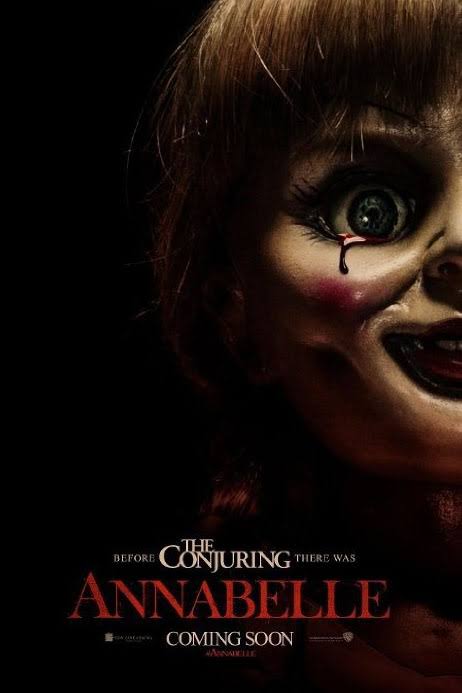
2013’s The Conjuring, directed by James Wan and based upon the claims of real-life paranormal investigators Ed and Lorraine Warren, was a massive hit. Wan’s smart direction elevated even the hokiest script elements and made even my personal distaste for the Warrens palatable. One of the most memorable images of the film was of the “possessed” doll, Annabelle. The real Annabelle is a Raggedy Anne doll that resides in a glass case in The Warren’s Occult Museum, but Wan decided to instead create a porcelain doll with a sinister smile and deathly pallor. I have an aunt at whose house I slept over many times when I was young, and I would often bed in a room filled with antique porcelain dolls, their ghostly pale faces staring at me in the moonlight. It’s likely due to my largely skeptical nature that I ever closed my eyes.

Of course, the inevitable Annabelle spinoff was expected, because… Hollywood. The film is directed by John R. Leonetti, who has only two other films to his directorial name, one of them being 1997’s Mortal Kombat: Annihilation, panned by critics and fans alike and often listed as among the worst sequels in history. While this leaves little promise for the viewer, what Leonetti has lacked in directorial craft he has made up for in talent as a cinematographer, bringing a wonderful mise en scène to multiple Wan films, including Insidious (2011) and The Conjuring.

Annabelle is a prequel to The Conjuring and follows a young married couple as they expect a baby. The doll is given by the husband to the wife and soon violent events transpire to attach a hippie demon to the doll. I’m not kidding. The script for the film is unfortunately lackluster and tends to meander. Also, right from the beginning it is inconsistent with The Conjuring despite recreating that earlier film’s opening scene with the nurses talking with the Warrens about the doll. In that scene, the film clearly displays on the bottom of the frame, “Annabelle Case – Year 1968”. Therefore, because we can count, we expect this prequel to take place either in that year or prior. But instead in Annabelle we see news footage of the Tate-Labianca murders by the Manson Family, which took place in August of 1969, and several months pass throughout the film which would put us safely into 1970, at least. This may seem like a minor quibble to most, but when basic chronology is ignored so blatantly is serves as an ill omen of what may come. There are other anachronistic elements, but I’m so anal as to list them all here. I don’t expect historical fidelity in films, despite my wishes to the contrary, though I do expect a franchise to follow its own timeline, especially when evoking the period is such a characteristic element. However, one plot hole which bothered me that I believe bares mention is that we are multiple times drawn to the fact that the couple can hear the people who live above their apartment, but we see many times, in many ways, that the couple lives on the top floor.

The beginning of the film makes several references to the societal changes of the 1960s, with mention of the neighbor’s daughter running off with “the hippies” and talk of keeping the door locked because “it’s a different world.” The Manson murders serve to further illustrate this. However, the cumulative effect, while perhaps unintentional, is to depict hippies in an exclusively negative light, as the only ones we see are of Manson’s ilk. Had these real life murders not been introduced, the movie may have in fact been improved, not to mention more chronologically sound. It may be in keeping with the contemporary fears of more conformist factions, but viewers having no knowledge of the peace movement or of the benign character of Woodstock could easily come away thinking 1960s counterculture was about murderous cultists out to destroy the lives of clean-cut, church-going, Barry Goldwater-loving Americans. With The Conjuring beautifying the Warrens, both their dubious paranormal claims and their staunchly Catholic approach, I can’t help but feel that the franchise is destined to be very politically and socially conservative, whether by inspiration from its source material or by design.

Annabelle Wallis does fine as the main protagonist, Mia Form, and the rest of the cast also are serviceable. Many nods are made to 1968’s Rosemary’s Baby, but the film forgets to surround their main girl with interesting characters and dynamic actors, which that classic film did so well, making the goings feel overly drawn out. As I watched I kept asking myself if this young couple has parents or friends, for their inclusion may have added a desperately needed dynamism to the story or presented further opportunities for scares while allowing the couple to not suspect the doll sooner without appearing overly dense. The ending of the film, too, is rather drab.

However, there are some impressive set pieces that Leonetti is able to orchestrate, particularly a well-paced home invasion early on in the film and a few effective jump scares, none of which are, thankfully, fake. Also, Wan returned to direct a tension-filled elevator scene. There also some less effective, and unintentionally funny, scares along the way, but they’re not so pervasive as to ruin the film.

Annabelle is, like a knockoff doll, a film of varying quality. There are some finely crafted pieces held together with cheap stitching and seams which continually show, ever threatening to come undone.

Grade: C

Horror’s “Worst” Films – Fire Maidens from Outer Space (1956)

This review is part of the Horror’s “Worst” Films: Tasteless Entertainment or Endurance Test? series.

Horror’s “Worst” Films – Fire Maidens from Outer Space (1956)

Fire Maidens from Outer Space (1956) is a sci-fi monster film that was UK produced but written and directed by American Cy Roth. In a film that makes even the worst original series Star Trek episodes look like Citizen Kane (1941), we follow a group of bored looking, chain smoking astronauts (even in the spaceship) as they land on the 13th moon of Jupiter only to discover the lost civilization of Atlantis. The meager society is made up of an old patriarch and a bevy of beautiful women who do seemingly endless dance routines when they’re not being plagued by a monster they call “the man with the head of a beast” – really, a guy in an unmoving fright mask and black jumpsuit with visible zippers down the back who comes around and yells “Rrraaaaaaagh!” And 1950s sexual politics abound as the girls are all man-hungry, man-hating, or helpless damsels (at least Robot Monster gave us a female character who was supposed to possess a brilliant scientific mind, even if we never saw it).

This could have been great campy fun were it not so soul-crushingly slow. The film is mostly padding – at one point we follow a secretary through a door, down stairs, having a conversation, then back up the stairs and through the door again. Maybe the editor fell asleep like I almost did. Not even the short skirts, nice legs, and arching backs can save it. With all the filler and a storyline that never seems to want to start, this one is unfortunately a test of endurance.

Movie Review – Jug Face (2013)

Movie Review – Jug Face (2013)

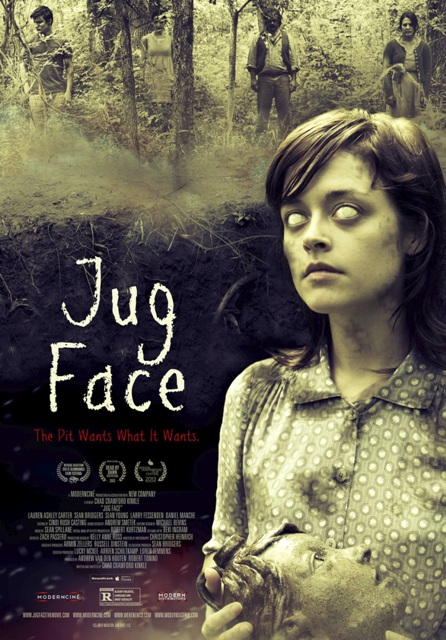
Small-budget horror films are too often formulaic and predictable, save for a sacred few each year, and it’s therefore always welcome for an unconventional entry to defy one’s expectations. 2013’s Jug Face is one such movie, filmed in Tennessee and telling the story of a backwoods community that makes regular sacrifices to a pit in order to keep its favor. The next victim is revealed in visions to the simple-minded Dawai (Sean Bridgers) who enters a trance and creates a clay jug with their face upon it. A local teenage girl (Lauren Ashley Carter), pregnant from her brother, finds out she’s the next intended victim and hides the jug before anyone can see it, thus setting off a series of unfortunate events as the pit’s entity emerges to kill members of the community one-by-one until it is satiated with its desired target. Say what you will, but it’s certainly an original premise.

Writer-director Chad Crawford Kinkle manages to weave the unsavory hillbilly tropes of incest and moonshine into an entertaining plot. The result is off-beat and at times quirky, but it never devolves too far into farce, thus allowing us to in some degree sympathize with our central characters. Not everything works, such as the image of the ghost boy, and by the third act the story threatens to grow redundant, but the film is elevated by confident direction and a strong cast. Carter carries the central role well, but it is Bridgers who steals the show. For those who have seen these two actors in 2011’s The Woman, where their roles are very different, you can’t help but be amazed at their transformations here. The interactions between the two are some of the best scenes in the movie and give the film its heart.

Jug Face is a bit clunky in places, and the ending is unfortunately underwhelming, but it’s an imaginative tale that showcases genuine talent both on and off the screen.

Grade: C+

Movie Review – Warning Shadows (1923)

This review is part of the A Play of Light and Shadow: Horror in Silent Cinema Series

Movie Review – Warning Shadows (1923)

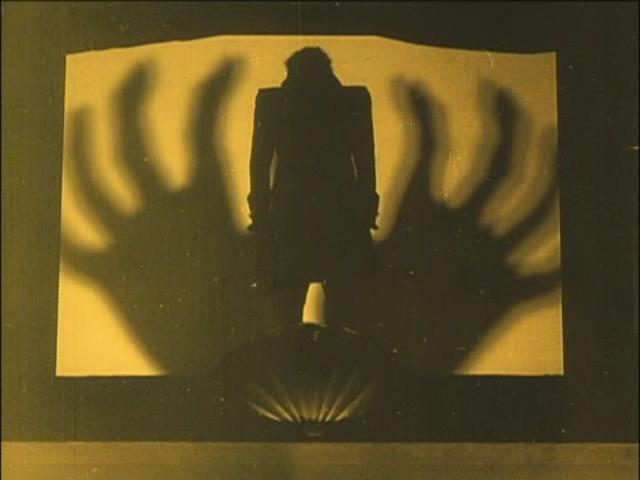
Warning Shadows (1923), known in German as Schatten – Eine nächtliche Halluzination (“Shadows – a Nocturnal Hallucination”), is a work which uses the characteristics of the German Expressionist movement as an interesting, and seemingly inevitable, tool for storytelling. Directed by American-born but German-raised Arthur Robison, the tale is about a flirtatious wife who adores the fawning attention she receives from four foppish dinner guests while her husband’s jealousy steadily brews. Into this mix an uninvited guest arrives, a disheveled and likely mad shadow-player who borrows the diners’ shadows to use with a kind of magic, revealing the tragic consequences that will come if they continue as they have been – a literal ‘foreshadow’. The shadow-player is performed by Alexander Granach, who played the memorable Renfield-type character in Nosferatu (1922) the year before, and again presents the screen with an eccentric, memorable performance.

That there are no inter-titles makes the narrative difficult to follow at times, and the film is experimental in many ways and uses Expressionistic elements in its approach. The costumes and hairstyles are exaggerated in the stylistic manner of the times and shadows are employed throughout the film as a way to expose a truth which light, ironically, hides. The shadows are used cleverly and add to the dream-like quality of the film.

Warning Shadows 1923

However, there are times when the film seems to get too artistic for its own good, at the cost of storytelling. The narrative tends to ramble and the generalized acting can be a distraction, especially after eighty minutes of continually watching the husband’s anguished jealousy play painfully on his face. The sets, too, are surprisingly unremarkable.

Warning Shadows is a film which attempts something novel and unique. Silent films are themselves a play of light and shadows, and here the art form appears to appropriately comment upon itself. Unfortunately, the final product has not aged as well as some of its contemporaries.

Grade: C

Movie Review – Sightseers (2012)

Movie Review – Sightseers (2012)

Radio Newsreader:The police announced today that they’re pursuing a ginger-faced man and an angry woman in connection with inquiries.

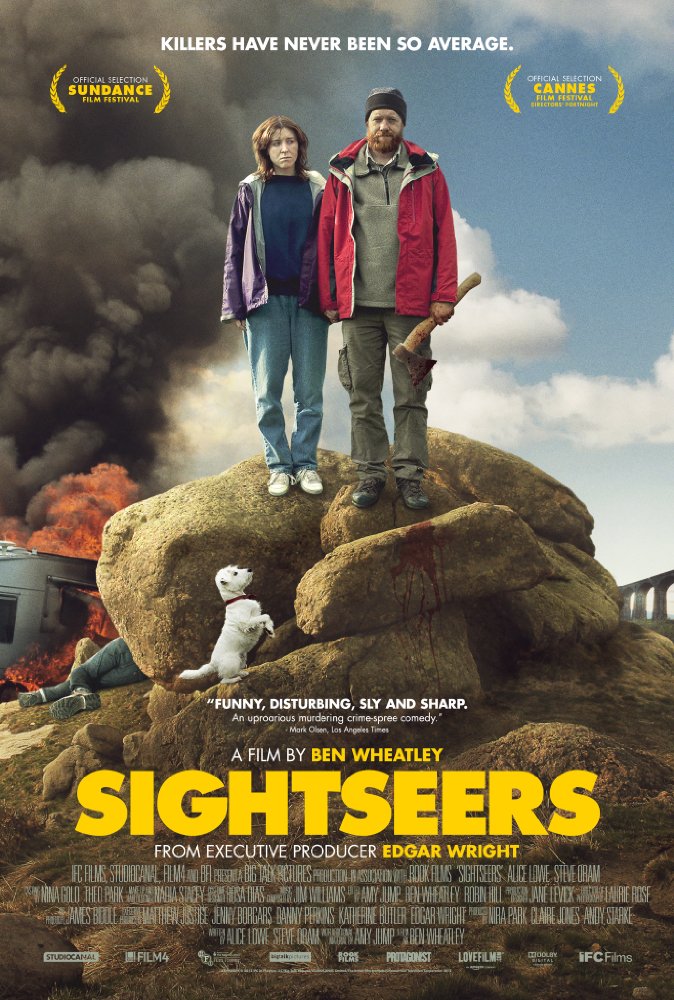
2012’s Sightseers is directed by Ben Wheatley, who had previously directed the well-received Kill List (2011). Written by and starring Alice Lowe and Steve Oram, the two central characters originated as a dark comedic routine in which the actors would pretend to drive through the countryside, commenting on the scenery, and occasionally referencing the casual murders they had committed. Eventually they developed a film idea and after numerous rejections pitched the idea to Edgar Wright, who took on production of the project.

Lowe and Oram are so comfortable with their creations, Tina and Chris, that they embody them with an immediately convincing ease. The characters are so self-absorbed and obsessed with their own little world that they don’t empathize with anyone else. When someone from the outside disturbs their idyllic, self-righteous sensibility, they react homicidally. The humor is restrained and understated in a manner that’s very British, and which works perfectly for the tone of the film.

Sightseers 2012 still

Sightseers is a well-balanced black comedy where the violence, even though placed in a humorous context, is unflinchingly brutal. It doesn’t let you forget that a life has been lost even as you laugh (uncomfortably) at the situation, and it’s this intelligent treatment of the characters’ actions and their journey that keeps the concept from growing stale. Wheatley makes you feel guilty, like an accomplice to their crimes, each time they murder and we again begin to follow them in their unglamorous, modernly British Bonnie and Clyde routine. As they drive deeper into the countryside they retreat more into their own little world, and civilization and our sympathies are gradually left behind.

Grade: B

Horror’s “Worst” Films – Robot Monster (1953)

This review is part of the Horror’s “Worst” Films: Tasteless Entertainment or Endurance Test? series.

Horror’s “Worst” Films – Robot Monster (1953)

In December of 1953 director Phil Tucker was staying at the Knickerbocker Hotel in Los Angeles. Despondent from a dispute with his film’s distributor, who was refusing to pay him, and unable to get work because he was saddled with the negative criticism his film had received, Tucker attempted suicide. Some reports say that he shot himself – and missed. He had sent an alarming suicide letter to a newspaper and, so the story goes, was saved when reporters and detectives found him unconscious in his hotel room. As Hollywood legends go, it can difficult to separate the fluff from the fact. Whatever the reasons or method, he lived on to make more films, but the specter of Robot Monster, which had been released the summer before in 3D, haunted his career.

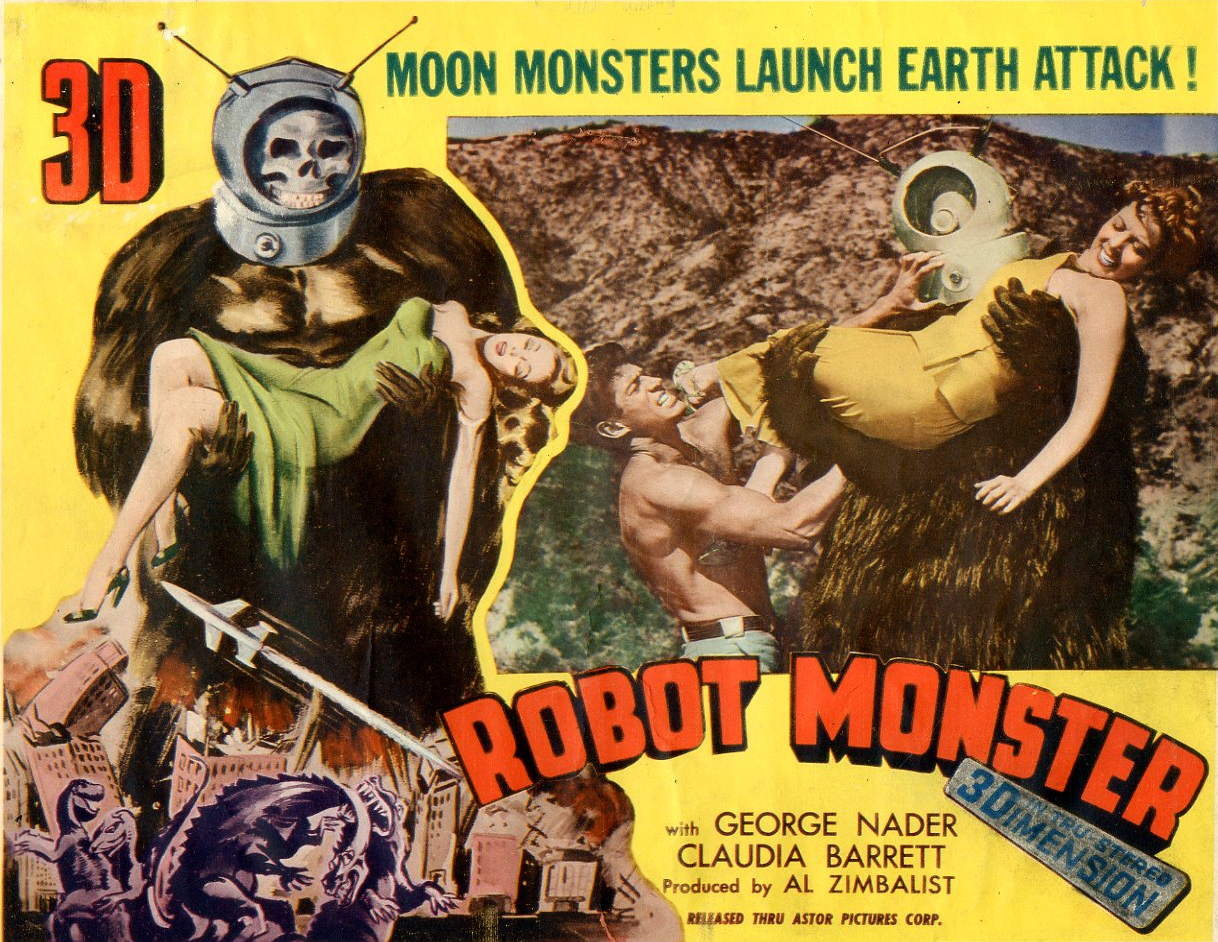
Robot Monster is a no-budget children’s sci-fi tale about an alien named Ro-Man who has wiped out humanity save for a family who have found a way to hide from him. Ro-Man is a monster that looks as if a kid made him by going through stuff in his closet. He’s essentially a guy in a home-made gorilla suit with a fish-bowl shaped helmet with TV antennae sticking out. His communication device, which he uses to contact his superior on his home world, is a bubble machine. The movie was filmed in four days entirely outdoors.

The film is clearly geared towards kids – we even see sci-fi pulp magazines in the closing credits – though it’s unlikely to win their hearts or even keep their interest for more than a millisecond. We should remember that both sci-fi and horror were seen strictly as kids’ stuff in the 1950s, which is why so little of it is what modern audiences would consider serious horror entertainment.

Despite the film’s shortcomings it managed to showcase two actors of note. George Nader went on to win a Golden Globe the following year (not, of course, for Robot Monster). The film was also the last for actress Selena Royle. She had had an active career with MGM until two years prior when she was brought before the House Committee on Un-American Activities where she had refused to name names. Stigmatized as a Communist sympathizer, her career was virtually over, even though she successfully cleared her name.

The movie is bad, certainly, but it retains a modicum of child-like charm. Even Stephen King has a soft spot for it, for he agrees with the review from The Castle of Frankenstein which generously states that though the movie is “certainly among the finest terrible movies ever made” and is “one of the most laughable of the poverty row quickies… the pic does make some scatterbrained sense when viewed as a child’s eye monster fantasy” (Danse Macabre, pg. 213). The movie even has some similarities to Invaders from Mars, released just a few months earlier.

Robot Monster is innocent enough to be inoffensive in its failures as a legitimate film, and that’s why it’s tasteless entertainment. Believe it or not, there are far worse movies to come…

Horror’s “Worst” Films: Tasteless Entertainment or Endurance Test?

Horror’s “Worst” Films: Tasteless Entertainment or Endurance Test?

An Introduction to the Review Series

The horror genre has been host to many (dis)honors, and one would be remiss to not include among them the recognitions for Worst Movies Ever Made. The genre has more entries than any other due to its ability to consistently churn out profitable films which have little-to-no artistic merit. Certainly, the horror genre is rich with great art and meaningful metaphors and examinations of personal and societal woes, and all those things that attract the intellect and enrich the soul. This is why horror matters. But sometimes, we turn to the genre for baser reasons – blood, beasts, and boobs (what Harley Poe refers to as “them sacred triple-Bs”). This is why horror is fun.

But there’s another reason we turn to horror. We adore the classics and we allow them to become a part of our psyche, but we recognize that those great films are few and far between. Over the years we’ve developed thick skins, enduring countless hours of on-screen disappointments, becoming savvier and more discerning with each viewing. We’ve seen scares done wrong more times than right, but we persevere knowing that the next film might be the one to crawl beneath our skin and latch onto our brain, just like we want it to. Along the way we’ve tasted the bitter salts of bad filmmaking and have developed a tolerance, and sometimes an acquired preference, for it.

Robot Moster 1953 still
Robot Monster (1953)

Let’s face it, as dedicated horror fans, no matter how shitty a film might be, we tend to take certain joys in reveling in their awfulness. Horror (and to a lesser extent sci-fi) is the only genre that when it fails it crosses over and becomes a comedy, albeit of the unintentional variety. We sift through countless hours of dreck in order to find that glitter of treasure, and to not find humor in what can at times feel like a fruitless endeavor would drive a lesser viewer to insanity. We laugh so as not to cry.

Entertainment can be found in anticipating the tired beats and ogling at the awkward dialogue, hopefully while in the company of some friends and judgment impairing beverages. These palate cleansers allow us to appreciate masterful craft when we see it, keeping us from becoming jaded, pretentious hipsters. Let us take a moment to thank them for that. Lesser films can also serve, as Stephen King has written, as junk food. We know there’s no nutritional value there, but it’s satisfying to indulge the Id over the Superego at times. Junk food has its place in life – the same is true for bad horror movies. Not every film need be a serious work of artistic expression – sometimes it’s enough to just have a good time. We should also remember that filmmaking is a complicated, messy process and that if anything artistic remains in the end product it is a small secular miracle. It’s actually extraordinary that more films don’t turn out as bad as some of the films on this list, but those that do serve to teach us what does work in film by demonstrating what doesn’t.

Manos the Hands of Fate 1966 still
Manos: The Hands of Fate (1966)

Some bad movies transcend the spectrum of good taste and come full circle, becoming genuine entertainment once again, often accidentally, and those are generally the best in the oft-named So-Bad-It’s-Good category. Those are the films made with the best intentions, but they’re like text written by people who don’t speak the language, like those “engrish” signs seen across Asia and photographed by giggling Anglophone tourists – you stare for a moment while your brain tries to process what you’re reading, and you can’t help but laugh at the result (I suppose the same could be said about amateur film blogs, but I digress).

Like all the best laid plans of mice and men sometimes Lenny doesn’t get to tend his rabbits. As a related aside, I recall showing Gary Sinese’s Of Mice and Men (1992), a film I found to be an affecting adaptation of Steinbeck’s classic novel, to a friend, anticipating his reaction to the final scene to be the same as mine – namely, riveted silence. Bang! My friend bowled over on the couch, clutching his stomach –laughing hysterically. It goes to show that one man’s gold is another man’s brass. Humor, like horror, is often subjective. Even bad films, therefore, can have legitimate fan bases; to each his own.

Troll 2 still
Troll 2 (1990)

Of course, some movies really are simply, objectively bad, lacking any entertainment value. Their fate is to dwell in that twilight haze of boredom and pain. Some break that taste spectrum mentioned above only to return right back to awfulness. The films listed below represent horror and monster films that have been generally regarded by notable critics as being the worst ever made, beginning with 1953’s Robot Monster. Certainly, the 1940s had many terrible Poverty Row flicks, some starring Bela Lugosi as his career began to tailspin (he’ll be revisited below), but those will be dealt with in some capacity at a later time on this blog. Similarly, two oft-mentioned films will get a more focused treatment elsewhere when the time comes on the website: Exorcist II: The Heretic (1977) and I Spit on Your Grave (1978) (the latter which may deserve more credit than critics have allowed).

We should begin by laying the ground rules: I have chosen to forgo my usual grading system here because, frankly, all these films utterly fail as cinema. It’s accepted that they are replete with incompetent directing, poor acting, sometimes incomprehensible writing, and all the other things that make moving pictures into the cinematic art form. They get F’s, every last one.

Birdemic 2008 still
Birdemic: Shock and Terror (2008)

So the question then becomes, Can they be considered real entertainment or are they simply masochistic tests of endurance? Is it worth the morbidly curious, rubber-necking genre fan to seek out these non-films so as to participate in some communal movie-watching schadenfreude? In the short reviews below, I will examine just how bad these films are and try to cull something positive from them, if I can. I’ll suggest if any of these are worth seeking out as entertainment (preferably with good-humored friends and a couple of beers), or if you’ll need the company of MST3K, when available, to cope through the experience. Put simply, I’ll judge whether the film at hand is Tasteless Entertainment or simply an Endurance Test.

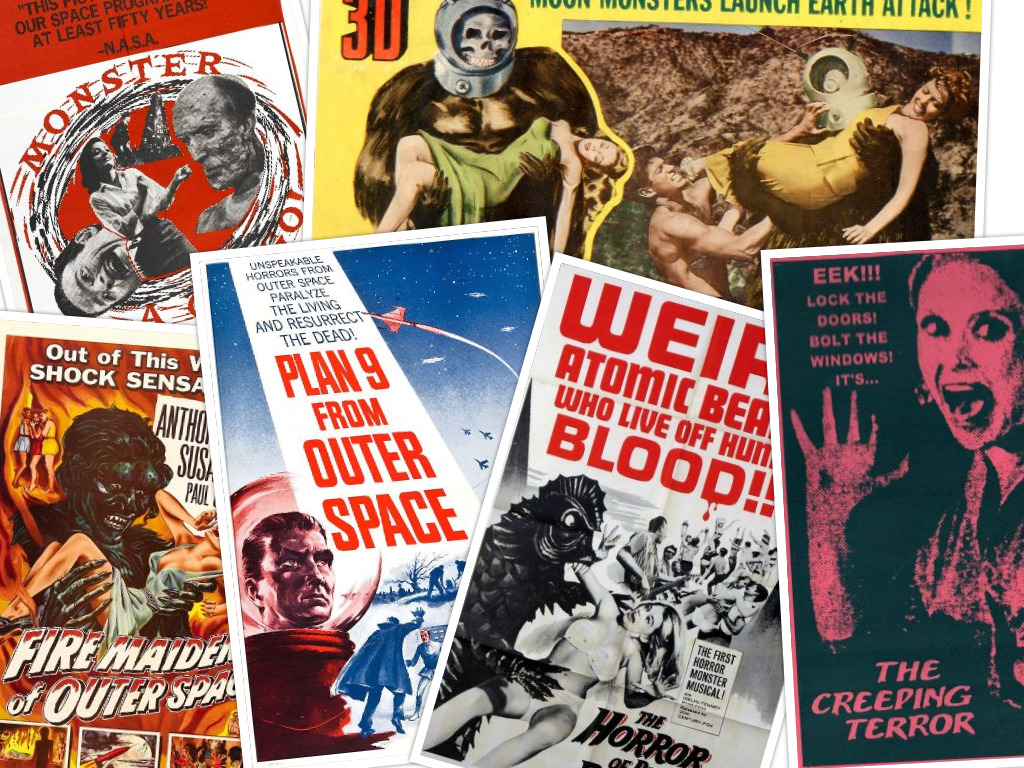
This series includes the following films (and more will likely be added over time as I come across them):

Robot Monster (1953)
Fire Maidens from Outer Space (1956)
Plan 9 from Outer Space (1959)
The Beast of Yucca Flats (1961)
The Creeping Terror (1964)
The Horror of Party Beach (1964)
Monster A-Go Go (1965)
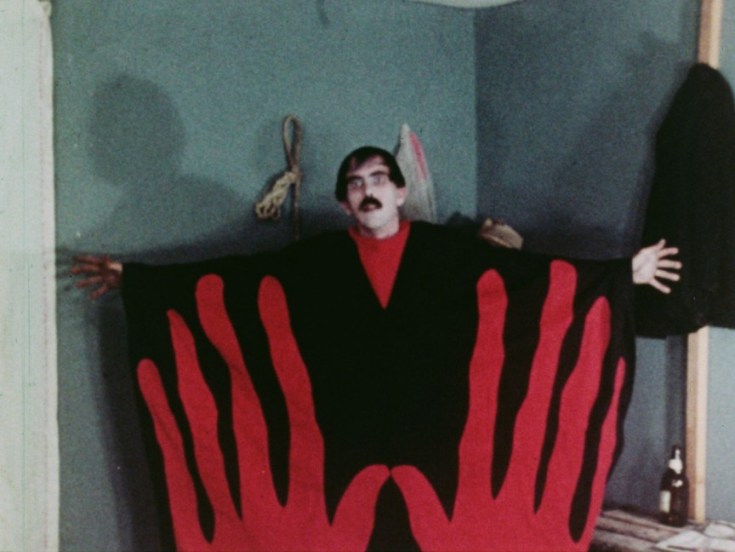
Manos: The Hands of Fate (1966)
Hobgoblins (1988)
Troll 2 (1990)
Birdemic: Shock and Terror (2008)

Movie Review – Berberian Sound Studio (2012)

Movie Review – Berberian Sound Studio (2012)

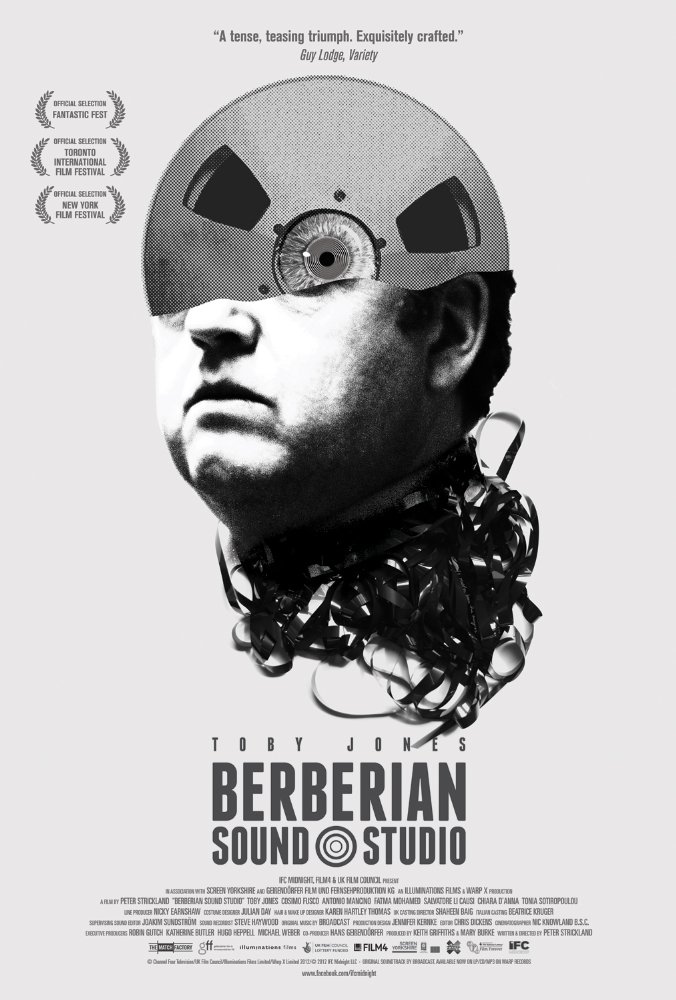
2012’s Berberian Sound Studio, written and directed by Peter Strickland, is set upon a fantastic premise: in the 1970s a reserved British sound engineer named Gilderoy, played by Tobey Jones, travels to Italy to work on a film called The Equestrian Vortex, which he mistakenly assumes is about horses. He soon discovers that he has been hired to oversee the sound design for a giallo horror film, and as the film’s Foley work progresses the boundary between reality and cinema begin to blur. Giallo fans will undoubtedly find a lot to appreciate in the many homages found throughout.

Strickland strips cinema down to its bare mechanics as we see Gilderoy create the noises for the soundtrack. We never see the film he is working on, but come to know it only through narration, written notes, voice actresses, and the sound effects which Gilderoy is crafting. Italian cinema is a perfect vehicle for this type of story given its penchant for post-synching sound (sometimes poorly so as anyone who has seen many films from this era can attest). Italy’s reasons for leaving sound to post-production stem from post-war woes, as the cameras and equipment available were of poor quality and troublesomely noisy. Though sound studios were available, they were not sound-proofed. Yet another reason for dubbing is sex appeal – by separating an actor from his/her voice directors could cast them on appearance alone. Finally, Italy rarely subtitles foreign films, and dubbing foreign movies, coupled with post-synching their domestic work, has maintained a self-sustaining sound industry.

It is in this unfamiliar world that Gilderoy finds himself, ignorant of the language, customs, and genre in which he is now working. We sense his isolation, never leaving the confines of the artificial sound studio. Strickland frames his shots beautifully and the sound design is, as would be expected, terrific.

Nevertheless, despite these very strong aspects of the film there were elements that simply did not gel with me. Strickland relies heavily upon symbolism, such as rotting food to show Gilderoy’s deteriorating sanity or a spider who he lets stay in his home as a nod to his acceptance of his current station, but the signals are repeated so often that they verge on redundancy. Ultimately, the film gets so caught up in its own symbolism that it forgets to tell an interesting story, and what’s there is stretched incredibly thin. At the halfway point I realized with a sinking feeling that hardly anything had actually happened. It’s like taking a beautiful scenic ride by driving in circles – eventually you want there to be a destination. We get a continuous buildup of tension that gets lost in an overly self-indulgent third act and an ambiguous, sudden, and unsatisfactory ending. Yes, one can dig to find meaning in the ending, but if there was an emotional connection to be felt I was numbed to it.

I’ve never been a film student, and my cinema literacy is self-taught and centered upon historical analysis and genuine appreciation of the craft, and I emphatically claim no expertise. My understanding of the technical aspects of filmmaking is shallow, and I fully admit that there may be more present in the film to those more well-versed than me that will allow them to connect with the film. But for this humble viewer, after all the promise of a great premise, Berberian Sound Studio became overly self-indulgent and did not deliver on its potential.

Grade: C

Movie Review – Waxworks (1924)

This review is part of the A Play of Light and Shadow: Horror in Silent Cinema Series

Movie Review – Waxworks (1924)

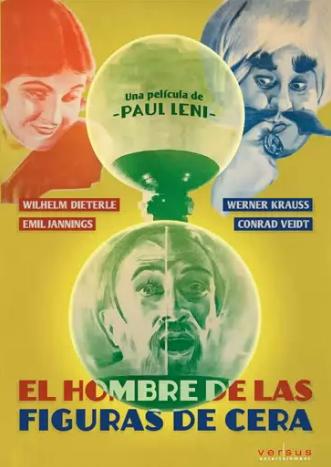
The German film Waxworks (1924) is commonly classified as a fantasy-horror, though more accurately it is an anthology film with horror elements coming into play only in the latter half. Written by Henrik Galeen, the structure clearly takes inspiration from 1919’s Eerie Tales, even having two of the actors playing multiple roles, and from Fritz Lang’s Destiny (1921). The framing story involves a wax exhibition at a fair that hires a young writer to create fantastic stories about their figures, which include Huran al Raschid, Ivan the Terrible, and Jack the Ripper.

waxworks still 3

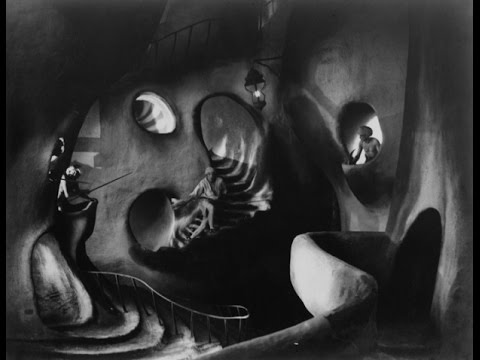
The sets of each tale are of course stylistic in the German Romantic sense, such as was seen in 1920’s The Golem: How He Came into the World. Their interesting construction is largely due to director Paul Leni’s early struggles as an avant garde artist and as a working set designer. In 1924 he explained his approach to the German film magazine Kinematograph:

“If the designer merely imitated photography to construct sets, the film would remain faceless and impersonal. There has to be the possibility of bringing out an object’s essential attributes so as to give the image style and color…

This is particularly necessary for films set wholly in a world of unreality. For my film Waxworks I have tried to create sets so stylized that they evince no idea of reality. My fairground is sketched in with an utter renunciation of detail. All it seeks to engender is an indescribable fluidity of light, moving shapes, shadows, lines and curves. It is not extreme reality that the camera perceives, but the reality of inner events, which is more profound, effective and moving than what we see through everyday eyes, and I equally believe that the cinema can produce this truth, heightened effectively.

I may perhaps cite the example of Caligari and The Golem, in which Hans Poelzig created a town’s image. I cannot stress too strongly how important it is for a designer to shun the world seen every day and to attain its true sinews…

It will be seen that a designer must not construct ‘fine’ sets. He must penetrate the surface of things and reach their heart. He must create mood (Stimmung) even though he has to safeguard his independence with regard to the object seen merely through everyday eyes. It is this which makes him an artist. Otherwise I can see no reason why he should not be replaced by an adroit apprentice carpenter.”

In addition to memorable sets, the film contains some notable actors of German horror cinema. The first tale stars Emil Jannings, looking far more rotund than he did in Eyes of the Mummy Ma (1918) six years earlier, playing the 8th century Caliph. The story is light and the ending is actually quite entertaining and funny, with Jannings playing the role with a joking glee, and it reportedly inspired Douglas Fairbanks to make Thief of Bagdad (1924) the same year. The humorous nature of the episode is an indication that the terror-film cycle that began with the deadly seriousness of Caligari and continued with Nosferatu was now coming to an end (S.S. Prawer, Cailagri’s Children: The Film as Tale of Terror, 42).

waxworks still 1

Conrad Veidt and Werner Krauss, who both played major roles in The Cabinet of Dr. Caligari (1920), also appear. Veidt plays Ivan the Terrible, being appropriately malicious and menacing, especially as he claps his hands to force a grieving wedding party to dance and to drink while the father of the bride lies dead on the banquet hall’s steps. Steve Haberman aptly describes the effectiveness of Veidt’s performance, recognizing that “the part could have been played as merely a leering sadist, but Veidt constantly emphasizes the almost childlike fear Ivan suffers of those around him, even in his own palace. Though he is the Czar, he seems like a wicked little boy among grown-ups, staring at them with wide, guilty eyes, waiting for one of them to punish him” (Silent Screams: The History of the Silent Horror Film, 62).

waxworks still 2

Krauss, who had played the titular Caligari, inhabits a fairly small role as Jack the Ripper, who the film combines with the Victorian urban legend of Spring-heeled Jack in a dream sequence reminiscent of the painted sets of Caligari, a manic disorientation created by a maze of double exposures. Through this sequence “Leni created the closest equivalent to a nightmare that the cinema had yet presented” (Haberman 63).

The writer is played by William Dieterle, who would also appear in F.W. Murnau’s Faust (1926). A fourth segment, based upon Rinaldo Rinaldini, had been written but cut due to budget constraints, and Dieterle would have played that role. In the mid-1930s, as Nazi policy and aggression mounted, Dieterle immigrated to the United States and became an American citizen in 1937. He would go on to a long and successful Hollywood career.

The wax exhibit owner’s daughter, and the main love interest of the stories’ various protagonists, is played by Russian-born Olga Belajeff, born in 1900, who had a strong career until the advent of talkies.

Director Paul Leni would accept an invitation in 1927 by Carl Laemmle, a founder of Universal movie studios, to come to America and direct. His debut American film would be the horror-comedy The Cat and the Canary (1927), which would have a profound influence on subsequent haunted house movies released by Universal over the coming decades. In 1928 he again teamed up with Conrad Veidt to direct him in one of his finest performances as the title character in The Man Who Laughs, the film that inspired Bob Kane to create The Joker. Sadly, Leni would die the following year of sepsis.

Waxworks doesn’t offer anything new to the genre but what it does, it does well. It’s a fine piece of entertainment and a showcase for some of horror’s most influential designers and recognized masters of German Expressionist acting.

Grade: B-

Movie Review – Hush (2016)

Movie Review – Hush (2016)

Director Mike Flanagan quickly gained a reputation for solid genre contributions with 2011’s Absentia and 2014’s Oculus, the latter especially with which I was particularly impressed. Therefore it was with considerable anticipation that I awaited his 2016 release, Hush. The film is co-written by and stars Flanagan’s wife, Kate Siegel, who plays Maddie, a deaf author who lost her hearing after a bout of bacterial meningitis when she was a teen. Maddie lives alone in a wooded area and it isn’t long before a masked psychopath is taunting her and biding his time before he’ll enter her home to kill her.

hush still

The cast does well, especially Siegel. The script is tight and Flanagan does great at creating tension, utilizing the relatively small location. I’ve always been partial to cat-and-mouse stories where opponents must try to outwit each other, and Hush displays this in exciting ways with both Maddie and her stalker having to use their brains to overcome a faster, stronger enemy. Also, while not a gory film, the violence, when it occurs, is effectively shocking. The result is a tension-filled single location drama which thankfully forgoes the normally predictable jump scares, and follows in the tradition of 1967’s Wait Until Dark and 1971’s See No Evil, which followed blind protagonists. What Hush adds to this company is our ability to see various scenarios play out in Maddie’s mind as she weighs her options, sometimes purposefully misleading the viewer to believe that things have gone terribly awry before pulling back to Maddie’s actual present state.

Hush is impressive, though it does fall victim to some heavy-handed foreshadowing that ultimately takes away some of the ending’s satisfaction. The film is so economical that anything introduced is essentially guaranteed to play a part later, but there are so few of these introductions that it becomes a waiting game for when certain elements will inevitably come into play. Thus the shock is absorbed too readily and the surprises become few, especially in the final moments. Nevertheless, Hush continues to reveal that Flanagan is a filmmaker worth keeping a keen eye upon, and I am still excited to see what comes next.

Grade: B-

Blog at WordPress.com.

Up ↑